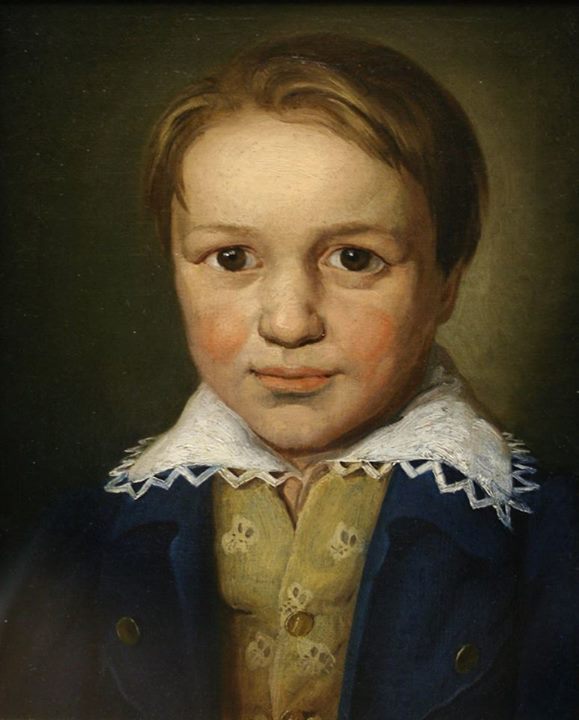
Beethoven at thirteen. In that era, little Ludwig had already been studying for about three years with Christian Neefe, an essential figure for his artistic development, thanks above all to his devotion toward the then-forgotten Johann Sebastian Bach, which he knew how to pass on to his pupil.
In those years, Maria Van Beethoven, Ludwig's beloved mother (most likely his first and original "Immortal Beloved"), was still alive; in a prophetic sentence written in her notes, she had summarized her son's future life: "Without suffering there is no struggle, without struggle there is no victory, without victory there is no crown."
And for me, it is incredible to rediscover pages written by Beethoven during that period, clearly already marked by the fascination with "Variation" that would later condition his entire future compositional art—a fascination probably rooted in the young composer thanks to the Bach studies he underwent under Neefe, during which he learned the concept of "invention," in which a single musical idea takes on and changes form throughout an entire piece.
The Dressler variations are a clear example of how little Ludwig, although still compositionally immature, possessed the innate gift (also exacerbated by his immense talent for improvisation) of knowing how to develop any type of idea in an original and intense way.
In this regard, how do you consider the so rarely performed Electoral Sonatas?
I find them fundamental for outlining the characteristic traits of his future production.