Restoration

Two hammers are not working

9 replies 4,564 views

Started by

adolfo

Member

Member

Opening post by adolfo

Posts
6
City
Fiumicino

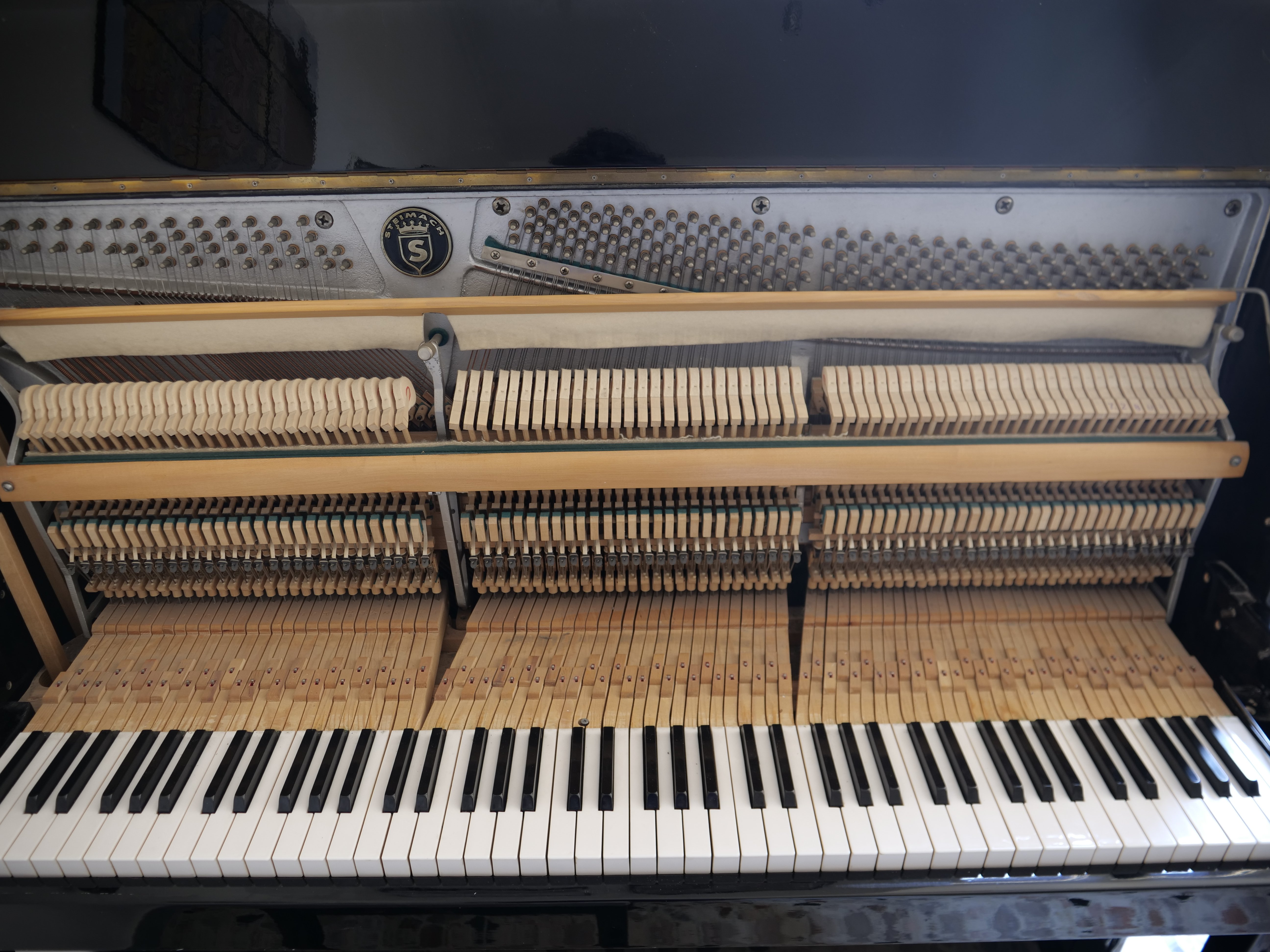
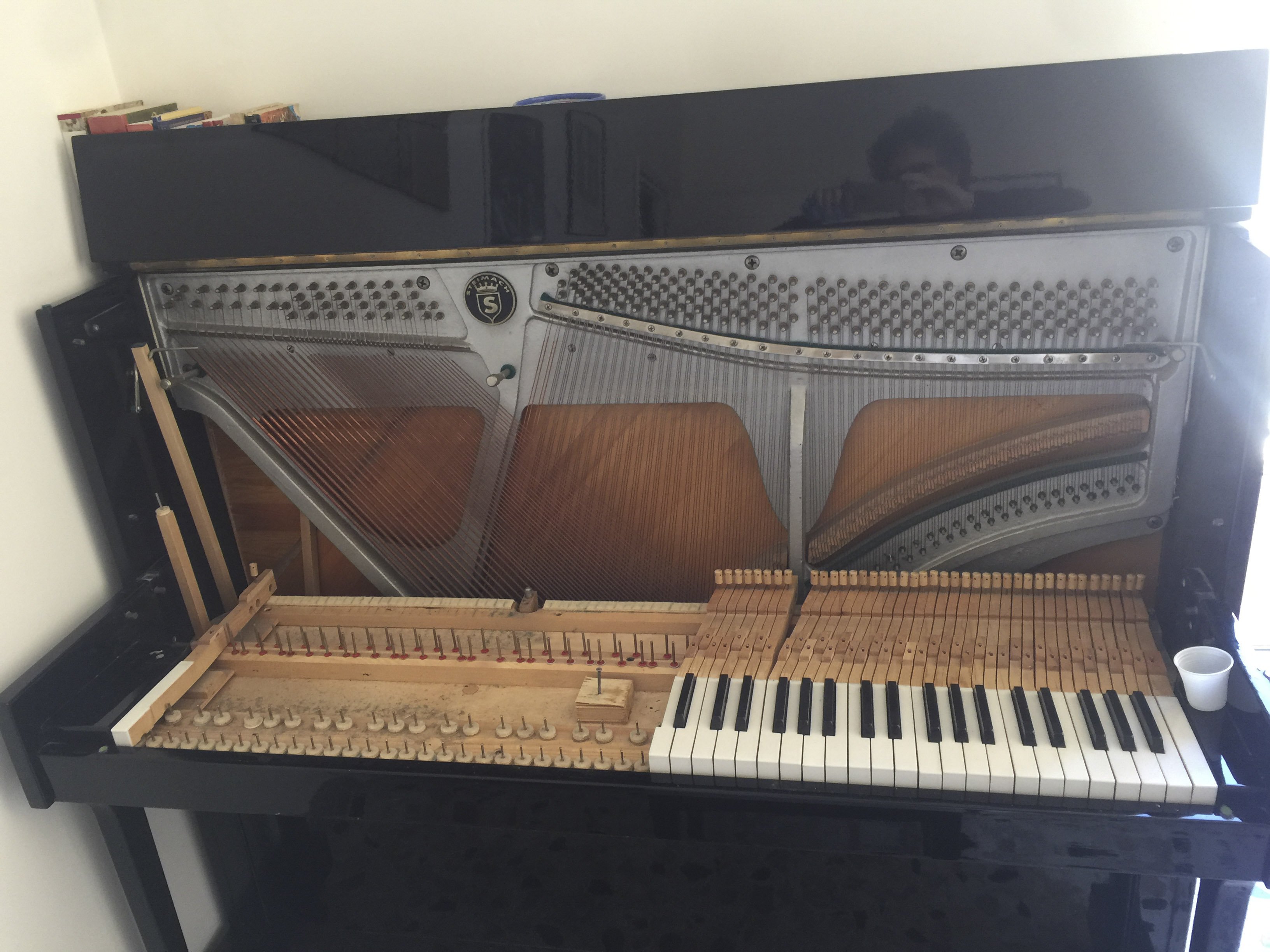
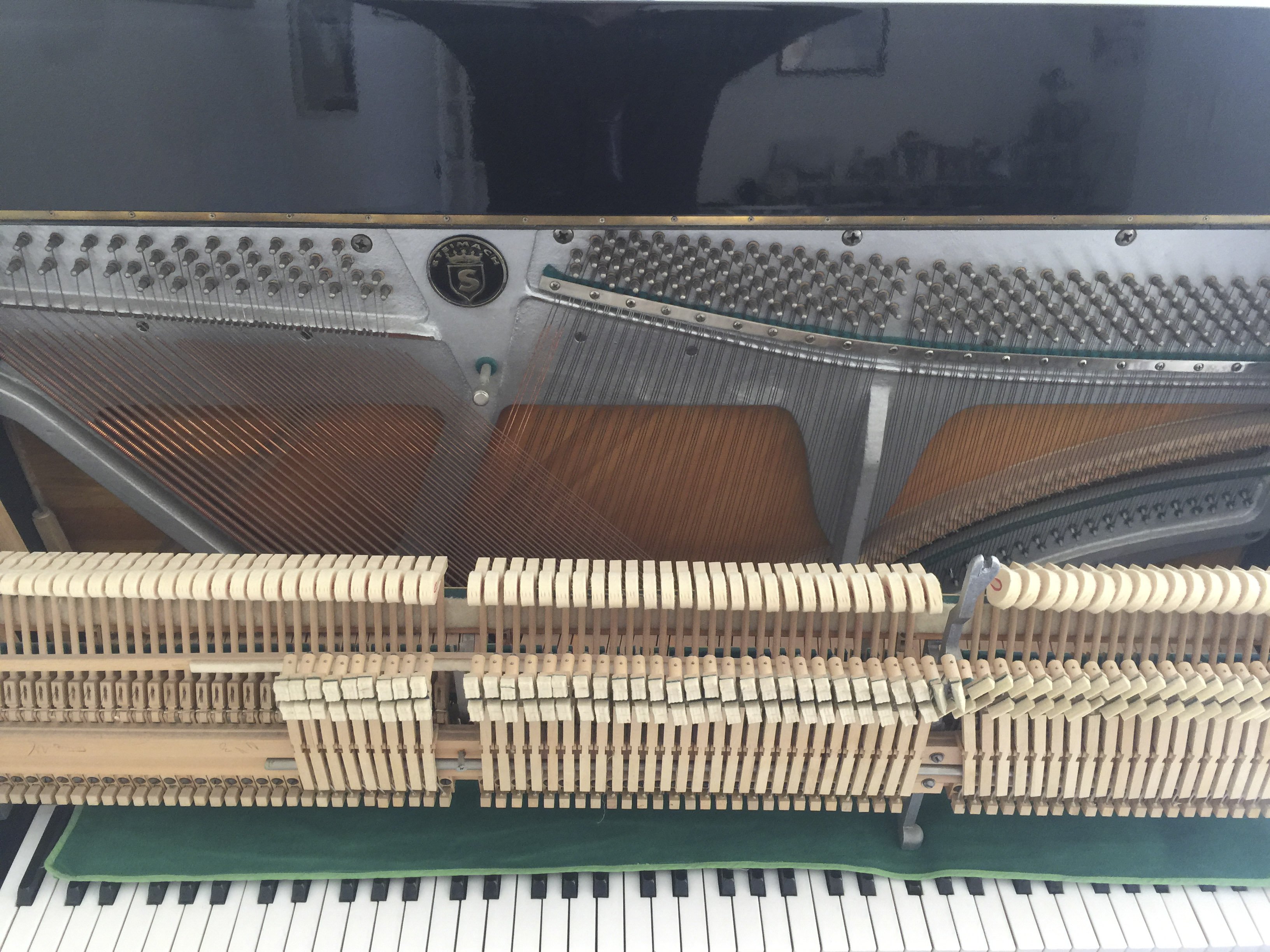
The piano is a Steiner upright, purchased new around 1995.

It hasn't been used for a few years and needs retuning.

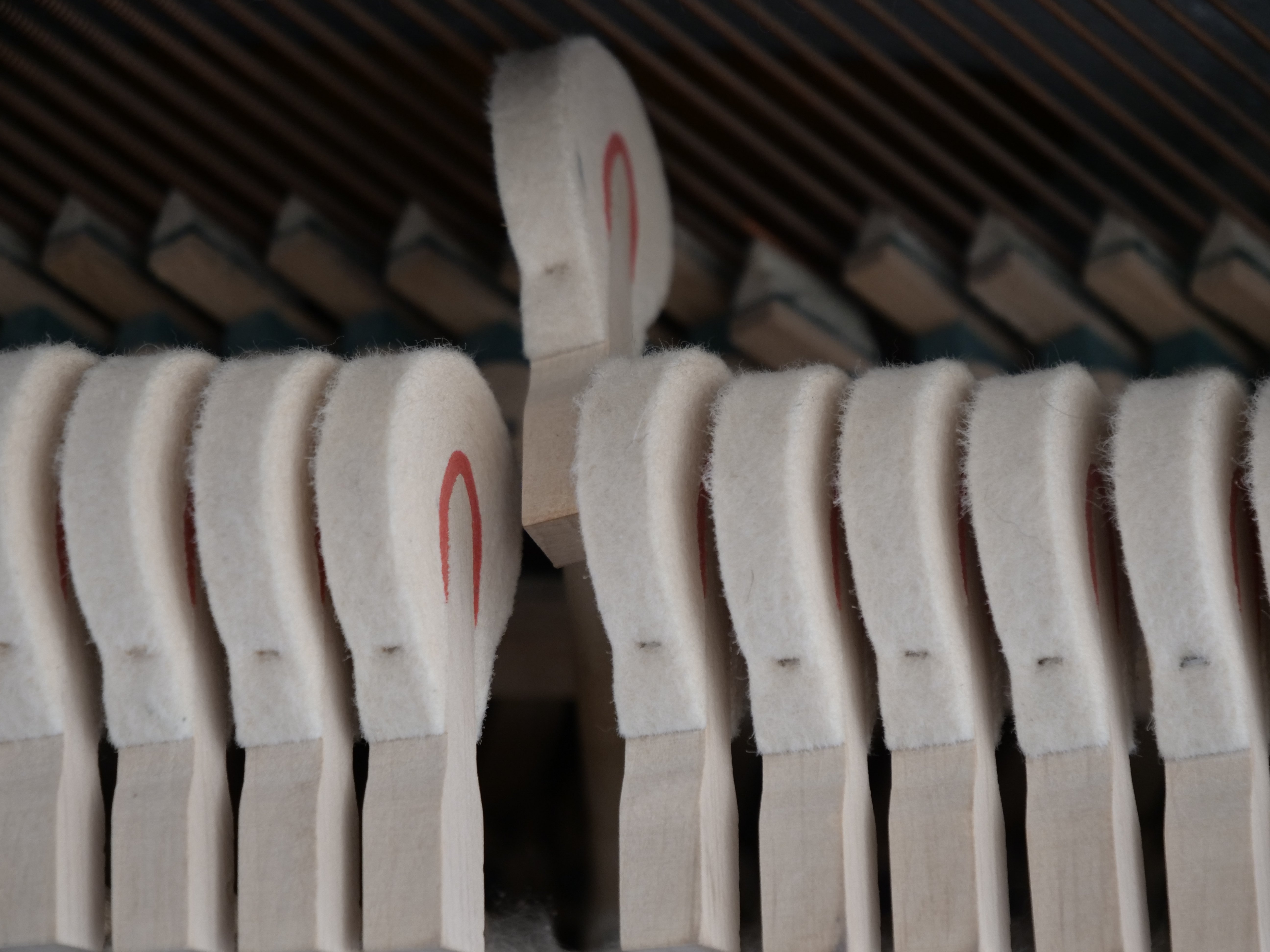
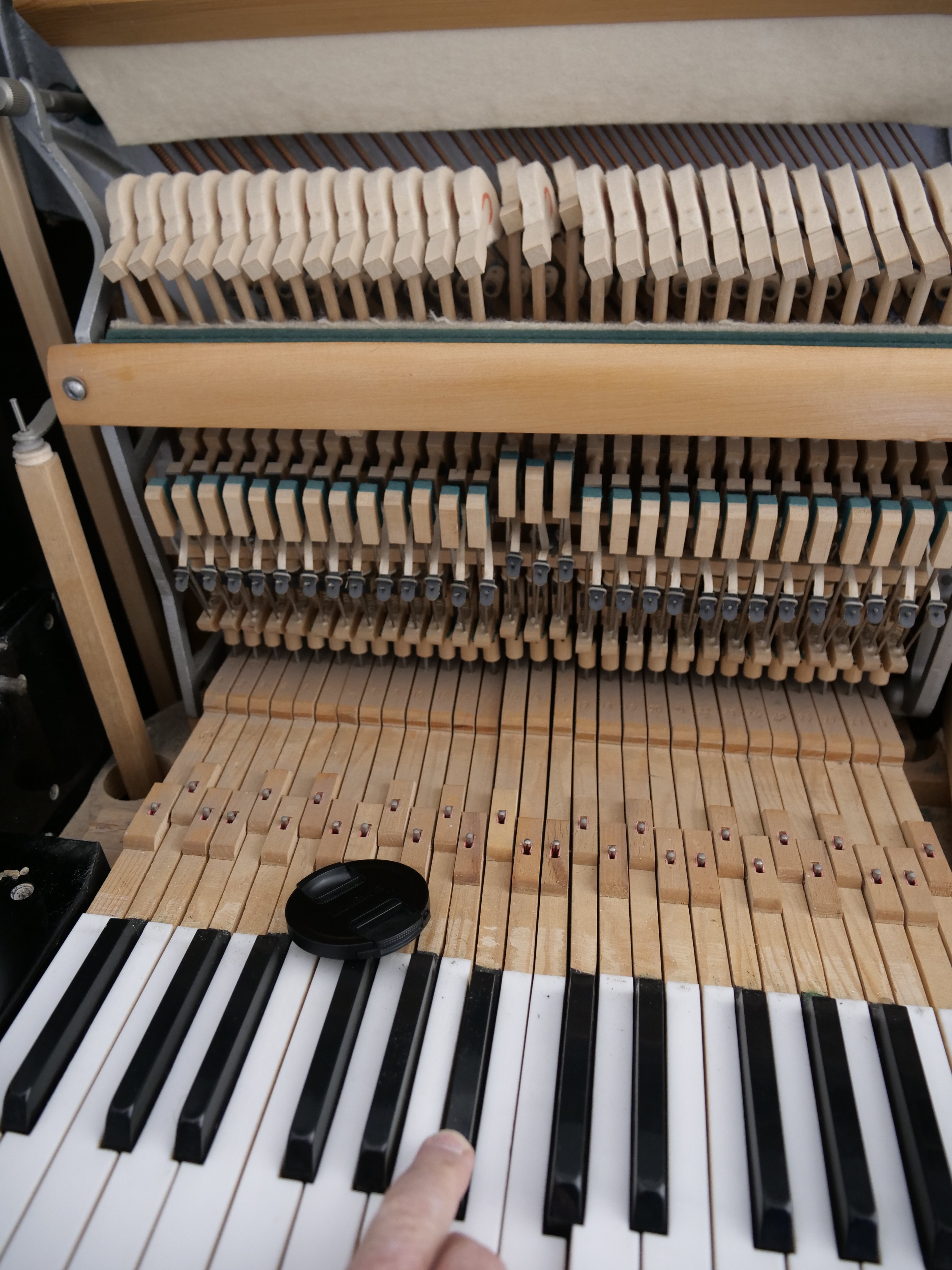
It also has another problem: two keys (F# in the 3rd octave and F in the last octave) are not being struck, in the sense that
the hammer, even when triggered, does not reach them.

I tried watching various tutorials on YouTube generously provided by "Journey Inside the Piano",

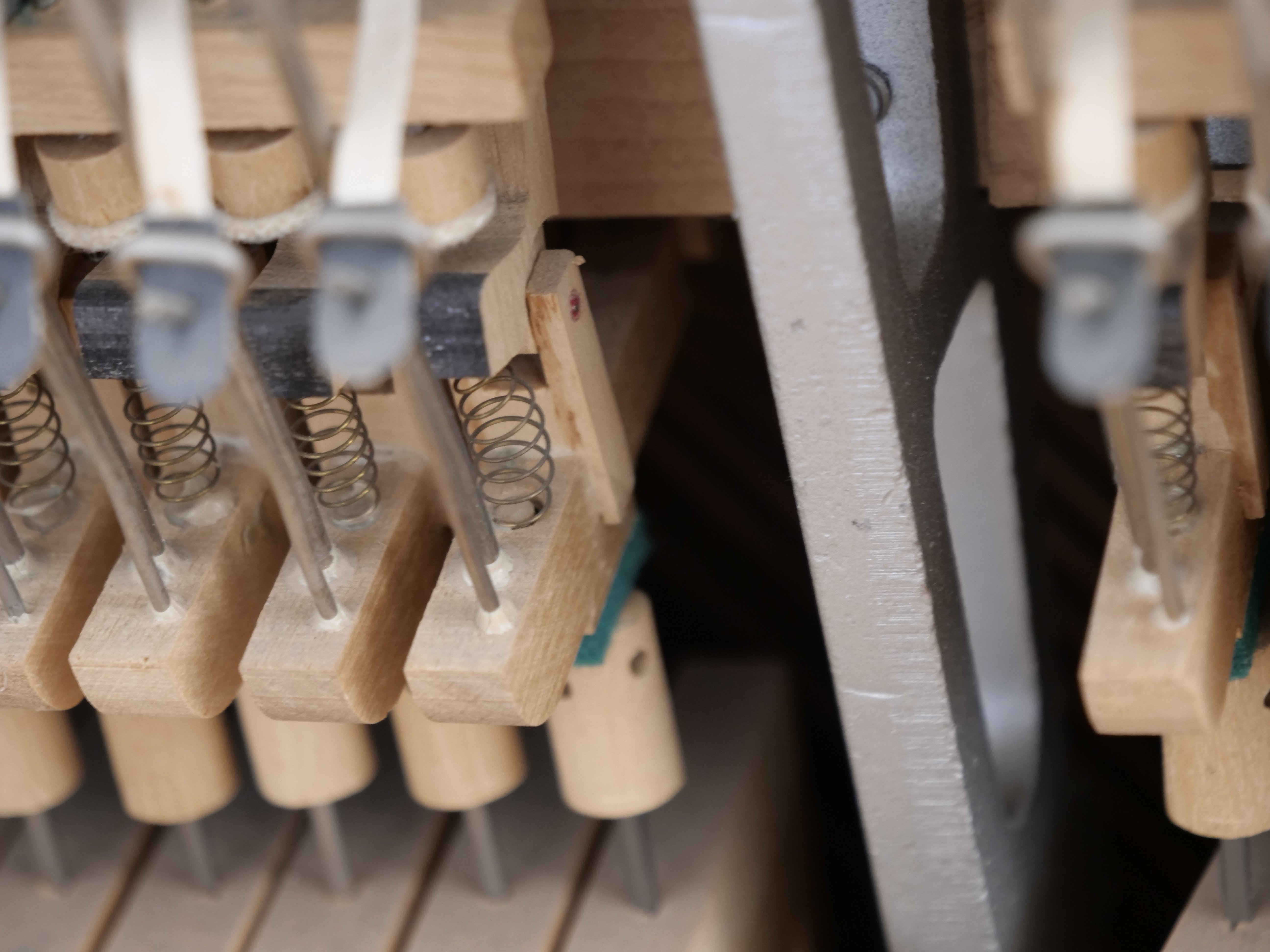
i opened the piano itself, the springs seem fine to me, I believe the problem is some kind of friction.

How do I disassemble the hammer?

Thank you !!!!!

_1011913.jpg_1011917.jpg_1011918.jpg_1011922.jpg

Moderator

Reply 2 by pianoexpert

Posts
3,876
City
rocca di papa

It is likely that it depends on the action pins. It is a delicate matter and, if they need to be replaced, a technician must intervene. Unfortunately, you have to be patient. This is not a "do-it-yourself" task. Remember that no lubricants of any kind should be used except for Teflon micro-powder. But I don't believe that will solve the problem. When pianos remain stationary for long periods and, perhaps, in an environment where the relative humidity increases and decreases significantly during different periods of the year, the bushings of the holes housing the pins swell... the wooden hole itself tightens around the bushing and therefore around the pin, and the part (hammer and/or wippen and/or escapement upright) locks, preventing its "back and forth" movement.
The technician will nevertheless have to check and potentially replace the pins in question with oversized pins (e.g., from 1.30 mm to 1.325 mm), taking care to slightly ream (with a straight, not conical, reamer) the seat of the pin on the cashmere bushing (without intervening on the wooden hole of the other part). All of this must be removed and reassembled with a special extractor.

If the "general sluggishness of the action increases" (perhaps, indeed, causing some parts to even lock), it is necessary to consider moving the instrument to a drier place.

Another hypothesis is that this process was already present at the time of purchase, perhaps only with symptoms of a "heavy keyboard," and that it then increased minimally, just enough, due to inactivity. If so, the efficiency of the action must be restored, which will return to new life in an environment that, perhaps, is already correctly suitable for housing the instrument.

Tuning should be checked at least annually, even if it is not played. After several years without being tuned, with just the change of seasons, the piano could drift away from the pitch, i.e., from the general level of A 440Hz. This would involve a particular job of recovering the general level before proceeding to one or two settling tunings.

All pianos were built to be tuned to 440Hz. Moving away from this level, the voice of the instrument changes and, over time, it becomes increasingly risky to bring it back stably to its general and "universal" level proper to all other instruments (playing, for example, with an orchestral accompaniment, you would find yourself out of tune!). Therefore, this must be demanded (guarantee of the 440 Hz level) for obvious reasons both commercial and for correct and satisfactory use.


Moderator

Reply 3 by pianoexpert

Posts
3,876
City
rocca di papa

The B that doesn't sound, probably, could depend precisely on the escapement lever pivot being stuck and not returning under the hammer cap to push it towards the string

Member

Reply 4 by adolfo

Posts
6
City
Fiumicino

First of all, thank you. Unfortunately, I am not familiar with the terminology for individual parts, such as "escapement pinion" or "hammer knob". I never thought about lubricating anything, since it is wood and not metal, and doing so could even be harmful. However, I was wondering if, as one sometimes does to unstick the shutters of old cameras, one could simply try to manually operate the mechanism (this time involving simple rotations) so that whatever might be causing the obstruction gives way. It is clear that the best solution would be the one you indicated, i.e., re-facing and replacing the pin, but I wanted to try something else that is simpler and at the same time satisfying for me. I understand that a technician would shudder, but I am easily satisfied! :-)

Moderator

Reply 5 by pianoexpert

Posts
3,876
City
rocca di papa

You can try to unhook the small strap, disassemble the stand from behind, and give a "little massage" to the escapement lever (that is, move it up and down energetically), which is the "lever" that pushes the hammer toward the string. I don't think that will solve it. The lever, once freed from the spiral spring that assists it, should fall under its own weight. If it is stuck, there is nothing left to do but change the pin. Unfortunately, the current situation does not allow us to see each other, but later, hoping that everything ends soon, we can talk about it again. And it is a delicate matter.

Member

Reply 6 by adolfo

Posts
6
City
Fiumicino

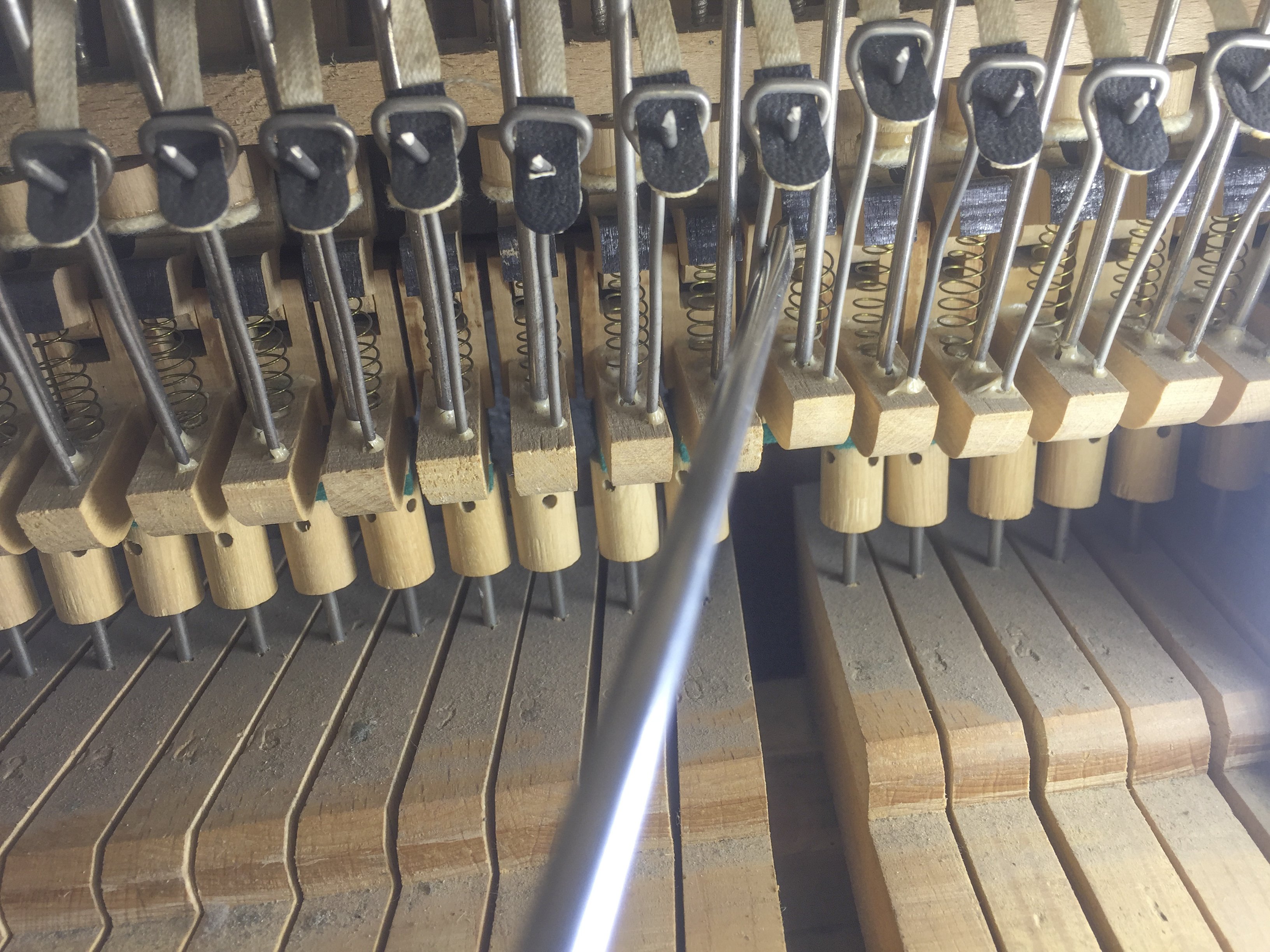
I fear you are right......by pushing the escapement with the tip of a screwdriver, the key sounds. But immediately after, it no longer sounds. Could it be the spiral spring that supports the escapement or the walnut pin: what do you think?

IMG_6876.jpg

Moderator

Reply 7 by pianoexpert

Posts
3,876
City
rocca di papa

That little lever you are touching, precisely, is the escapement lever or escapement lever (but they don't want it to be called that, because everything must be standardized to European nomenclature)... so the "escapement lever" does not come up. The clip only serves for a little help, but it is the pin that is stuck. The phenomenon could be present on all the pins of the action, and it could make you feel a "hardness" in the entire keyboard... like a sensation of "muddled" movement. Extreme cases, then, "lock" the part itself, and this serves as an alarm bell if, by any chance, the pianist did not notice or had become accustomed to, resigned to, this malfunction. To use a metaphor, it is like driving a car with the handbrake on! The parts, called "forcole" (balance pins/joints), are the "articulations," the "joints" of the action. There are three: the pin of the escapement lever, precisely; the pin of the hammer balance pin, and the pin of the rail balance pin, which is disassembled from the back of the action. They must have a friction of 3 to 6 gr.. No more, no less. If more, as in this case, the part locks or results in being too "hard" to move. If less, the part might "wobble," be too loose and create a sensation of too much "slowness" with excessive vibration at the moment of hammer impact. The right amount keeps the balance pins firmly in place, while offering the correct friction. Along with these potential excessive frictions, one must also check the central and front key bushings that could create other impediments during the descent and ascent of the key. Eliminating the excessive friction throughout the entire action gives a "new life" to the instrument.

These problems can be caused by excessive environmental humidity (even in the warehouse of the new piano dealer!) and/or by poor seasoning of the action woods or, also, by poor quality of the cashmere bushings that house the movement of the pins.

Regards

Paolo

P.S. So, do not touch the clip!

Member

Reply 8 by adolfo

Posts
6
City
Fiumicino

Perfect: today I completely disassembled the action from the case, removed a lot of dust from the inside, checked the keyboard felts, and the problem seems to be exactly the escapement upright pin, which does not allow the upright itself to rotate freely. I realize, based on what you said in previous replies, that I have neither the tools nor the skills to perform the repair.

The piano, on the other hand, has been in my house for about twenty years, and always in the same position, so the cause should not be poor seasoning or poor exposure (for years, fortunately, I haven't turned on the heating in the house, and I don't even have air conditioning). I think the main cause is not using it for over 10 years, so when this mess is over, I will turn to a tuner. Obviously, in the meantime, I reassembled everything, and IT STILL WORKS!?

?

Patience personified, thanks again!

AttachmentAttachment
Log in to participate