

Does anyone know if it is possible with Finale to arm a key signature in an unconventional way,
for example with Bb Eb and F#?
Thanks everyone.

Started by
Member
Member
Does anyone know if it is possible with Finale to arm a key signature in an unconventional way,
for example with Bb Eb and F#?
Thanks everyone.

Member
I've never tried it and I'll try it right away... but I doubt it makes sense (except in a few decades of a certain historical period). Key signature works if there are references to the key... in your example, there are none. From the performer's point of view, regarding what they actually read in the score to which it would be intended, it is preferable to have no alterations in the key signature and eventually use alterations where needed.
This obviously doesn't prevent me from trying technically to understand if it is possible to achieve this thing with a cadence
Member
In the first 3/8 measure, insert a Bb, an Eb, and an F# as eighth notes; you will hide the meter indication and the barline, and you will modify the stems and noteheads to make them transparent.
At this point, you will have the 3 accidentals in the clef, but then you will never mark them in the score
Member
My method is much simpler: no key alterations and then you manage them with the expression menu
Member
It cannot be done, Finale reflects the tonal model ...so it's just editorial tricks. See expression menu. If you also needed playback, unfortunately you will have to have 2 scores, one for printing and one with all the little things in place for playback. I'm sorry.
Member
DiesIrae wrote:I've never tried it and I'll try it right away... but I doubt it makes sense (except in a few decades of a certain historical period). Key signature accidentals work if there are references to the key... in your example, there aren't any. From the performer's point of view, since they are the ones reading the score to which it would be intended, it is preferable to have no alterations in the key signature and eventually the alteration where needed.
This obviously doesn't stop me from technically trying to understand if it is possible to achieve this with a key signature
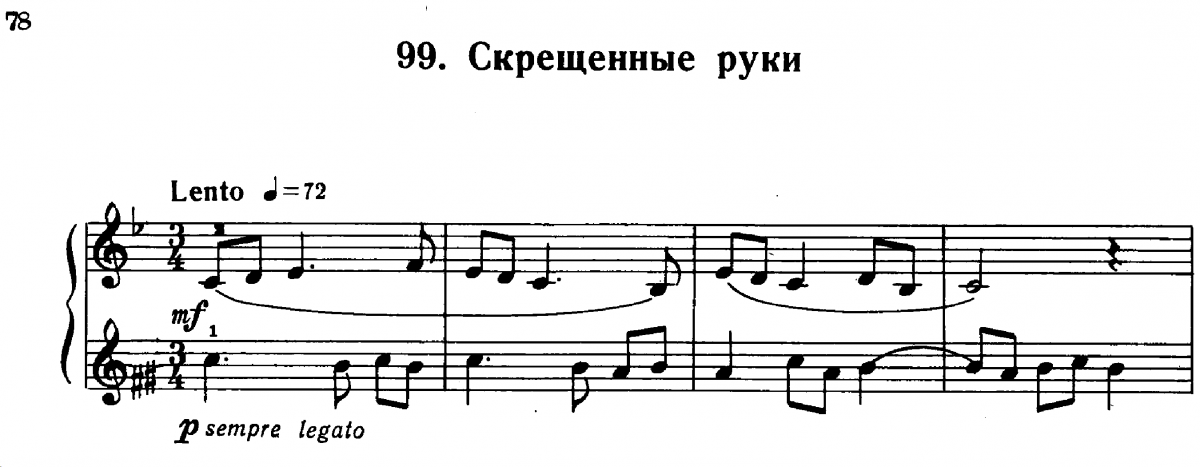
Thank you first of all. For me, it's not so much a technical issue of the key signature, but I would still need to be able to do it with this notation software. From the performer's point of view, I also agree with what you say. From the perspective of the writer, it can be useful. I am attaching, for example, the beginning of a piece by Bartók, which is truly unique.
Member
It falls into the cases I was referring to, but there were also historical reasons at the time. Now ... ? ...
Anyway, the publishing industry meets you halfway.
Member
Trade1 wrote:In the first 3/8 measure, insert a Bb, an Eb, and an F# as eighth notes; you will hide the meter indication, the barline, and modify the stems and noteheads to make them transparent.
A this point, you will have the 3 accidentals in the key signature, but then you will never mark them in the score
it's not quite clear to me, but if I understand correctly, it only affects the print...
Bit wrote:My method is much simpler: no accidentals in the key signature and then you manage them with the expression menu
this one is even more obscure to me
Member
Bianca wrote:this one is even more obscure to me
He means that you write everything in C major and at the beginning of each line you insert the two expression signs, which you will prepare (b and #)....
Obviously, seeing but not hearing
Member
DiesIrae wrote:It cannot be done, Finale reflects the tonal model ...so it's just editorial tricks. See expression menu. If you also needed playback, unfortunately you will have to have 2 scores, one for printing and one with all the little things in place for playback. I'm sorry.
I understand, anyway it's a bit strange because Finale allows the creation of non-standard key signatures, although not yet fully understanding how that mask works I don't know how to manage them and anyway it seems to me that there isn't complete freedom in doing so....
thanks anyway
Member
Which mask? Maybe I'll research it better... I mean, I'll invest more time in it
Member
DiesIrae wrote:Which mask? Maybe I'll research it better... I mean, I'll invest more time in it
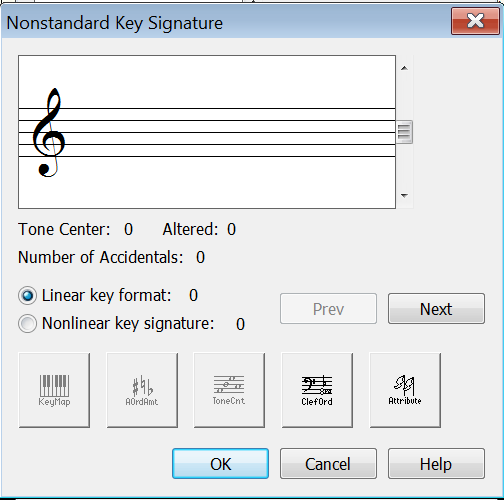
you get there when you set up the armor and choose the way

Moderator
It is managed via a map, by selecting Non-linear Tonality.
You set a keyboard to 12 semitones and the white squares are the accidentals... the problem is making them mixed # and b
But I am working on it
Member
Frank wrote:It is managed via map, by selecting Non-linear Tonality.
You set a keyboard to 12 semitones and the white squares are the accidentals... the problem is making them mixed # and b
But I am working on it
that's what I tried too, but it's precisely with the mixing that I got stuck... anyway, the documentation isn't very exhaustive and in my opinion they could have done it in a much simpler way.

Moderator
anyway, I tried it millennia ago, back during my bachelor's degree, because in a Britten work that I had to discuss in my thesis there was a very strange key signature. Obviously I don't remember it... but it was similar to the one mentioned by Bianca, and it corresponded to a "Morris Dance", an English folk dance
Moderator
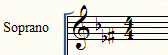
It can be done
Moderator
So: Non-linear Tonality
Map, configure the first three white keys and the others as black. If you look, you will see written at the top: Total Adv 12 and Diatonic Adv 3
Ord Alt, if the amount is -1 the alteration becomes a flat, for pitch you play with the distance from the tonic... Unit would be the number of the alteration... having exactly 3 to choose from, first you configure the first one, then via success. the second and then the third.
In your specific case:
- Unit1, Dist from tonic 3, Amount -1 (b )
- Unit2, Dist from tonic -1, Amount -1 (b )
- Unit3, Dist from tonic 0, Amount 1 (#)
You saw the result in the image... if you need...
Member
I should have looked closer, I apologize to Bianca. Thanks Frank
Member
Thank you so much Frank! and also to all the others who went to such great lengths.
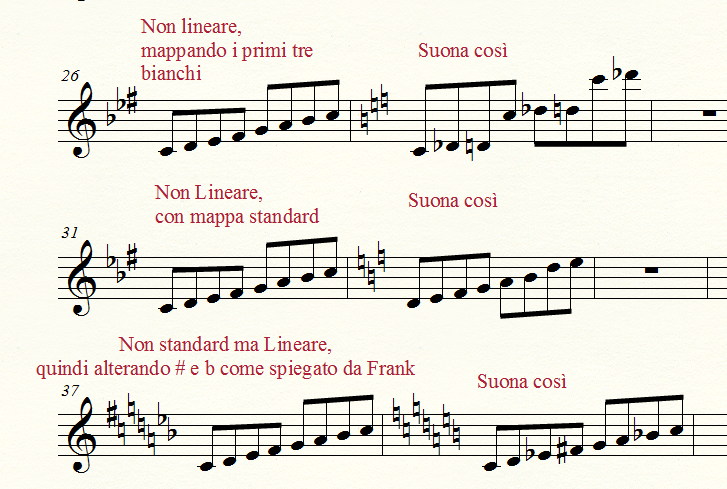
Dunque here are the results in the attached image. I hope it is legible.
I did a few tests: on the left is the method used and on the right how it actually sounds.
My initial interest was being able to write with a scale like the "Gypsy" one.
Thank you truly Frank!
Member
thallo wrote:anyway, I tried it millennia ago, back during my bachelor's degree, because in a Britten work that I had to discuss in my thesis there was a very strange key signature. Obviously I don't remember it... but it was similar to the one mentioned by Bianca, and it corresponded to a "Morris Dance", an English folk dance
indeed they are scales like those used in the music of many folk traditions, for example also among Ashkenazi Jews...