Technical problems and their resolution

Unresponsive keys

11 replies 3,891 views

Started by

Liorfolg

Member

Member

Opening post by Liorfolg

Posts
7
City
Lucca

Hello everyone!

I would like to ask for your help regarding the maintenance/calibration of an upright piano. In fact, when I press the keys, I notice that I have to press them very hard to produce notes, especially the lower ones; furthermore, the keys return to their initial position very slowly.

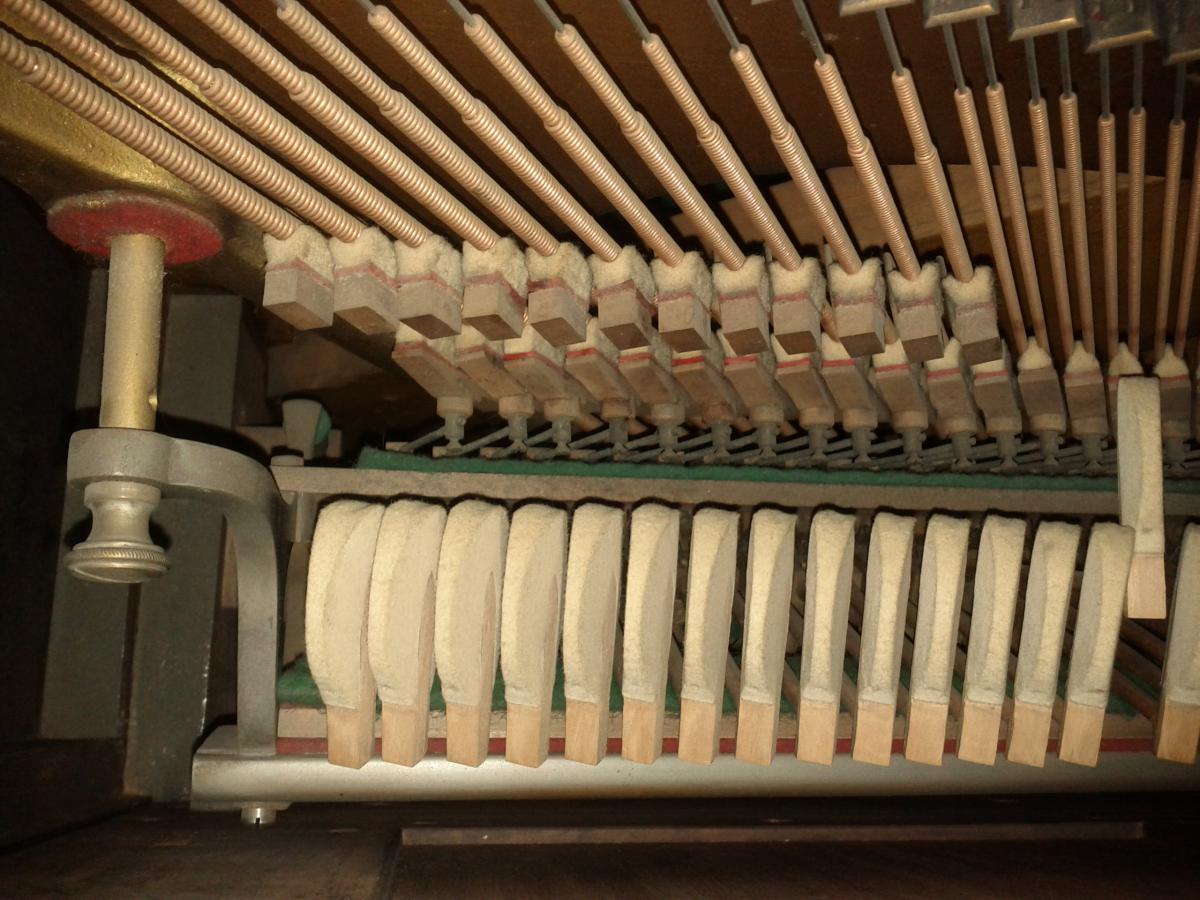
Someone told me that the piano in question has a particular hammer system, so I would like to be sure to follow the appropriate instructions; could you indicate the procedure to fix these problems? With a little attention, can I do it personally, even if I am not an expert?

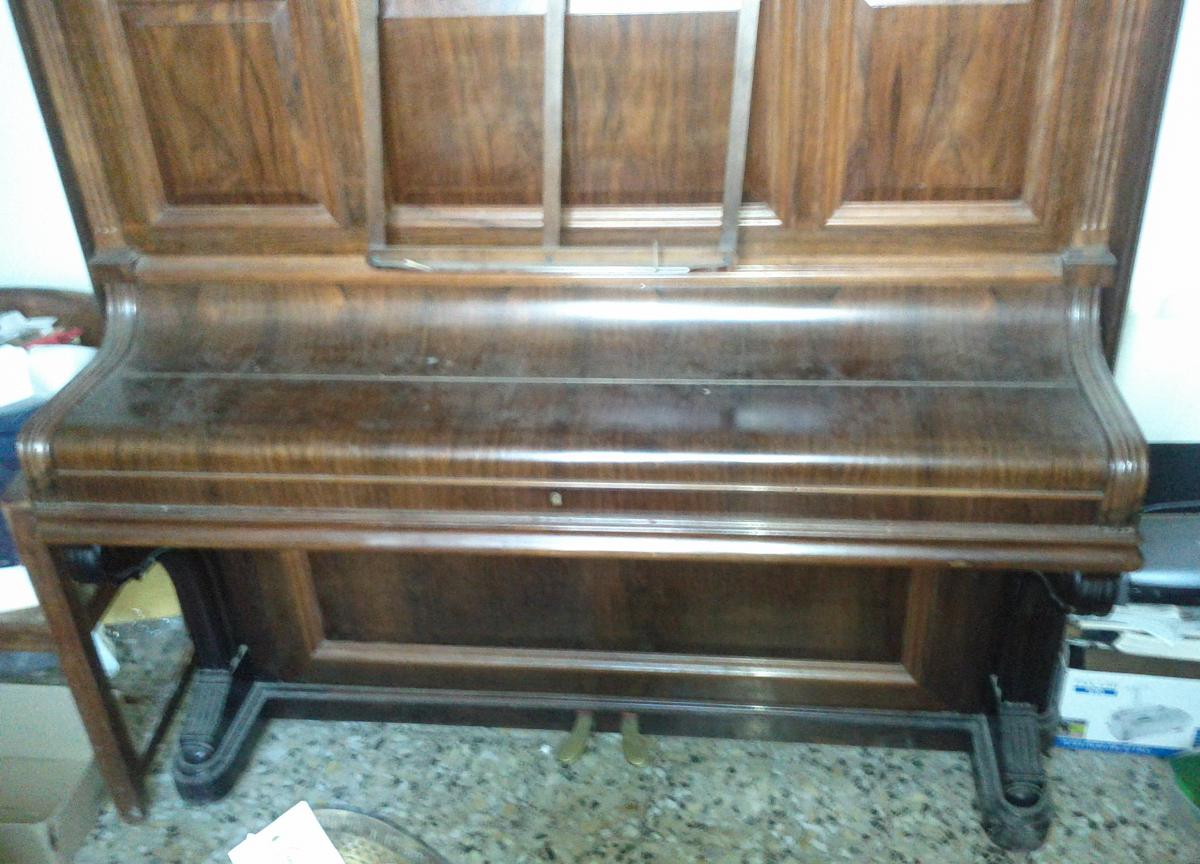
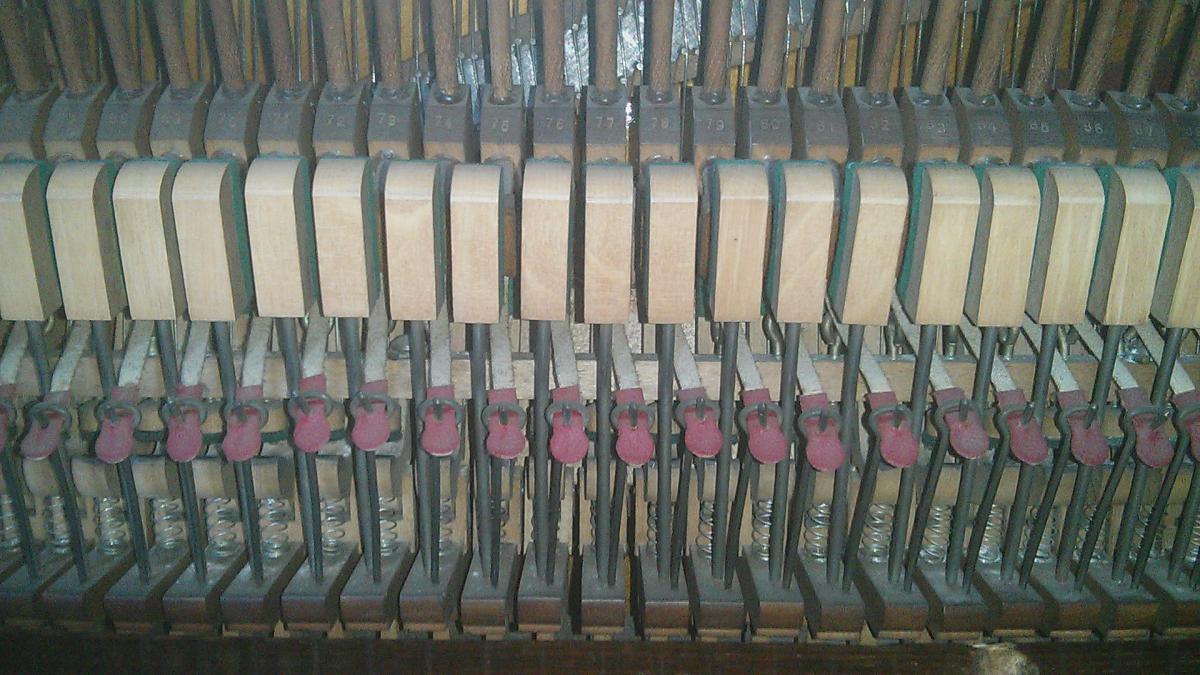
I have attached some photos of the hammers and the piano (which has the name Herard Paris on it); if others are needed, I will provide them!
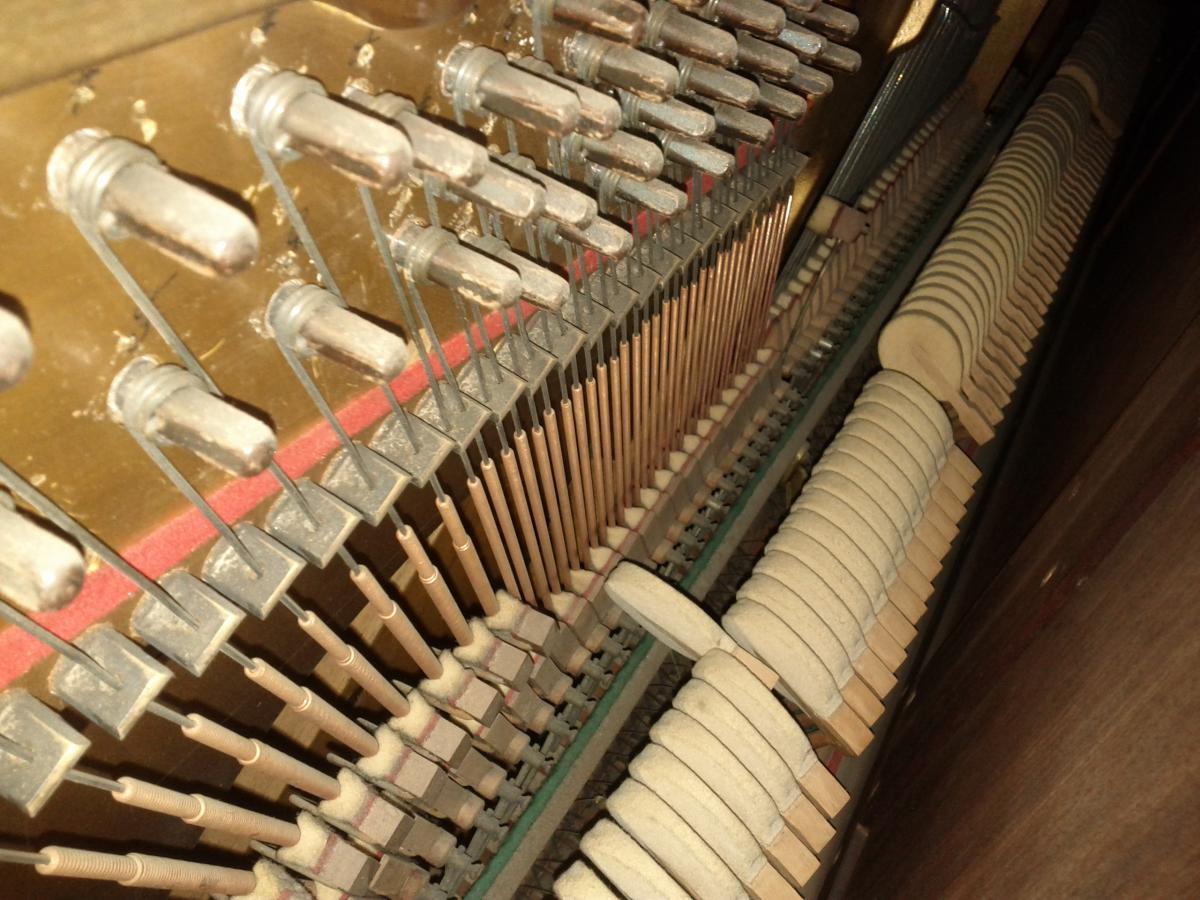
AttachmentAttachmentAttachment

Moderator

Reply 2 by pianoexpert

Posts
3,876
City
rocca di papa

Unfortunately, you cannot intervene personally. I believe that, given the age of the instrument, the efficiency of the action should be checked by a technician. You need to see what expense you might face and whether it is worth undertaking a restoration. The hardness of the keys can, in particular, depend on the action pins which have become "lazy" due to age and/or humidity absorbed by the hole bushings. However, many checks must be made regarding the tuning and the smoothness of the keyboard, the condition of the soundboard, and the mobility of the tuning pins around which the strings are wound. The hammer felt has also hardened over time, as have many other felt or leather bushings in the action.

Member

Reply 3 by Liorfolg

Posts
7
City
Lucca

At this point, I am actually evaluating whether to have it restored to make it usable; I only wonder: would it be possible to replace the hammer system along with the related hooks, pins, and so on, with new parts? Are these parts commercially available? And could the strings, in some cases, require replacement, or would tuning them suffice?

Sincerely, I like DIY, just as I like repairing objects, and if it were a purely mechanical job, I think I would be able to replace the action (perhaps by finding the parts at a good price), and then I would entrust an expert with the task of calibrating the action in terms of sound and performance.

Is it a totally unfeasible task?

Curiosity: is there anything special about the action of this piano, or is it simply outdated?

Thank you!

Member

Reply 4 by Liorfolg

Posts
7
City
Lucca

Updating the situation: I have further inspected the mechanism and seen that the hammers respond promptly to key pressure; however, during the "return" phase, the movement is too slow.

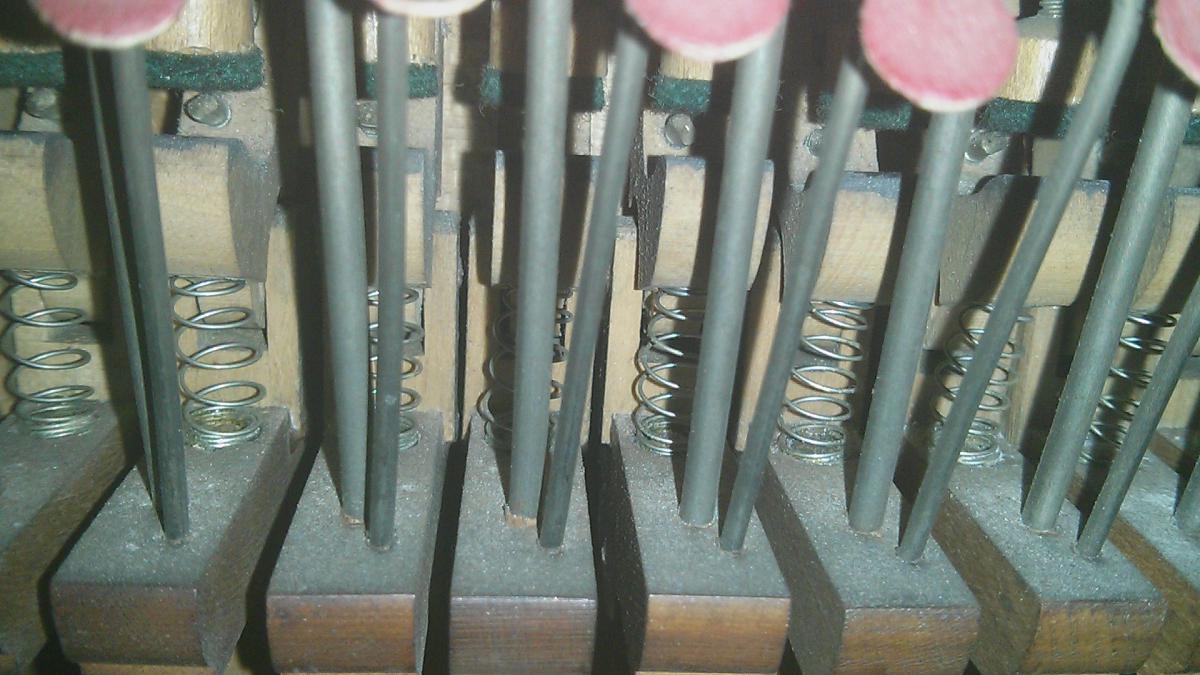
I observed that when the keys are pressed, the levers are correctly pushed against the springs, which compress and go on to push the hammers. Subsequently, once the key is released, the spring expands and returns the lever (and the key) to its original position.

At first glance, I was unable to find any kind of friction; in fact, the hammers are well-spaced and the levers respond promptly to the extension of the springs.

What I think is therefore that it is the springs that are not very reactive, extending in a "non-explosive" manner, and not pushing the levers back fast enough during the return phase.

If this were the case, and the springs were worn out, how can one proceed to make them more reactive? Can they be manipulated or must they be replaced?

I have attached a couple of photos

AttachmentAttachment

Moderator

Reply 5 by pianoexpert

Posts
3,876
City
rocca di papa

It is all to be seen.

Dear friends (this consideration of mine applies to many who write on this Forum),

Intervening on a piano is a matter for experts. All the more so if it is vintage. This site and this forum were created to better understand and analyze the problems of our instrument, so as to then entrust them into the hands of an expert technician and not just... a convincing one. Another thing is acquiring the deep competence that avoids irreversible errors or bad results with the consequent waste of money. This job is one of the least suitable for attempting "do it yourself" .....even if supplies, with beautiful and colorful catalogs, seem to show many things "ready and easy". My video tutorials are useful but far from exhaustive for being able to start intervening on your own. Behind every consideration regarding intervention, there are numerous reasons that could discourage anyone from improvising. The piano and the success of its "preparation" benefit from countless small interdependent interventions, such that a lightness or an error in one of these creates a rather "hidden" obstacle that compromises the rest of the work. In short, one must be extremely careful with the entire dynamics of the mechanics and succeed in determining the priority of such interventions. Even apparently identical materials might not prove suitable and could compromise the final result. And what can be said about friction, measurements, adjustments, manufacturer specifications, etc... in short, if possible, choose an expert.... This is something one can learn to do by knowing more about the nature and reasons for the interventions necessary for one's own instrument. If you arrive well-prepared, you can more easily follow the path suggested by the Technician and..... eventually be able to present a counter-argument. It is, however, a good thing to demand that all interventions be detailed and even to request a report with photographic documentation. In fact, many of them cannot be verified once the instrument is assembled. The specification of materials and glues used, as well as the return of replaced parts, tend to preserve the identity of the instrument, creating added value

Member

Reply 6 by Liorfolg

Posts
7
City
Lucca

I understand that your advice is dictated by experience and common sense, and I certainly do not ignore it.

However, my own experience has taught me not to take actions for which I could not remedy, and to be cautious; therefore, I rarely move without first having observed and understood what I am doing.

This is the reason why I have not performed an in-depth job, but rather limited myself to unscrewing a couple of screws, without disturbing mechanisms that are too complex for me.

I will add that, if I had not approached the solution (or so I believe) after this little work, I would have called a technician.

Returning to the problem, I think the cause is mainly the lack of mobility in the joints at the end of the arms.

I made a short video showing the problem; excuse me if it is horizontal and if I gave things made-up names:

The problem now is making the joint at the end of the arm fluid, as it moves with difficulty, probably due to accumulated dust.

I tried to remove the pin (it is not a screw) to be able to clean the inside, applying light force with a needle, but it did not slide out.

I think the alternatives are trying to remove the pin or lubricating the joint (but I saw that you advise against using lubricant).

What do you think (or what do you all think, if anyone wants to add something)?

Member

Reply 7 by Liorfolg

Posts
7
City
Lucca

Correction: as has already been said, it is indeed a humidity/mold problem (and not dust), which has slowed down the sliding; in the last frames of the video, among other things, green color can be seen near the pin.

What can be done? Is there any specific product or is it necessary to disassemble the joints?

Moderator

Reply 8 by pianoexpert

Posts
3,876
City
rocca di papa

In fact, you have determined the cause of the problem: excessive friction of the fork pins. Now they must be replaced and this, if you are not very experienced, I advise you not to do. Furthermore, a specific extractor and a specific reamer are required, as well as quite a bit of experience. Anyway, you were very sharp in arriving at the solution. Lubricants: NOTHING. The cloth housing the pin would make things worse. There is nothing left to do but replace the pins.

Member

Reply 9 by Liorfolg

Posts
7
City
Lucca

I understand. At this point, I have to hope that no other parts are replaced, given that the mold has also grown elsewhere, such as in the joints where the keys interlock.

I will not venture into such a delicate operation and will entrust the task to a professional; I only wonder: could there be problems finding spare parts, or are they usually "standard" parts (or if not exactly standard, at least obtainable) even for old pianos?

thanks!

Moderator

Reply 10 by pianoexpert

Posts
3,876
City
rocca di papa

Before thinking about replacements, one should attempt to restore the efficiency of the forcole. Check the cashmere seals and the holes. Then, one must proceed with the replacement of the pins, working with calibrated straight reamers and trying to understand well how the new pin should be received by the seals (which might also be a bit hardened). Many overall and interdependent evaluations must be made

Member

Reply 11 by elZinamusica

Posts
10

You could try treating the pins with a fluid called Protek. But seeing the video, it seems quite serious to me, so perhaps it is better to have them replaced.

Moderator

Reply 12 by pianoexpert

Posts
3,876
City
rocca di papa

I am personally opposed to Protek. The problem is not resolved and could even worsen. Even heating the pins... I am against it. Heat does nothing but momentarily expand the pin, which in turn enlarges the hole in the wood. Exactly what must not happen. Let us remember that the pin must have the right smoothness in the cashmere-lined holes and maximum stability in the wood!!!! The new pins must be oversized by at least one size, therefore taking care to slightly and not excessively ream the gaskets. Reaming is correct when you can slide the pin into the fork by hand, even if with slight difficulty.

Log in to participate