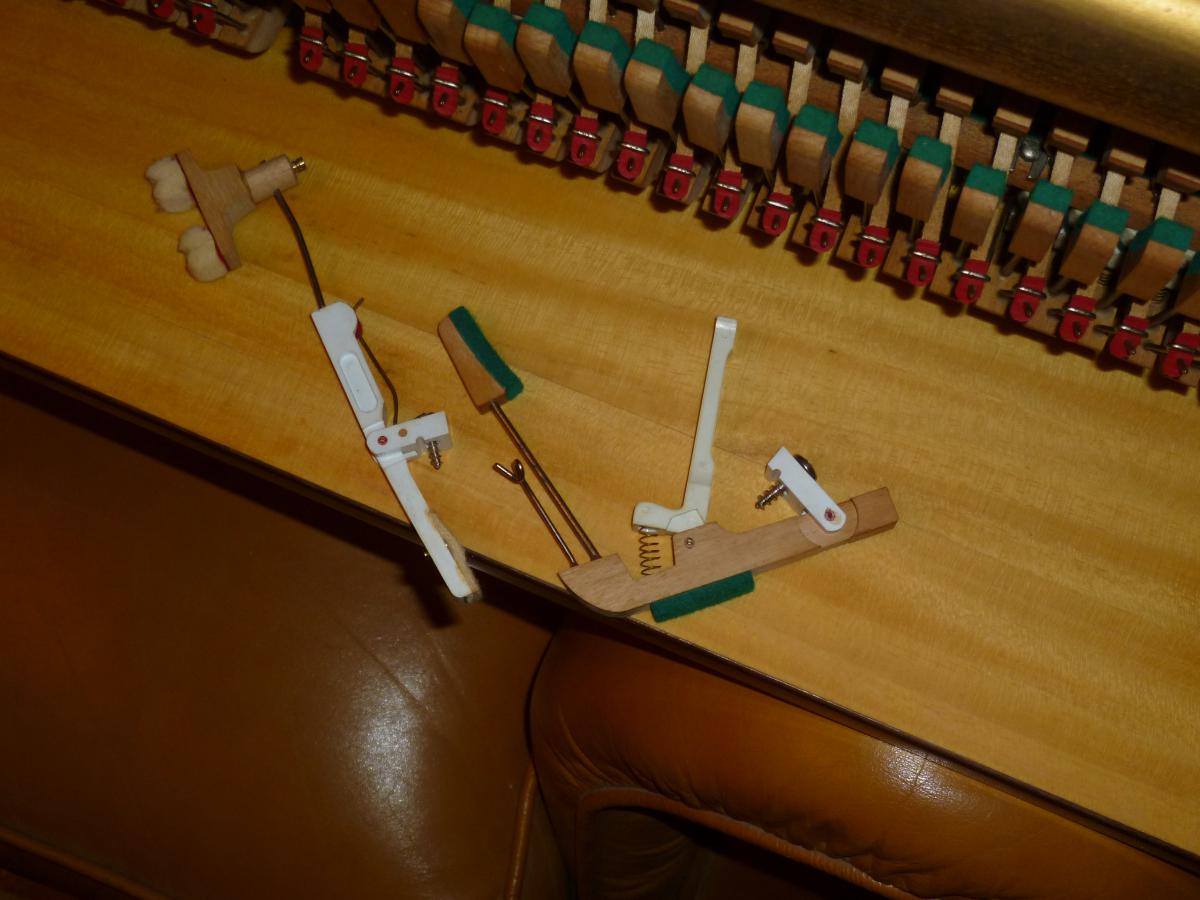
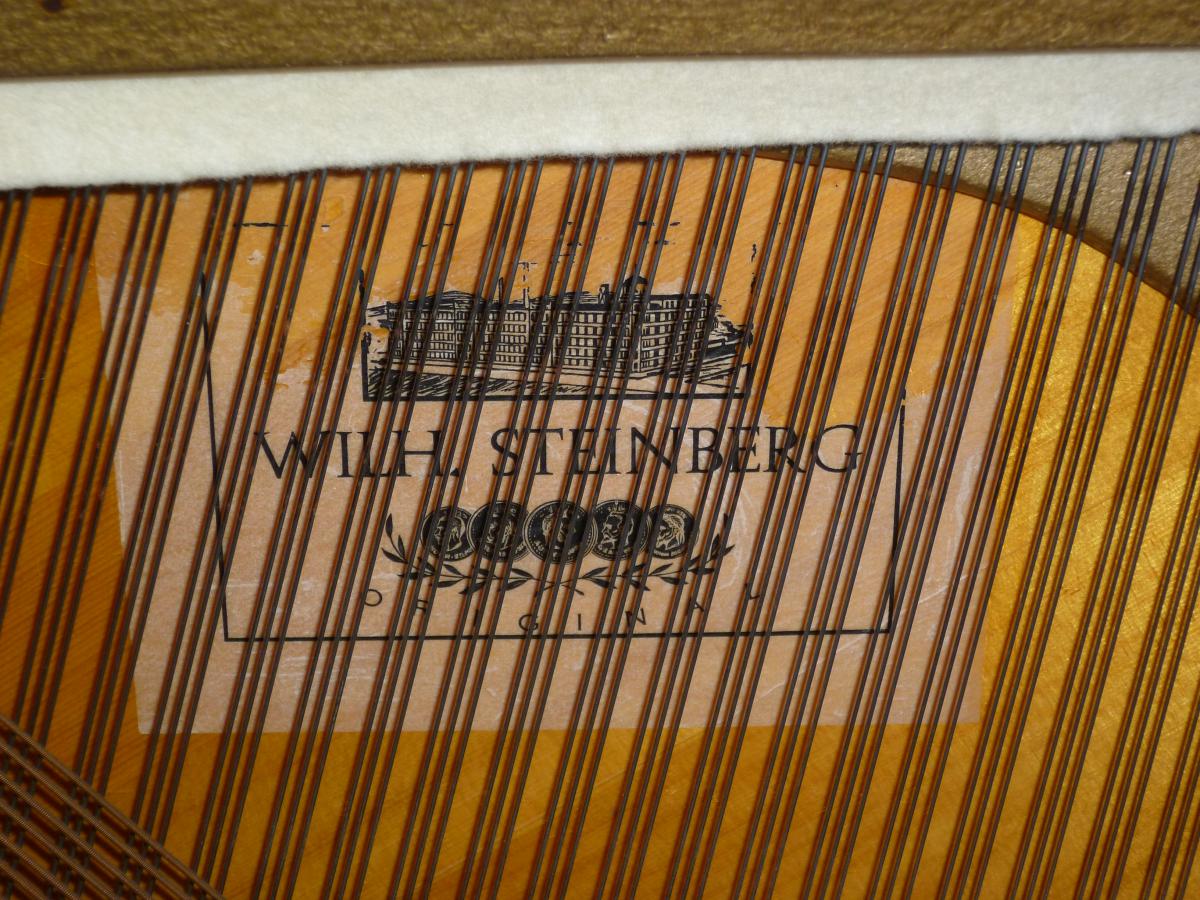
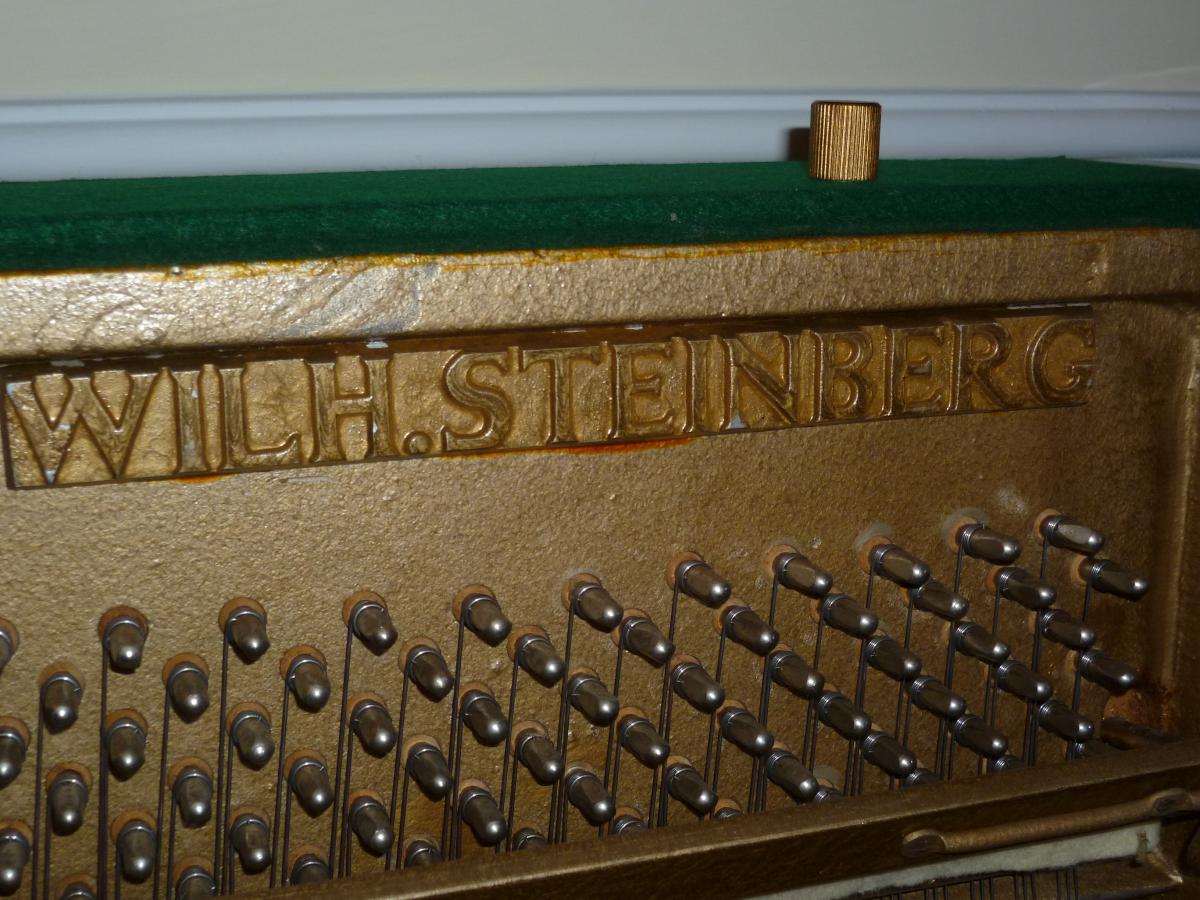
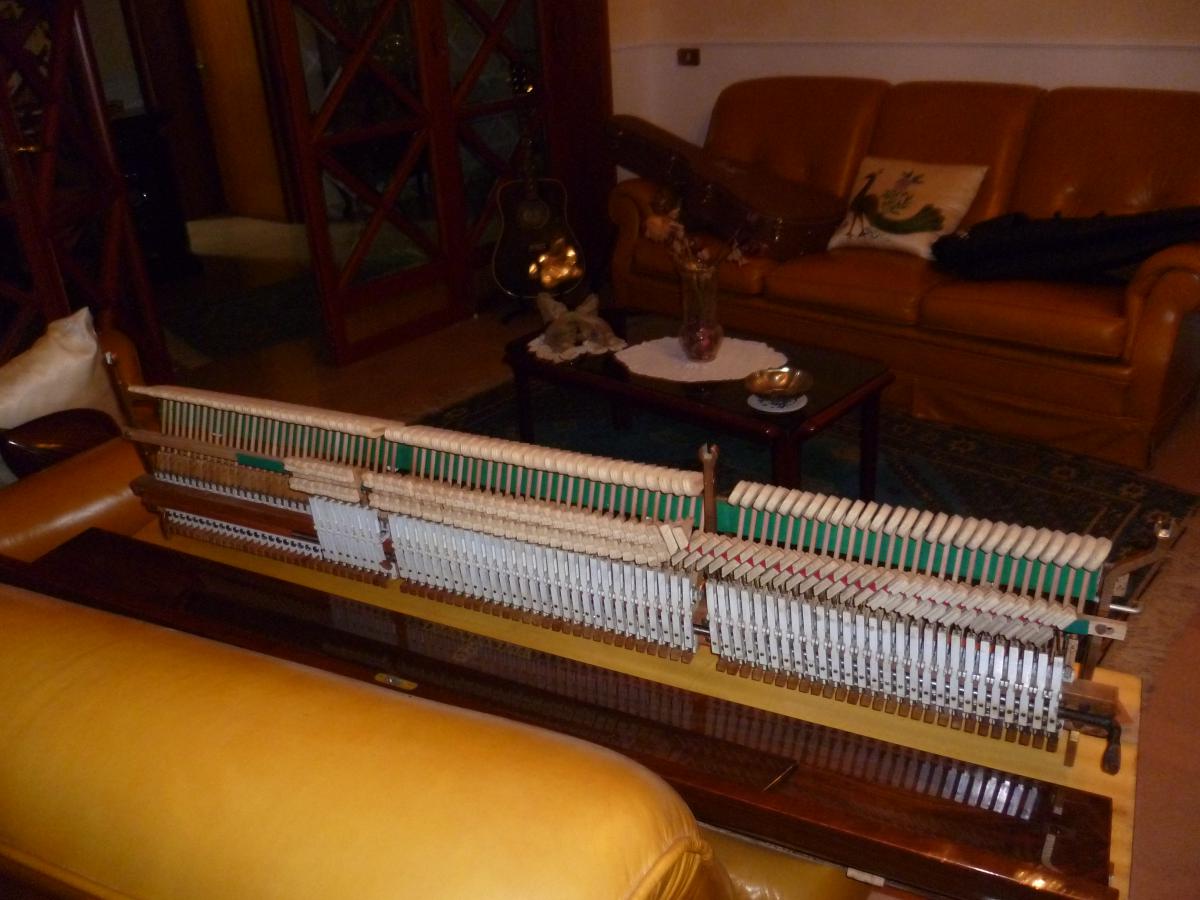
Dear forum users, I would like some advice from someone. About 47 years ago my father bought a Wilh.Steinberg piano with the number 71765; the problem is that the piano's action is mixed, yet the piano cost 1,200,000 lire, a significant sum 47 years ago. By mixed, I mean it consists of wooden parts and other plastic parts. I found a website online where all the spare parts are available; what do you advise me to do: replace the plastic parts or let it be? I am attaching some photos.
Certain of your feedback, I thank everyone in advance
I don't think it is necessary to replace the plastic parts. Especially regarding the dampers, it is a difficult intervention and they are hard to find identical. This could also apply to the escapement uprights and the jack rails. The instrument was born this way. You can consult an expert technician in your area who could consider the work. However, it remains to be seen if the aforementioned parts are causing operational problems. Not so much the dampers, but the rails and uprights could be sluggish or stuck. Their replacement must be carried out with identical wooden parts, choosing the correct pin diameter and using a special extractor and cylindrical reamers.
Hi Uccio, it seems to me that Paolo's response has already exhausted the possible arguments. It is not so unusual to find actions built with different materials. Kawai still builds actions in wood and plastic or carbon today; for example, the escapement levers of my piano are made of carbon. Is wood better? Probably yes, if only for a matter of material longevity in relation to absorption and failure due to humidity, which does not happen with carbon and plastic. Replacing them with wooden parts, as Paolo has already said, is not something for home DIY. Honestly, once the action has been regulated and the components that must fall within a certain tolerance have been measured, if the piano keyboard runs smoothly, I don't see why you should replace them with wooden ones. I am of the opinion that one should only tinker with something when it causes dissatisfaction. If your car weren't giving you problems and wasn't letting the water boil, would you go and change the water pump for a larger one? I don't see the reason!
If your action is causing you discomfort, then it is worth investigating, but even in this case, it is likely that the cause of your dissatisfaction is not the plastic parts, but rather incorrect regulation or a friction coefficient that is too high and needs to be corrected.
It is certainly a PIANIC mechanism popular during the time of communist Germany; for example, I found it mounted on my Hoffmann & Kuhne upright from DRESDEN!