Technical problems and their resolution

whippen/bluthner trestle positioning

3 replies 1,760 views

Started by

Davide80

Member

Member

Opening post by Davide80

Posts
13
City
bologna

good morning everyone

i would like to ask you all for an opinion, i have a 3/4 grand Blüthner from 1910, one of the first with a "quasi" modern roller action produced by Blüthner.

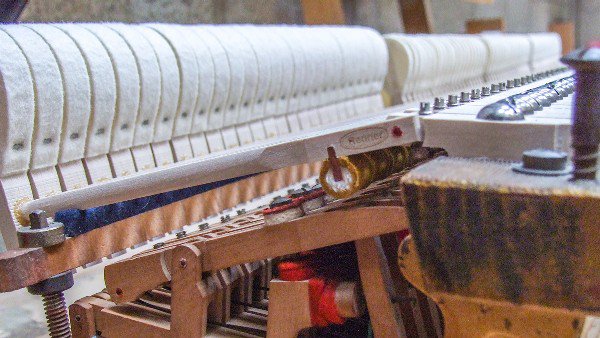
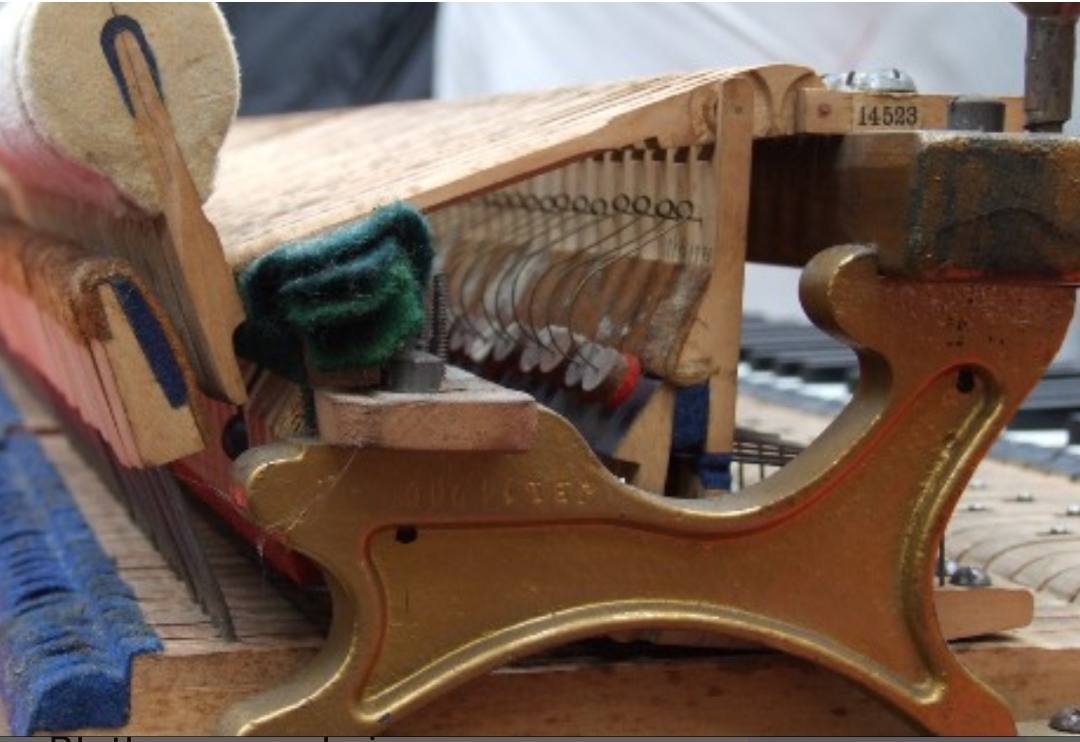
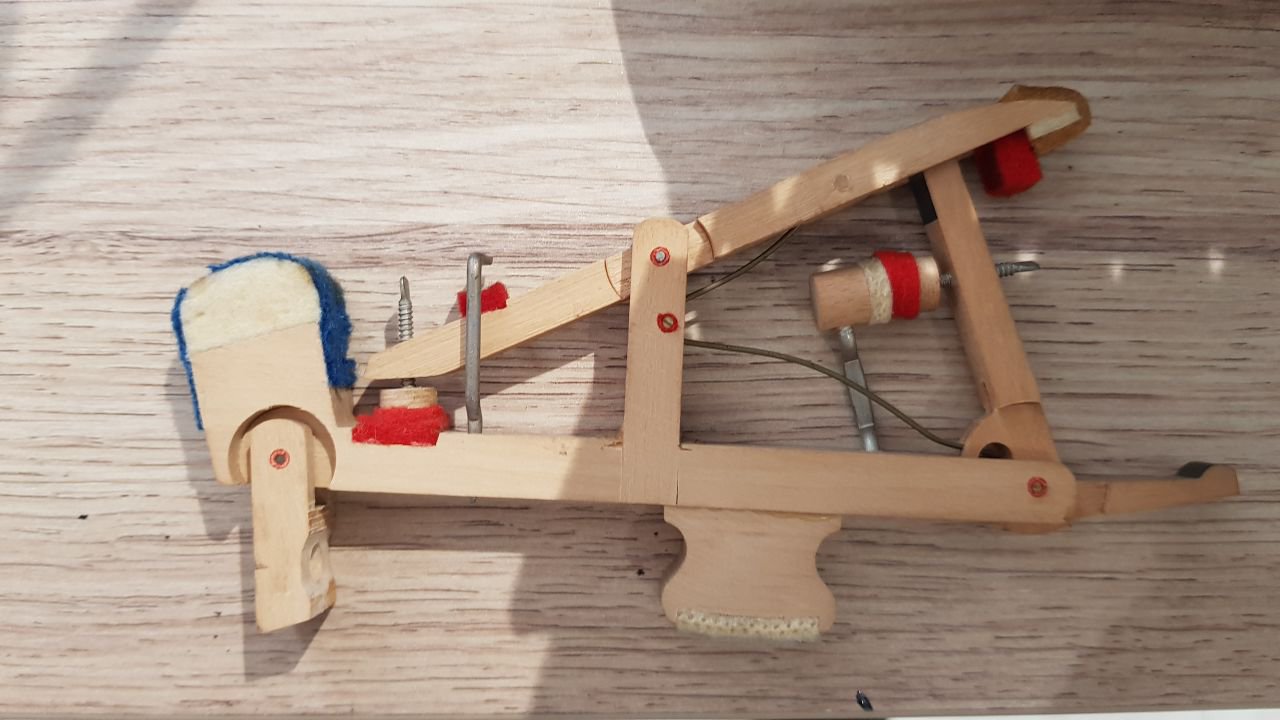
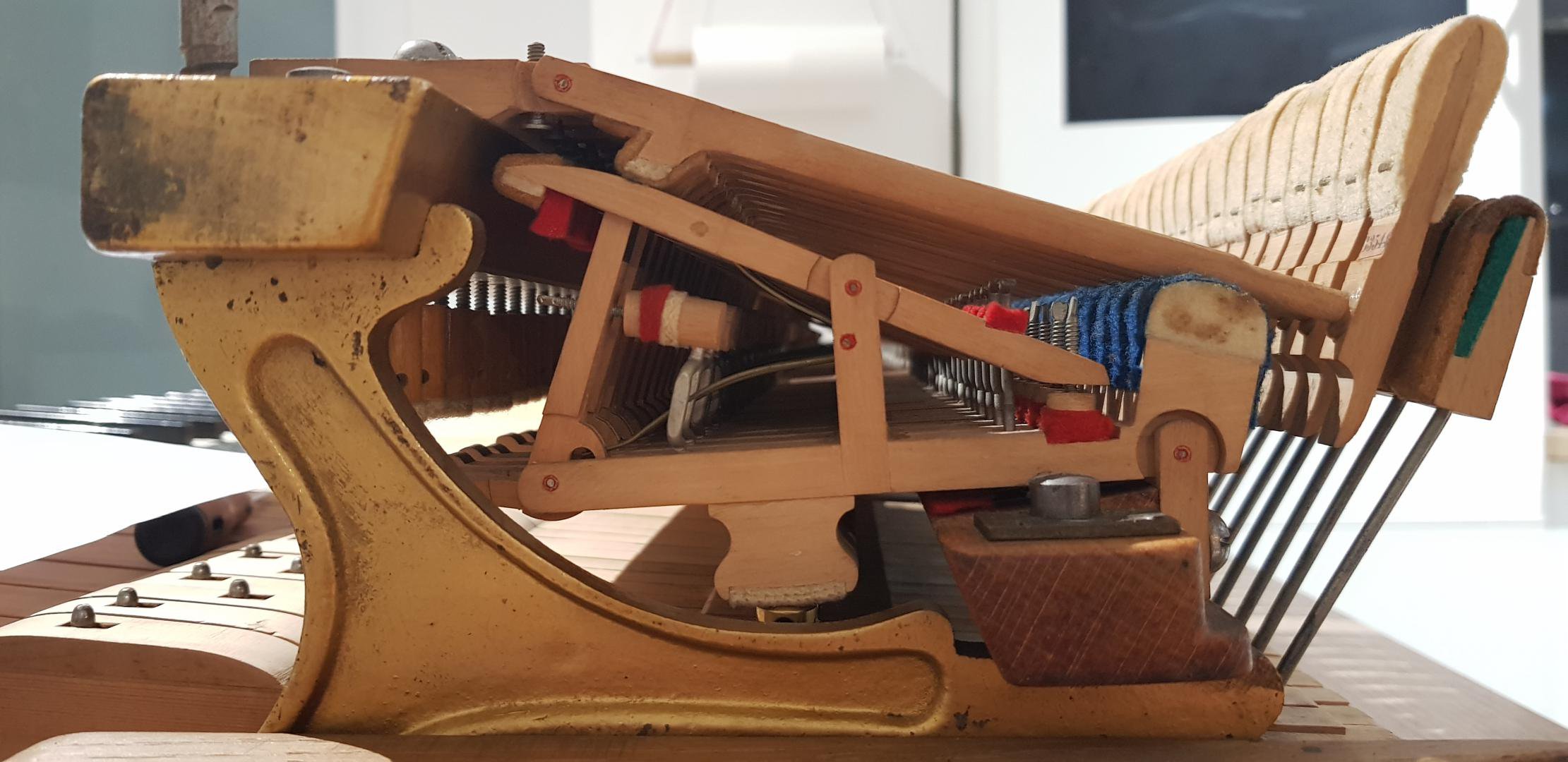
Once the action was removed, the situation facing me is what I am attaching. The repetitions (cavalletti) are almost identical to those of a Steinway without spring adjustment.

Everything seems completely original; at least from what I can see, everything appears to be contemporary.

The distance between the flange center and the pusher is about 98mm.

I don't have any (older) comparable examples, but I have always seen the repetitions almost if not entirely horizontal with the key at rest; could you help me understand why the repetition is tilted downwards?

If I raise the capstan, the hammer rises too much from its seat by 1.5 / 2 cm.

Is there something wrong with this action or are they just made this way? I am checking some manuals, I have 3, but they tell me almost nothing about an action made like this.

Changing the hammer shanks and hammers, obviously today they are all manufactured with classic rollers; for now, I am taking all the measurements to understand what compatibility there might be with modern parts, weights, etc.

i need to check carefully at which point the hammer strikes the string; on the lower part it seems slightly shifted behind the hammer, as if it were not striking on the top.

It could very well be that they are just worn out and therefore strike at the wrong point.

i know Paolo has had experience with vintage Blüthners, I beg your pardon if I am talking nonsense...

thanks to all
mini_20200302_001816 (1).jpg

Moderator

Reply 2 by pianoexpert

Posts
3,876
City
rocca di papa

No, you're not talking nonsense. This is a very particular model and it is difficult to explain from a distance. I believe that originally it was supposed to be without this type of lever. That is, with single escapement... called "pin escapement". One would need to reconstruct the geometry of the action with round roller pins to see how the mechanism reacts. The hammer rail is also unusable and should be replaced. Naturally, without dismantling the old one, that is, by returning the original pins and hammers!!!!!! This is important. The new one would be mounted on new pins... assuming the geometry allows it.

P.S. the hammer pin, with a lever of this type, must not rest on the rest felt.

Member

Reply 3 by Davide80

Posts
13
City
bologna

Thank you Paolo

I have carefully examined the keys; I cannot find any signs of the old pins that the Blüthner patent had, and even the mechanical supports are completely different. The conversion was always a mess; I think even the key levers were shorter than the current ones. Blüthner itself told me that the keyboard is often replaced and sometimes the keyboard plane is lowered because the old action was lower in height and the inside of the instrument needs to be planed. Then, obviously, someone did some horrendous work and the result is unmanageable. The English and Germans have many more Blüthners than us, and all the info I found comes from them and their work. I also struggle to find anyone who understands them, unfortunately.

I haven't found the measurements for modern production components. Does anyone have them? To evaluate the distances, I would need to purchase one piece of everything and try which one works best.

The capstan is the same as those used on Steinway, but the flange is different; it doesn't have the classic Steinway profile, but who knows, it was one of the first models released. I read that on 230cm and 270cm pianos, the first modern actions were installed as early as the 1910s, which is probably why it features all this.

I am attaching 2 more photos.

The sort of sketch of a roller protrudes by 10mm, which gives hope for a replacement with an equivalent roller.

How do I weigh a hammer that is certainly worn out? It has probably also been shaved down during its decades of life.

The keyboard bushings are made of leather instead of felt, very durable but not infinite...

Thank you very much

For comparison, one is the Blüthner patent, the other is the roller type with new rods and hammers. They are not mine, it's just to understand the difference.

The capstan is mine, however.

roller_action_01.jpgScreenshot_20200303-143127_Google_compress23.jpg20200303_144638_compress19.jpg

Moderator

Reply 4 by pianoexpert

Posts
3,876
City
rocca di papa

Blüthner has had many changes in philosophy throughout its history. Many modifications have been made over time, also conditioned by the previous period of the GDR's closure compared to the rest of Germany. In any case, what matters is reconstructing the correct geometry of the action. The leather on the bushings is a handicap! They certainly do not slide and should be replaced with cashmere. They could create a discontinuous impediment in the key descent and distort the entire smoothness of the keyboard.

Log in to participate