LucaCavaliere wrote:You have stolen the words right out of my mouth: that is exactly what I wanted to ask Carlos (leaving a bit of 'decanting' the discussion aside).
What could that "something else" (extramusical?) be that disadvantaged Op. 124 in terms of marketability?
Prompted by this further question, I went to check my discography (I mean the discs I own) because I knew I had a CD (Harnoncourt, Chamber Orchestra of Europe) dedicated exclusively to Beethoven's Overtures... I said to myself "imagine if it wasn't there!", but it isn't there either! It is a Teldec recording, released in 1996 and recorded live (except Coriolan) between 1993 and 1996. Eight overtures (Coriolan, Prometheus, The Ruins of Athens, Fidelio, Leonore I, II, III and, finally, Egmont). "What a disappointment!" I thought. Then, right next to it, another CD, DG, Abbado and Berlin Phil. "Beethoven: Bühnenmusik - Die Weihe des Hauses op. 124 | Leonore Prohaska WoO 96". How wonderful that recording, also live, I believe, from 1993/'94, but released in 1996, of the two incidental pieces, complete. Then I thought that "Grandpa Karajan" could not disappoint me. I have a CD with the Violin Concerto op. 61 (Christian Ferras, if you don't know this recording, run and listen to it!) and there are some of the overtures he recorded. I take out the CD and... "Zur Namensfeier op. 115 | König Stephan op. 117 | Die Weihe des Hauses op. 124", oh yeah! I knew I could count on "old Herby". Moreover, checking carefully, I see there is a DG double CD with eleven overtures, recorded between 1965 and 1969 - from which the three present together with the Violin Concerto are taken, obviously.
However, it is too little; returning to the discussion on Die Weihe des Hauses; I completely agree. But, "by instinct" as they say, the reason is easily identifiable and concerns that overture like other Beethoven masterpieces which, always, have been preferred in a "ranking" that has at the center of the top list the music we could define with the term "heroic", which even transcends the division into the three styles we have discussed here in recent days, privileging that aspect of Beethovenian poetics, never born and never finished, present in much music of all three periods. Therefore, here is how the "Pathétique" Sonata op. 13 has become more famous and decidedly more performed than the three Op. 10 Sonatas (extraordinary) and the two Op. 14 Sonatas (not to mention the two Op. 27 Sonatas, of which the "Moonlight" is known on a planetary level, while its companion op. 27 no. 1 - which I find decidedly better! - is reserved for an audience of "those in the know"). Thus, the Fourth Symphony has become "territory for a few", present in 90 percent of cases only in complete cycles, because it is sandwiched between the "Eroica" and the Fifth (not to mention the "Pastoral" and the Seventh!); the same fate, moreover, has befallen the Fourth Concerto, hidden by the imposing Third and the "Emperor".
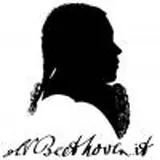
If you think about it, most of the works that have received a name (almost always imposed by the publisher and not chosen by Beethoven) are precisely those that reflect that musical heroism I was talking about and those that have always identified Beethoven, whose most famous portrait is the one in which he glares at the portraitist (as if Beethoven had lived inc*** his whole life, among other things...). I say "most" because op. 11, namely the splendid "Gassenhauer Trio", suffers the same fate as many other pieces, due to very cumbersome neighbors (in this case the already mentioned "Pathétique" op. 13, of the three Violin Sonatas op. 12 - which, being the first three they are, as the first three Piano Sonatas and the first Quartets, "fundamental" regardless - not to mention the two trios op. 70 no. 1 "Ghost Trio" and op. 97 "Archduke").
Now, not to say, but do you have in mind what comes before the Consecration? Beethoven's op. 123 is nothing less than the Missa Solemnis (and op. 125 is the Ninth, as they say - also with a nice name stuck on it, namely "Choral", just so she doesn't lack a posthumous baptism too).
Years ago, when I was a choir director, we prepared for a concert dedicated to Beethoven a magnificent short piece, for choir and orchestra, titled Mehresstille und glückliche fahrt (one of the many attempts by Beethoven to give choristers cold sweats, as they say elsewhere). The piece is truly beautiful and, in its brevity, is a concentrate of "Beethovenism". Does anyone know it? And, those who know it, how many times have they heard it in public or seen it in a record catalog? Very well, take a look at the number of opuses and, along with me, widen your eyes... It is
op. 112! and before that there are the three monuments, namely the three Sonatas opp. 109, 110, 111 and, after, Die Ruinen von Athen, op. 113.
Having said all this, in my opinion, a couple of "clichés" emerge that one always carries with them when talking about a composer and which, at least we musicians, should actually contribute to dismantling. One of these concerns almost all authors and refers to the fact that the final works are always and anyway the best (as if, moreover, the author knew they would be the final works). A similar sort exists for the early works, which, as a debut, are always to be considered, alternatively and depending on who is speaking, omens of future splendors, or fundamental for seeing how much the author himself later deviated from them.
Beethoven also suffers from another very serious burden, namely that he "is" (or was, if you prefer) the musician "with his fist on the table," the musician angry with the world, the musician who scratches... it would instead be enough to remember that he himself considered his Eighth Symphony his favorite to decisively revise these positions. And it would be enough to listen to the few fragments of his Tenth (of which, moreover, there exists a "completed" version that, although it cannot be considered "Beethovenian," is illuminating regarding the direction B. would later have taken), to understand how, yes, the Ninth is to be considered an enormous leap forward, a decidedly innovative piece, but that, probably, for Beethoven was nothing more and nothing less than an experiment (of which even he must not have been very convinced, judging by how he had started the very next symphony).
After a couple of hours of writing, thinking, rethinking, and rewriting, I realize that the answer to Luca's question has remained hidden between the lines. I reread (again!) and apologize: it must be sought out, but I guarantee it is there!
http://www.youtube.com/watch?v=Iwsc4FH2BhI