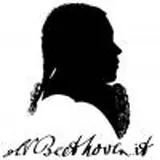
L. V. Beethoven

Die Weihe des Hauses Opus 124

53 replies 7,829 views

Started by

danielescarpetti

Member

Member

Reply 41 by danielescarpetti

Posts
1,032
City
Castel San Pietro Terme

Carlos, I'll preface this by saying that my intervention will be deliberately friendly and playful, just as I wish our relationship were; I hope you don't mind. We are among friends at a bar: you, Armando, Luca, anyone else who wants to participate, and of course me. We are all at various levels and with varying degrees of knowledge as Beethoven lovers but, as beautifully happens, we don't necessarily agree on everything. You said your piece, filling it with those that can quite easily be considered: personal tastes regarding Beethoven's works. Now I will do the same, conversing amiably with you and expressing what mine are, hoping to draw a smile from you. Shall we try?

But that is too little; returning to the discussion on Die Weihe des Hauses; I completely agree. But, "by instinct" as they say, the reason is easily identifiable and concerns that overture like other Beethoven masterpieces which, always, are preferred in a "ranking" that has at the center of its top list the music we might define with the term "heroic," which even transcends the division into the three styles we discussed here in recent days, privileging that aspect of Beethovenian poetics, never born and never finished, present in much music from all three periods. Therefore, the "Pathétique" Sonata op. 13 has become more famous and significantly more performed than the three Sonatas op. 10 (extraordinary) and the two Sonatas op. 14.

Carlos, I consider Beethoven's compositional work a bit like a "Rossinian crescendo" — forgive me this term, but I can never find a better one — where through highs and lows one arrives at final greatness. I know you disagree, but that is how I think.

Of the three sonatas of Opus 10, I consider only the third to be truly excellent, with that initial Presto which is very complex and visionary, and with that colossal Adagio that already foreshadows — damn it, I know you don't like this — that of Opus 106; what a marvel! As for the first, what can I say? It's not bad; but I still find it too close to Mozart's style, and personally, Mozart's piano sonatas, with the exception of K. 311, do not seem anything particularly exceptional to me. In the second, I hear C.P.E. Bach and also Haydn; this one isn't bad either but, yes... the third is decidedly superior and already vigorously Beethovenian, as I like it.

But Carlos... Opus 13, as I already said, is the first true great leap in quality in Beethoven's piano-sonata works; the one that up to that point in his career features for the first time a dramatic introduction in a slow tempo, the first whose movements are undoubtedly linked through the commitment of common thematic material and with conscious reminiscences. It is undoubtedly this one that opens the way to the "Sonata-fantasias," don't you think? No, right!

The two Sonatas of opus 14, yes, are undoubtedly delightful, but I continue to think that the Pathétique and Opus 10 no. 3 are something else.

(not to mention the two Sonatas op. 27, of which the "Moonlight" is known on a planetary level, while its companion op. 27 no. 1 — which I find decidedly better! — is reserved for an audience of "insiders").

Frankly, I wouldn't know which to choose between the two because they are two excellent Sonatas. Moreover, I find the melody of the Adagio con espressione from Opus 27 no. 1 so similar to the Largo of the Piano Concerto No. 3 in C minor, Opus 37, what do you say? That concerto was my favorite among the Beethovenian ones when I was a boy.

Thus, the Fourth Symphony has become "territory for a few," present in 90 percent of cases only in complete cycles, because it is sandwiched between the "Eroica" and the Fifth (not to mention the "Pastoral" and the Seventh!); the same fate, moreover, has befallen the Fourth Concerto, hidden by the imposing Third and the "Emperor."

The Fourth has been rightly revalued today, and for me, the beginning is wonderful: a slow movement full of ideas that break apart and without any connection: truly, genially brilliant!

I am not so convinced that the Fourth is a hidden concerto: in reality, it has always been my favorite, even if today I have also strongly revalued the Fifth: the Adagio un poco con moto is among Beethoven's most beautiful pages ever.

If you think about it, most of the works that have received a name (almost always imposed by the publisher and not chosen by Beethoven) are precisely those that reflect that musical heroism I was talking about and those that have always identified Beethoven, whose most famous portrait is the one in which he glares at the portraitist (as if Beethoven had lived inc*** his whole life, among other things...).

Ehhh well, after all, even this served to build the myth, didn't it?

I say "most of them" because op. 11, namely the splendid "Gassenhauer Trio," suffers the same fate as many other pieces, by virtue of

very cumbersome neighbors (in this case the already mentioned “Pathetique” op. 13, of the three Violin Sonatas op. 12 - which, being the first three, are, like the first three Piano Sonatas and the first Quartets, “fundamental” regardless - not to mention the two trios op. 70 no. 1 “Geistertrio” and op. 97 “Erzherzogstrio”, which we know familiarly as “Ghost Trio” and “Archduke”).

What do you say? You know, I have a very different opinion from yours on this, practically the opposite. First of all, a comparison with Mozart's “Trio for bowling pins” K. 498 is inevitable – even if there is a viola instead of a cello – which is clearly and superlatively better and, furthermore, when compared in its version for violin instead of clarinet, it seems to me a real big step backward compared to the one in C instead of Op. 1: the piano is clearly the master, while the other two instruments seem to me like two docile poodles kept on a leash.

Now, not to say, but do you have in mind what comes before the Consecration? Beethoven's op. 123 is nothing less than the Missa Solemnis (and op. 125 is the Ninth, as they say - also with a nice name stuck on it, namely “Choral”, just so she doesn't lack a posthumous baptism too).

Who knows, perhaps in this case too that is exactly why this overture is in the background!

Years ago, when I was a choir director, we prepared for a concert dedicated to Beethoven a magnificent short piece, for choir and orchestra, titled Mehresstille und glückliche fahrt (one of Beethoven's many attempts to make choristers break into a cold sweat, as they say elsewhere). The piece is truly beautiful and, in its brevity, is a concentrate of "Beethovenism". Does anyone know it? And, for those who do, how many times have you heard it in public or seen it in a record catalog? Very well, take a look at the opus number and, along with me, widen your eyes... It's op. 112! and before that there are the three monuments, namely the three Sonatas opp. 109, 110, 111 and, after, Die Ruinen von Athen, op. 113.

Eh yes but, Carlos, you know well that, especially in the final part of the catalog, the numerical order almost never corresponds to the chronological order of the works.

In reality Op. 112 - which is undoubtedly a "little" masterpiece of sonic painting (Beethoven would have beaten me for this statement, given what he wrote for the Pastoral) - dates back to 1815 and the last three Sonatas of the Bonn genius were conceived between 1820 and 1822; the incidental music “Die Ruinen von Athen” is from 1811 and thus predates Op. 112. But, if I must tell you the truth, they are among Beethoven's least happy pieces, especially if one considers that they are from 1811... my goodness!

Having said all this, in my opinion, a couple of "clichés" emerge that we always carry with us when talking about a composer and which, at least we musicians, should actually contribute to dismantling. One of these concerns almost all authors and refers to the fact that the last works are always and anyway the best (as if, moreover, the author knew they would be the last works). A similar sort exists for the first works, which, as a debut, are always to be considered, alternatively and depending on who is speaking, omens of future splendors, or fundamental to see how much the author himself has since deviated.

Carlos, the last works are anyway the last works because then the composer dies even if he doesn't know it. But even if he did know, it's certainly not because of this that he gives his best, but because he has reached a degree of maturity and experience superior to his youth. I don't know if I have explained myself in all this contortion.

If Beethoven had lived longer and had completed his projects, they would probably have been even greater and more important, and not because death was approaching, but because he had taken other steps forward on his path as a composer.

You can prefer whichever Sonata you want (think that Chopin, whom Beethoven did not like, said that his best sonata was Op. 26) but music criticism says precise things in this sense, however tastes are tastes and must be respected anyway.

Beethoven also suffers from another very heavy burden, namely that he "is" (or was, if you prefer) the musician "with the fist on the table", the musician angry with the world, the musician who scratches... it would instead suffice to remember that he himself considered his Eighth Symphony his favorite to decisively revise these positions. And it would suffice to listen to the few fragments of his Tenth (of which, by the way, there is a "completed" version that, although it cannot be considered "Beethovenian", is illuminating regarding the direction B. would have subsequently taken), to understand how, yes, the Ninth is to be considered a"

a huge leap forward, a decidedly innovative piece, but one that, probably, for Beethoven was nothing more and nothing less than an experiment (of which even he might not have been very convinced, judging by how he started the very next symphony).

In reality, what failed to convince Beethoven about that symphony was the final movement, and that is ultimately the one most contested today, even though it is the most popular, at least in its initial part.

After a couple of hours of writing, thinking, rethinking, and rewriting, I realize that the answer to Luca's question remained hidden between the lines. I reread (again!) and apologize: it must be sought out, but I guarantee it is there!

And what if the answer were that, besides being crushed between two giants, this overture can sound not so popular in its second part? That is to say, in the part that most closely recalls the late Beethovenian style: not popular, just as his late quartets and his last sonatas remain non-popular for a wide classical audience.

Now I'll say goodbye to everyone and go to sleep! Good night!
Member

Reply 42 by danielescarpetti

Posts
1,032
City
Castel San Pietro Terme
OrlandiArmando wrote:

You were talking about Mehresstille und glückliche fahrt; do you know, Carlos, an opera that has practically never been performed in its original instrumentation? Opus 118 - Elegiac Song: Sanft wie du lebtest, hast du vollendet. A quartet of voices and a string quartet; sublime Beethovenian quintessence.

Magnificent, I completely agree with you Armando!

Moderator

Reply 43 by Frank

Posts
3,838
City
-

Speaking of dying and giving one's best....this piece came to mind (which even few experts know)

Schoenberg: String Trio, op. 45

http://www.youtube.com/watch?v=yDN93Ijomm4

At the end of the listening... think about the fact that there are only 3 instruments ....

Member

Reply 44 by Carlos

Posts
759
danielescarpetti wrote:

Carlos [...] You said yours by stuffing it with those that can be quite easily considered: personal tastes regarding Beethoven's works. Now I will do the same, conversing amiably with you and expressing what mine are, hoping to steal a smile from you. Shall we try?

You see, I had said that one had to “read between the lines,” but it seems to me that you never do and you keep yourself at a very superficial level of discussion, don't take it personally.

Member

Reply 45 by danielescarpetti

Posts
1,032
City
Castel San Pietro Terme
Carlos wrote:

Look, I said that one had to "read between the lines," but it seems to me that you never do and you keep yourself at a very superficial level of discussion, don't take it personally.

Look, once again I was wrong: unfortunately you are beyond help, you are just full of conceit and that's it, don't hold it against me either, but anyway, of everything I rightly tell you, you don't give a damn because you are and remain on your pedestal as a Conductor,,,!

Member

Reply 46 by Carlos

Posts
759
danielescarpetti wrote:

You see, once again I was wrong: unfortunately you are beyond help, you are just full of conceit and that's it, don't blame me either, but anyway, of everything I justly tell you, you don't give a damn because you are and remain on your pedestal as an Orchestra Conductor,,,!

Oh, finally you've shown your hand! You told me that "I was likable to you" and that you wanted our relationship to be "friendly and playful," but the exact opposite emerges from your messages. Finally, you have said clearly and bluntly what you think of me. Do you want me to tell you that I care about all your considerations? They may or may not interest me, but that wasn't the point! I tried to give an answer to a question that Luca asked ME, and you found it "stuffed" with my personal tastes, but you didn't notice that the considerations I was making were instead based on issues of receptivity regarding Beethoven's music which even today make certain pieces of his more pleasing than others. You didn't even notice that since this discussion started, I haven't yet said whether I like Die Weihe des Hauses or not: who is "stuffing" their comments with personal tastes? Considerations that stimulate a discussion are what matter, and that is what a forum discussion should be directed toward (like a conversation at a bar), but nitpicking every single one of my statements serves no one (or maybe it does for you, if you have to prove something to yourself, but I can't know that) and, keeping with your bar metaphor, it makes you appear like those who keep interrupting and raising their voices because they must have their say. If I seem to be on a pedestal to you, you think about what kind of image you project of yourself...

PS: I would be "beyond help" compared to whom? Beyond help because I refuse to let just anyone who writes here lecture me? I am a humble person, regardless of what you think, and if I find someone from whom I can learn, I listen without complaining (and I have met quite a few, believe me). But generally, people who have something to give/say do not present themselves, as you did from the beginning, under the banner of "listen to me, I'll explain it to you," because their value emerges on its own. You do nothing but quote from one text or another, but it is very clearly understood that your relationship with music is little more than amateurish. Nothing wrong with that, but who would you like to "recover"? I have played Op. 10 No. 3. I have played Op. 27 No. 1. I have played the "Kegelstatt Trio." I have conducted Beethoven's Fourth, and also the Fifth, and also the "Pastoral." I have conducted the five Piano Concertos, and the fact that the Fourth has always been your favorite doesn't change the fact that "the rest of the world" prefers the "Emperor" and the Third. (Consider that my favorite is the First, and when it "quotes" La Cucaracha in the last movement I always burst out laughing, but... who cares?). Do you understand? I try to talk about things I know in an authentic way. And if for you this is conceit... Oh well!

Member

Reply 47 by Carlos

Posts
759
LucaCavaliere wrote:

Thanks Carlos!

So: I hope I searched for the answer between the right lines!

I understand that what you are saying is that the Beethoven "beatified" by discography, and by the most widespread public taste, is the heroic one, scowling with his fist on the table. Indeed, it seems so to me as well.

Definitely, but the discussion should be expanded to many (perhaps all) the most famous composers, whose image is linked to certain pieces (sometimes while they are still alive, sometimes shortly after) that characterize a stereotype of them.

Thus, Beethoven "is" the beginning of the Fifth, along with the "Ode to Joy," "Für Elise," and little, truly little else; Bach "is" the Toccata and Fugue in D minor (and that's it! for 90 percent of listeners...); Mozart "is" the beginning of the Symphony in G minor K550, the beginning of "Eine kleine Nachtmusik," and... "Là ci darem la mano"... and so on (anyone will tell you that Don Giovanni is beautiful, but look at the faces they will make when you ask them to sing something other than "Là ci darem la mano").

I have oversimplified, I hope the meaning is understood, but I don't think I am very far from the truth. A dear friend, not long ago, asked me why Schubert is considered a "B-list" composer and I (not without thinking "how lovely! a non-musician friend interested in these things!") began to explain to her the coincidence of their two careers with Beethoven, the fact that at the time "there was room" for only one genius at a time (thinking also of Mozart and Salieri, whose fame was reversed only thanks to history...) etc. etc., and she, at a certain point, said "Too bad, because, damn..." (and I hoped she wouldn't say what she instead...) "damn, the Ave Maria is splendid!" Schubert "is" the Ave Maria...

Returning to Beethoven, history has privileged precisely the heroic and "furious" aspect of the genius from Bonn (just as it privileged the hieratic and "boring" one of Bach... - if they listened to the Gloria of the Mass in B minor!!! - and the playful one of Mozart, with the sole exception of the "G minor," oh well); I was talking about the characteristic with which B. is identified, which has certainly also influenced many market choices in the recording era. Karajan, in the '60s, filmed only one symphony by B. under Clouzot's direction and it was the Fifth (it is a masterpiece, not just the symphony, but also the performance and the filmic realization, let me be clear, but the choice was in a very clear direction). "Fate knocking at the door" (the beginning of the Fifth), "the apotheosis of dance" (Wagner on the finale of the Seventh) and that's that.

LucaCavaliere wrote:

And it happened to me, once, while listening to the Fourth Piano Concerto or the Violin Concerto, to cross his gaze looking sternly at me from yet another book cover with one of his severe portraits, and finding myself "saying to him" "but no my dear, stay calm... I know, I feel it, that you weren't always like this..."

You don't know how much I agree with you. Personally, I love the "happy" Beethoven of the "Pastoral" Sonata op. 28 very much, I love the "sly" one of op. 31 no. 3 (that one after "The Tempest," for clarity...), I am not a big fan of the "Appassionata," but I adore "Waldstein" and "Les Adieux" and, of the late sonatas, my favorite is the 101, so just think about it... Logically, I absolutely do not disavow the Beethoven "with his fist on the table," that aspect is a preponderant one, but it is not the only one, and recognizing and valuing all aspects of Beethoven means doing him justice even when his most "mean" masterpieces are performed.

LucaCavaliere wrote:

It is a fact that even the Consecration of the House seems very 'heroic' to me. It's just that we are in the midst of a battle already concluded (and won!). Unlike the Fifth where the light of C+ is not given so "for free" from the beginning, and unlike Coriolanus where the drama, the struggle, ends in defeat. [...]

Here too, naturally, I agree. The character of the overture as a whole is that of Beethoven with his head held high, but, on one hand the total lack of "drama," understood as inner struggle, on the other hand the choice of the fugue - for the very same reason: B. had made the dialectic between the two themes of the sonata form his preferred playground (and in this case there was no need for "dialectic"). Coriolanus is perhaps the most striking example, in which even the two main themes "are" two people: Coriolanus and his mother, Volumnia - they make a piece that more than others falls into that cliché I mentioned above.

LucaCavaliere wrote:

I'll change the subject a bit. Once András Schiff said "but how can one ask for an encore after the sonata op. 111! What can come after the 111?". He is not wrong. [...]But"}

so, this Consacrazione, couldn't it be the right encore? [...]

And couldn't the other work you mentioned be an even more beautiful encore (with the choir!)? Mehresstille und glückliche fahrt!

Here, on the other hand, I must agree with Schiff. Especially when we are dealing not only with pieces of great proportions, but also with such relevant "philosophical" scope (I am thinking of the Sonata op. 111, the Ninth, but also the "Hammerklavier" op. 106 or the Quartet in C-sharp minor op. 131), I believe that silence is the best response, because granting an encore means admitting that "it was not enough"; but who among us, at least, would have the courage to admit that after listening to the Ninth there is a "need" for something else? Of course, the excitement of the moment can cause this sensation, but I, personally, remain literally exhausted after listening to the Adagio and, even if I understand B.'s uncontrollable dramatic need to conclude in that way, I wish there were a pause before the Finale, to be able to absorb that wonder...

I'll tell you more: more and more often there is a tendency to precede the Ninth with a short piece, sometimes an overture, sometimes something else... but that piece, the Ninth I mean (like and perhaps more than others) has within itself everything that "is needed" so as to have no need for either introductions or conclusions. What better introduction than those empty fifths at the beginning? A tremendous beginning, magnificently calibrated by B. Nothing before. And nothing after, in my opinion. Only silence.

Member

Reply 48 by OrlandiArmando

Posts
234
City
San Biagio di Valpolcevera (Genova)

Excellent example Carlos; these descending triads in D minor start --- I would say as always in Beeth.'s mental development ---- from a purely eighteenth-century idea: http://www.lvbeethoven-music.it/Beethoven-Mp3/Biamonti/Biamonti686a.mp3 . How the hell this man manages to go from a rather generic sketch (I would say averagely interesting) to arrive at the synthesis of empty fifths, which you describe so well, where it is more the silence, the indeterminacy, rather than the music, that hits like a punch, is to be attributed to the field of pure genius.

A little post-scriptum: we are all little men (there are always too few girls, alas) jointly interested in musical topics, and for this reason - so to speak - brothered, willing or unwilling - by the same topics. I beg you, within the limits of your personal sensitivity, to try to reach an agreement. Let's not get "personally nasty". I notice that you have strong characters, and this is a good thing, both for acting as musicologists and for practicing the noble profession of musician. (it could also be true that the asymptote is having character = having a bad character) Let us use these peculiarities to help those who need it in their understanding. My goodness! How well I speak! I feel like a 90-year-old man.... the Neapolitan of the forum? Perhaps because I am its administrator? It is certain that I read that we are all "advanced members", which tells me that regarding the "member" there is no doubt, and regarding the "advanced" it feels to me like food left on a plate..... Let me laugh heartily, my friends!

With friendship to all,

http://www.lvbeethoven-music.it/Beethoven-Mp3/Biamonti/Biamonti686a.mp3

Member

Reply 49 by danielescarpetti

Posts
1,032
City
Castel San Pietro Terme
Frank wrote:

A proposito di morire e dare il meglio di sé.... mi è venuto in mente questo brano (che anche pochi addetti ai lavori conoscono)

Schoenberg: String Trio, op. 45

http://www.youtube.com/watch?v=yDN93Ijomm4

Alla fine dell'ascolto ... pensate al fatto che sono solo 3 strumenti ....

È meraviglioso, grazie FranK!

Moderator

Reply 50 by Frank

Posts
3,838
City
-
danielescarpetti wrote:

It's wonderful, thank you FranK!

Speaking of what was being said, the circumstances in which the writings are also interesting

Member

Reply 51 by LucaCavaliere

Posts
860
City
Segrate

I agree with you Carlos,

sur the fact that the Ninth needs nothing after and nothing before. Conceptually, I agree. And this applies to the Ninth as well as to the other works you mentioned.

After such works, personally, the thought of an encore doesn't even cross my mind. But there are two facts following which I was trying to imagine what the 'best' encore would be (I could write: 'least bad').

1st fact: "canonical" timings of a symphonic evening

While the timings of the academies (marathons!) in which the premieres of the Ninth took place are far away—the massive program of 22.12.1808 with the Fifth, the Sixth... it is also true that the running time of the Ninth is a bit tight within the modern duration of a symphonic concert. But on this, I immediately realize I have written an naivety: just leave the monstrum after the intermission, and propose something lighter in the first part. In 1993, I listened to my first live Ninth (Delmann-Verdi Orch.) with Beethoven's First Concerto in the first part, and in the summer of 2010 (Milanese complete symphonies: Manacorda with the Pomeriggi Musicali Orch.), the Ninth was preceded by the First Symphony. In both cases, very beautiful and... no encore at the end.

2nd (trivial) fact: the audience insistently asks for an encore

in this case, I do not agree that it might depend on the excitement of the moment: I think there are very few who, after the Ninth, feel the need for anything else. But I think this also applies to evenings of a less philosophical scope (I've removed the quotation marks for you!). An audience asking for an encore does not do so because they think they have "had too little" but, more simply (more trivially if you wish), as an attestation of esteem for the performers, they still demand their 'active' stage presence (i.e., not just coming out for applause).

And so . . . either one tries to educate the audience by denying them the encore (and that can be justified).

But, as with children, especially when small, we know how much they dislike educational interventions in the moment; even if they will be useful later.

Or one seeks the best or 'least bad' encore: the one that, despite the limited running time, can present even just a small affinity with the Ninth: small affinities that I saw in those two Beethovenian works we discussed.

for Armando,

That fragment of the sketch of the first movement theme that you included in your message is illuminating in its relationship to what it became in the completed work: it is richer! And it is the same impression I get listening to the sketch of the Arietta from opus 111. This is very interesting. By pairing these two things with De Roda's statement regarding the "working out" of the Canzona from opus 132, thoughts come to me about Beethoven's way of composing . . .

a see you soon

Member

Reply 52 by OrlandiArmando

Posts
234
City
San Biagio di Valpolcevera (Genova)

Exactly. "Rich", not synthetic. The way of proceeding is quite the opposite of the famous "per augmentationem", if one can put it that way, but a sort of abstractionem: ............ qui est coniunctus corpori, propriùm obiectum est ... quae faceret intelligibilia in actu, per abstractionem specierum a conditionibus ... as Saint Thomas Aquinas used to say in "self-awareness as the original reflection of the subject upon itself". This is even more obvious in this sketch http://www.lvbeethoven-music.it/Beethoven-Mp3/Biamonti/Biamonti779a.mp3 (which I consider one of the few certain ones of the tenth, even though it ended up in the ninth) where you will immediately notice how Beethoven worked, in the definitive version, the elision of the eighth note placed as the third note of every measure. Abstractionem, indeed. Upon an analysis that is little more than superficial, one notices how this way of proceeding repeats itself in the same way in practically all the sketches. (perhaps we should open a post about the sketches) The inspiration starts from a fundamentally eighteenth-century premise (in terms of formation) and then arrives at the definitive result (which is never definitive, given the continuous refining that B. performed). In this way, the subject applies reflection upon oneself (reflection as unstable as his personal experience). Good heavens! It came to me just like that, even after a killer tiramisu by Fiorella!

http://www.lvbeethoven-music.it/Beethoven-Mp3/Biamonti/Biamonti779a.mp3

Member

Reply 53 by LucaCavaliere

Posts
860
City
Segrate

The subsequent sketch track is also interesting, which then became "dried out" in the Ninth!

But, excuse me, "per augmentationem" (from my memory of The Art of Fugue) doesn't simply mean when the duration of individual notes in a melodic line is increased with skill?... I don't see the connection with Beethoven's way of getting rid of the "extra".

Regarding the Latin quotation from Saint Thomas, I can't say anything .... I am a qualified surveyor and, unfortunately, with the little time available, Latin is not one of those things I have been able to approach later....

(and let's forget about online translators; if I work "by fantasy," I would probably get closer!)

bye!

Luca

Member

Reply 54 by OrlandiArmando

Posts
234
City
San Biagio di Valpolcevera (Genova)

No no Luca, sorry for the misunderstanding; The Art of Fugue has nothing to do with it here. I only meant to say that the Beethovenian compositional method starts from a single premise: The composer has the idea; an idea that proceeds by subtraction rather than by addition. That is, the primal inspiration is - so to speak - "fleshed out" (see the fifths of the Ninth mentioned above). Forgive me for the linguistic kinship with Bach's "per augmentationem": here it simply means "augmentatio" = to increase or via [abstractionem ("abstractio", to subtract) (in fact, if you notice, I had already used quotation marks). Now, one might ask me, why not write it in Italian; because, in this case, the Latin sense inherently contains a "nuce" (that is, a particle) of morality, which suits the Beethovenian experience well. Finally, here the severe morality of Saint Thomas Aquinas (whom I am certain B. did not know) comes into play. It is precisely the very object of Saint Thomas's "corpus": one starts from a premise of physicality to arrive at spirituality through the subtraction of useless matter. What better example than Beethoven's sketches? What better example than the Diabelli waltz, which is emptied of its corporeal - base - essence to ascend to the perfect spirituality of the 20th variation? Regarding compositional morality, from St. Thomas, the value of a natural ethics is claimed, which is not annulled by the observation that the goal of perfect beatitude to which man aspires cannot be reached with natural forces alone. This applies perfectly to the sketches of the Missa... soon a section dedicated specifically to these sketches, Homines!!!

Log in to participate