Restoration

keyboard action felts

25 replies 7,677 views

Started by

Davide80

Member

Member

Opening post by Davide80

Posts
13
City
bologna

good morning everyone!

since the felts of my beloved 1913 Bluthner are a bit (ehm.. decidedly) worn out...

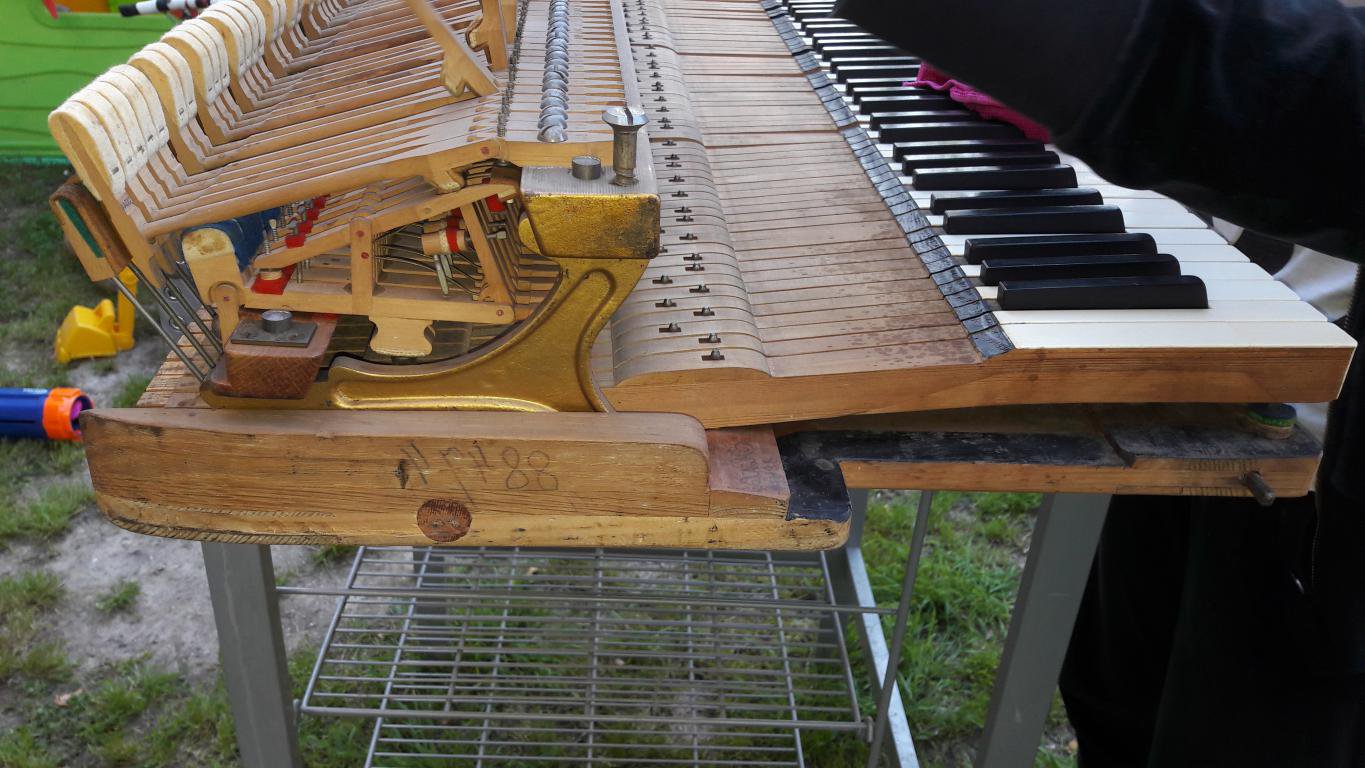
(the keys were all numbered and with patience I removed them, put them in order, and cleaned them well one by one. It is one of Bluthner's first "modern" actions, without the classic roller but otherwise it is in decent condition (at least it seems so to me...) Those stains on the keys must be due to some technician (it's an offense to the profession to call him a technician) who must have put some liquid for ankles without removing the action from underneath; fortunately, it is only superficial and hasn't affected anything.

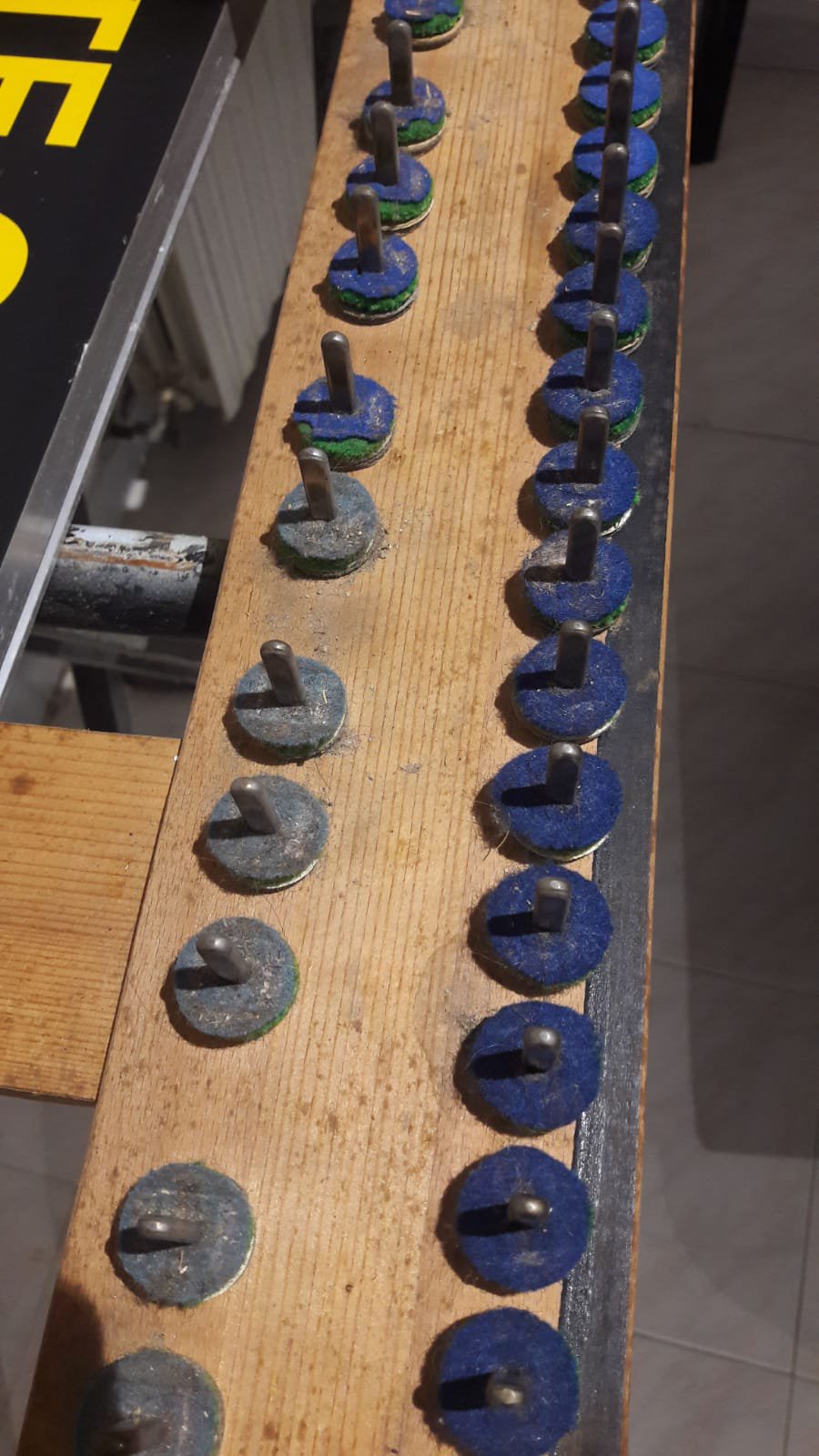
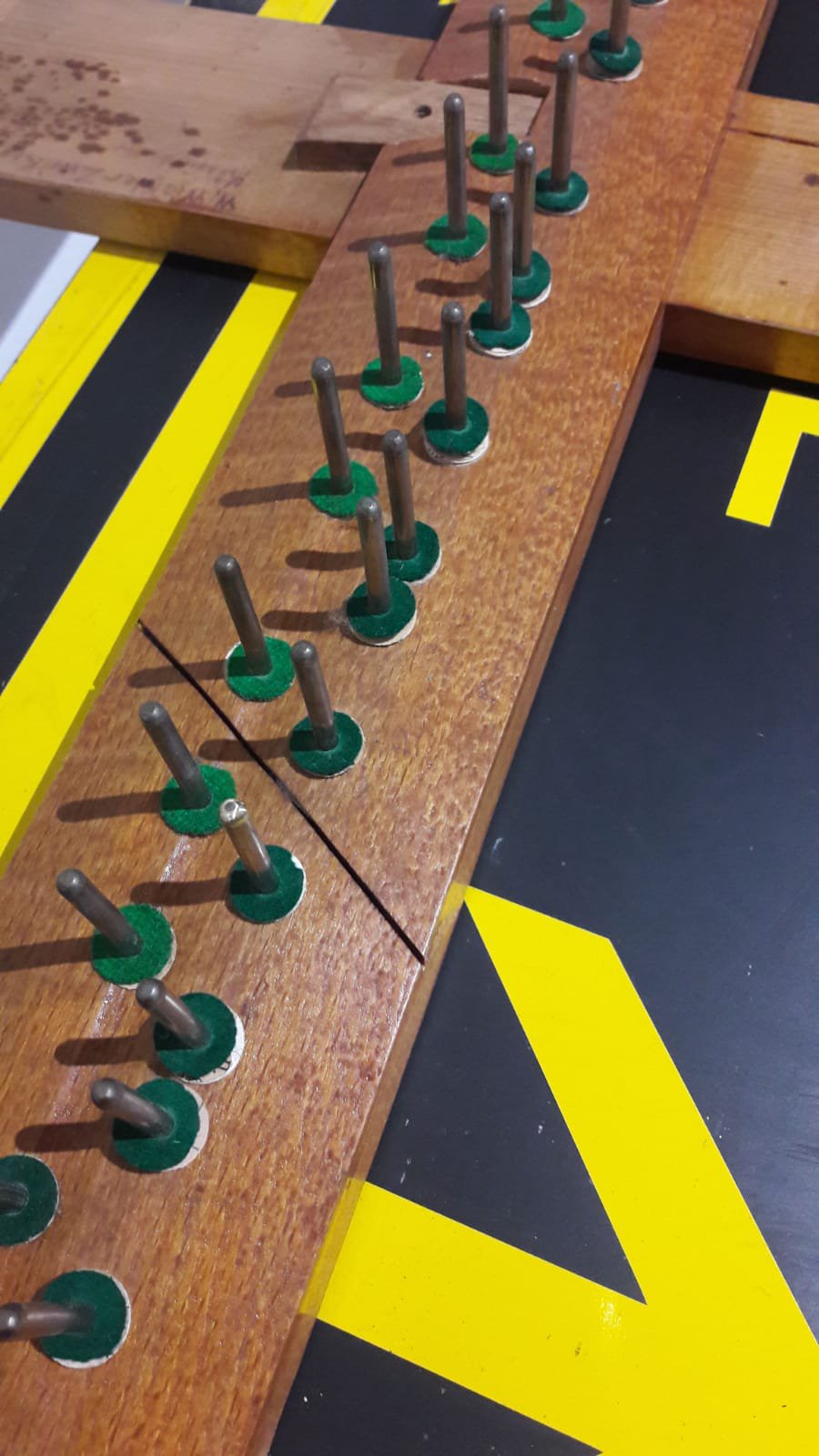
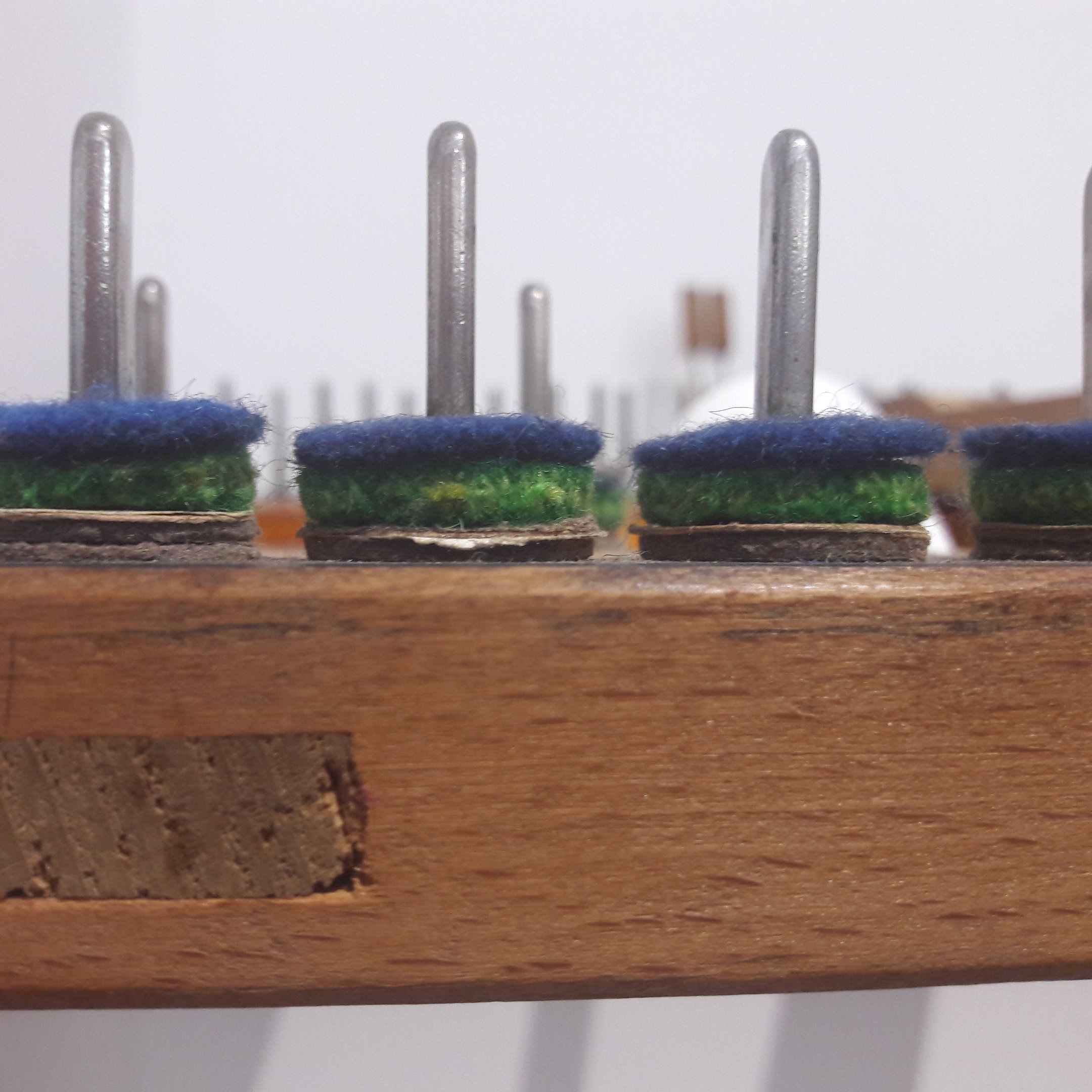
The felts under the keyboard are 20mm in diameter and I can almost only find 22mm ones around; they are a "sandwich" of 4mm of cardboard and paper washers and about another 4mm of green felt padding plus a soft cloth disc of about 2mm.

Why so much paper?

The felts in the key center pins are 2 very thin layers of paper and one of cloth about 1.2 mm.

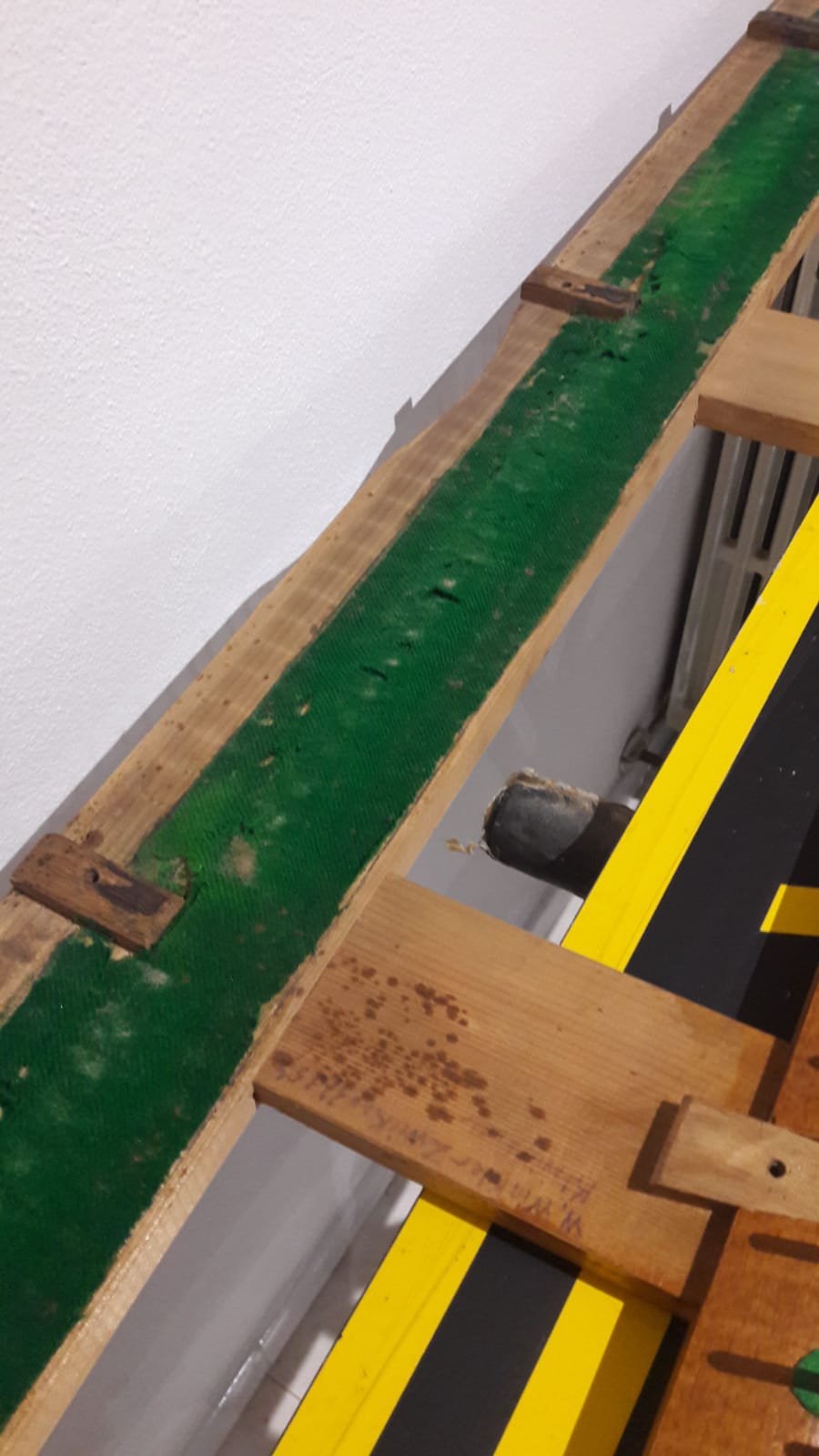
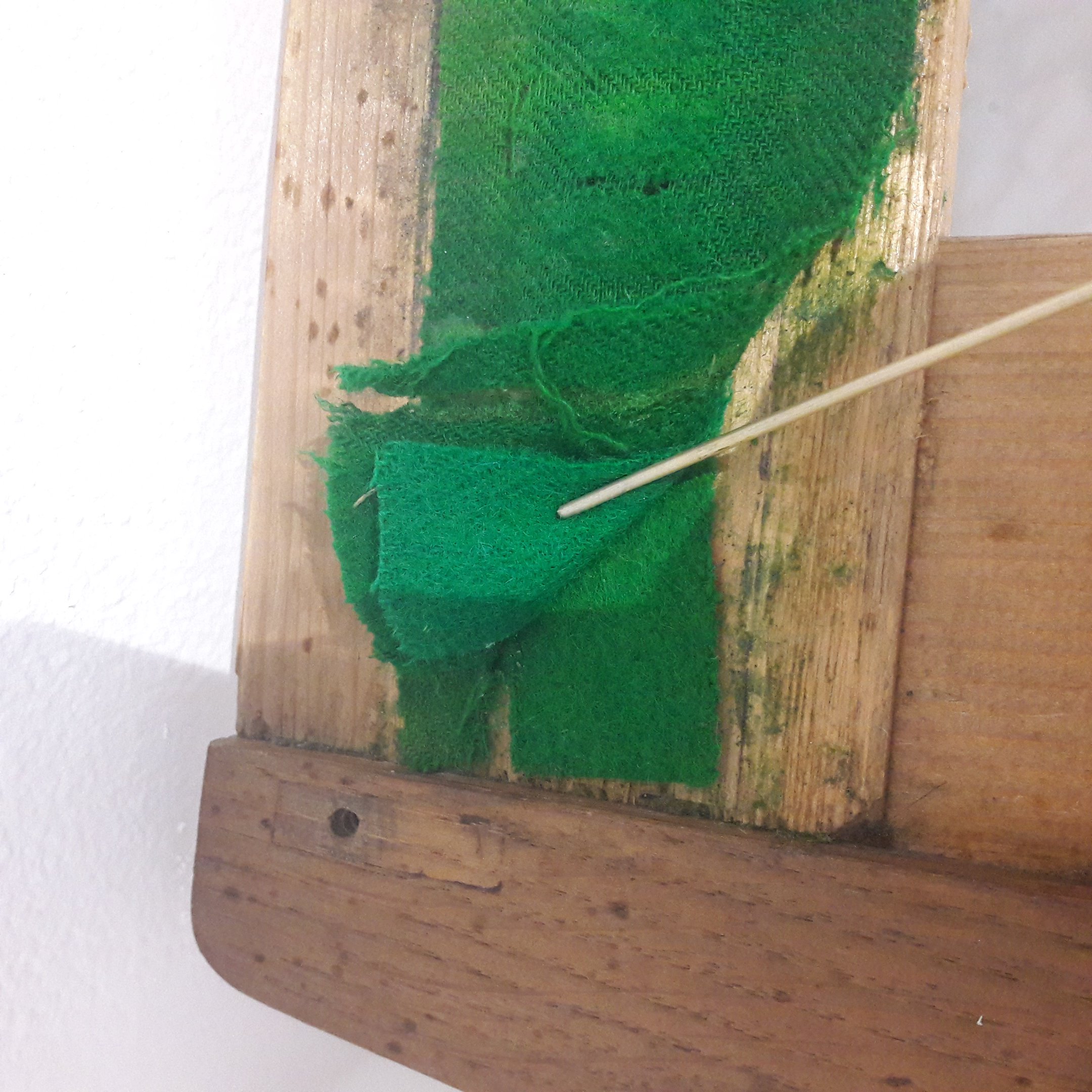
The felt, which is actually a package of various layers of fabric where the keys rest at the back, is it better to remake it the same way or with a single layer of felt?

What system can be used to establish the heights of the felts? Being very worn, I don't know how much to trust measuring the existing ones...

Does anyone have advice?

I have a couple of manuals on the "fine" regulation of a keyboard, but none of them explain to me how to start from a good "base" if the felts are crushed and worn.

After 100 years, can I improve some felt-paper-fabric combination?

I know that it will still need to be properly regulated by a technician later, I would just like to make everything an adjustment rather than a total remake without causing damage...

Thank you very much

ù

AttachmentAttachmentAttachmentAttachment

Member

Reply 2 by giovannig

Posts
514
City
Monza

It is a job that, in my opinion, only makes sense to do if one decides to renew a large part of the action; otherwise, it is useless because it does not lead to real benefits, but only apparent ones because the piano will seem different for the first few days (and it is not guaranteed to improve).

For example, I see that the hammers are hitting wood; I would prioritize them.

As for the felt bushings (rosette di mollettone), these work under compression, so they do not wear out but rather compress; this is not a bad thing, in the sense that in this condition they also become stabilized and measurements can be compensated for with regular maintenance.

And how are the key guide felts (if original leather) doing? I see the tips are very dirty, and I wouldn't want someone to have applied non-drying lubricants which, over the years, may have mixed with dust, making the key descent feel unnatural and less smooth.

It is useless to modify one parameter without reviewing them all. It serves no purpose and risks making the situation worse.

"As long as it works well enough, leave it alone so it doesn't break"

How do you determine the key height? They don't write it in manuals because there is no single or scientific method, but an empirical one; You start from the keybed felt (mollettone retro tastiera) at rest, which is only changed if it has been damaged by pests, maintaining the same measurement as the original (it doesn't wear out because it is hard). After that, you level the center, always maintaining the same measurement of the existing bushings, unless they have been replaced (if you measure 1.2 mm now, it's unlikely they are 2 mm; maintain the same measurement), and then you adjust the keybed with the new bushings...

the important thing is not to reach certain situations seen even in new and oriental pianos where there is a stack of paper under the key, because you would have an "accordion" or "quicksand" effect, I say, when playing, and the keyboard would feel heavy; the same principle applies when advising on choosing bushings for the keybed (the green ones) of medium/high density (hard in the sense that they must not deform while playing, not as if a tank were driving over them. Not excessively hard then, otherwise you might as well use wood).

Some manufacturers provide the key height relative to the keybed, but in the end, these are all relative matters, especially in historical pianos where there was not great repeatability in the assembly of the action... with tests on 3 or 4 samples, one can easily find the optimal condition by observing how the action works... if you don't know how to do it, the most reliable reference is what is already there, keeping in mind what I wrote above. The shorter the levers, the more inclined the key will be.

My question instead is: what would you like to achieve with this replacement? Are you sure it will bring benefits while leaving everything else as it is?

Bluthner 190 (probably) with Hertz spring (so not a repetition action/spillo action) but.... Aliquot or not? I prefer the second specimen; the last one I worked on was a 212 from 1895, 88 notes, with double escapement action like yours and 3 strings per note (so NOT aliquot)... a beautiful instrument, it goes out of tune constantly...

Think about how the same Bluthner confided that the fourth string (resonance string, not directly struck) was a useless patent that nevertheless made him a lot of money...

Member

Reply 5 by Davide80

Posts
13
City
bologna

hello everyone,

the bluthner is 230cm, year 1913. Version with jubilee frame, Aliquot system. The soundboard seems practically intact, only a few hints of separation between a pair of ribs, but only visible upon very close inspection. The action is still its original black-painted one; I need to check how well the ankles hold up, the strings are the originals and probably need to be changed anyway.

I am not an expert in the matter, let's just say I like learning but I don't want to cause damage.

It is also true that in my area I struggle a lot to find someone skilled (Bologna) and I don't want to spend a fortune all at once, which is why I try to do things bit by bit.

should those hammers be replaced entirely with stem and hammer head? (the existing one is a very old version of the hammer head)

Forgive my ignorance, but besides the felts and hammers, what else is changed to fix a mechanism?

I disassembled all the keys to clean up 1 century of dust and various dirt, then I will clean the center pins and the front ones.
the felt behind is made of 3 or 4 layers of fabric.

is there a substitute?

6 cm width I can't find anything on FTP ...

gratitude

Moderator

Reply 6 by pianoexpert

Posts
3,876
City
rocca di papa

If I were you, I would entrust the restoration to an expert. Not only that, but when a part is replaced, even the fine keyboard felt, it must be of the same type and thickness. The geometry of the action is at stake. Wippens, rollers, hammers must be of that size and, I cannot stress this enough: THE HAMMER REPETITION AND THE WIPPENS MUST BE RETURNED TO THE CUSTOMER.

Putting the action back in order: many things must be taken into account... it is not enough to just replace parts. The smoothness of the action depends on many things: the center pins of the action must have the correct friction. Skins and felts must be efficient. After many years, hammers must be replaced with new wippens. The tails of the same shaped like the originals. Identical weights, with some minimal balancing of the keyboard lead weights. Efficient strings and tuning pins with good holding power. Checking the crown of the soundboard.

"Spending a fortune".... Well, it depends on how much efficiency you want to restore to the instrument. The piano is a complex instrument. Naturally, one can identify work phases to be spread out over time, also to see how the instrument behaves.

For example, I see that that type of wippen, as well as the rollers, are no longer used in this shape. The hammers are too small... the new geometry of the entire action should be recalculated.

An alternative is to leave everything as it is. Partial and botched interventions would only result in wasting money, risking bad results.

Member

Reply 7 by Davide80

Posts
13
City
bologna

Paolo, essentially you are right, I only have 2 perplexities.

Unfortunately, precisely when you change 1 thing, you often then HAVE to change another and another again, and so on until you change or fix an N number of things; this is why it is difficult to "dilute" the work over time.

As they say, "the strings are old, they should be changed". True, but then what do you do, do you also change the pins, but since you have to disassemble the frame, do you fix the soundboard or at least refinish it, then refinish the harp itself and so on....?

In the end, unfortunately, you cannot do things a little at a time and, since you are doing them, do them properly; I wouldn't know how to dilute an expense of a few thousand euros over time for work that essentially needs to be done all together.

The only thing that is possible to separate is the mechanical work from that of the strings/pins/repetition levers (I hope not) etc. and the touch-up of the external cabinet...

I only wanted to change the worn felts without changing the measurements in order to not change the geometry, to start from a better point than the "old, dirty, and worn" one.

What Americans call back rail cloth, I don't know how to translate it well, also because they are not entirely wrong to call it cloth, i.e., fabric, because in effect mine consists of 2 layers of green fabric superimposed and one wider one on top glued both at the front and back. It is not a felt like I have seen on Steinway, Yamaha, and recent pianos.

However, they also explained to me that with modern, calibrated felt, it is easier to achieve a balanced level across the entire width compared to old felts or fabrics.

The other thing, unfortunately, is finding a professional... um... difficult?

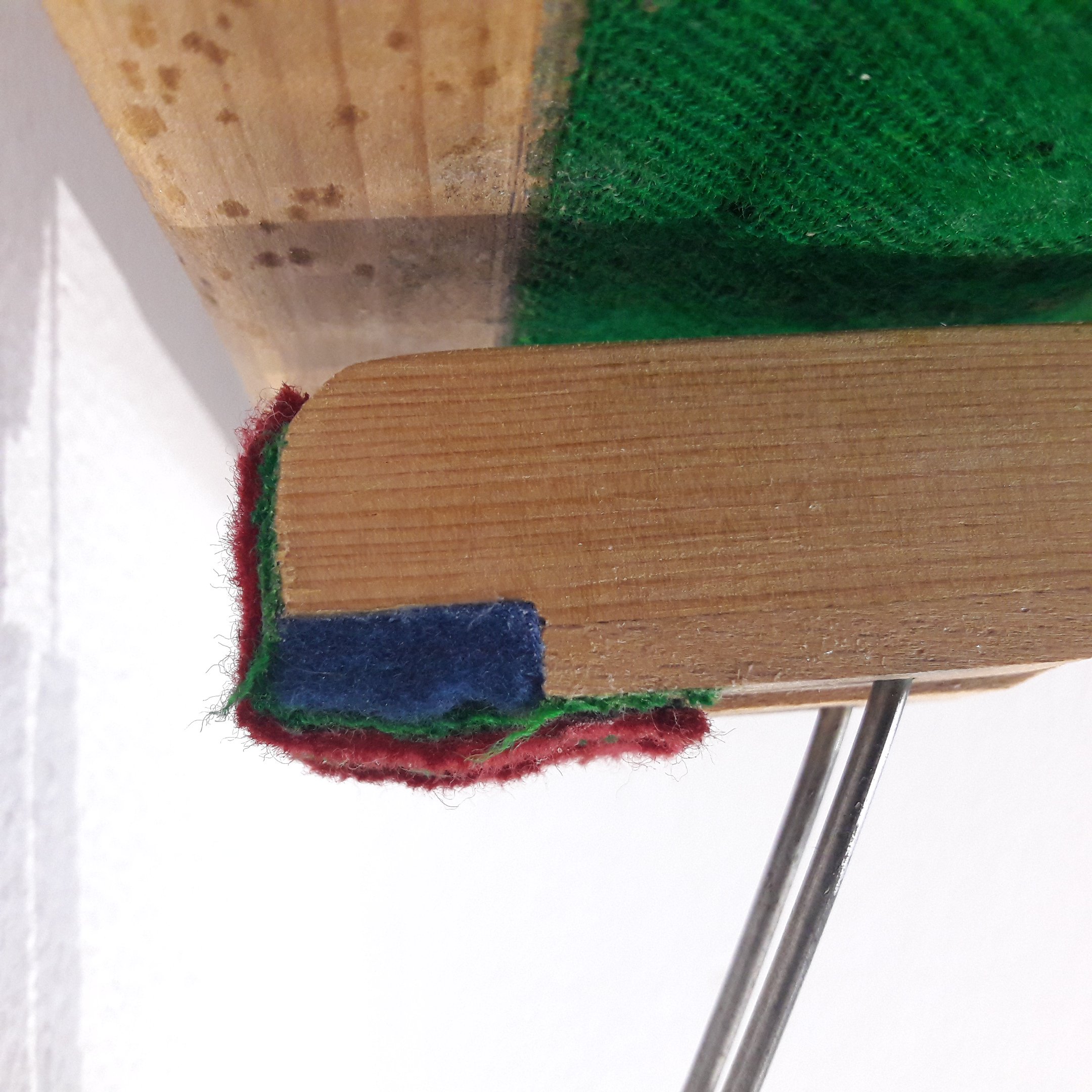
I'll give an example: looking at mine, I noticed that 2 dampers were slightly higher than the others; I look closer... they put 2 felts with red underfelt on top of the original blue felt... how much effort did it take them to remove that blue one to make them level with the others?! maybe that person who did that work 50 years ago also passed themselves off as a professional technician, but they were certainly a hack.

Regardless of the fact that an expert technician eventually does the work, I prefer to be well-informed about everything.

THEN maybe someone else does it due to manual skill or experience, but I'll keep a close eye on them, eheh.

I have heard too many people to whom the hammer action was changed on old pianos, only to complain that (obviously) the action no longer responded well... of course, they were given modern hammers that are 5, 6, or 10 grams heavier while leaving the rest unchanged.

How many people do you know who know the Blüthner pianos of that era well? They have a timbre all their own, a particular construction system, a historical tone.

I have studied everything I found around about these instruments; they have always fascinated me. When I found one in "okay" condition with a "modern" action, I couldn't let it slip away. I heard a Bechstein and that same Blüthner on the same day; the Blüthner had a soul that the Bechstein of the same era did not have, even though they had changed strings, pins, and hammers recently.

Let's say I want to be a very advanced user who doesn't just watch, but has the elements to understand what is happening to their piano; after all, no one is born knowing...

(I asked around a bit without much luck, but in the Bologna area, at least for a consultation/quote, do you have any suggestions?)

sorry for the long post...

Davide

Member

Reply 8 by giovannig

Posts
514
City
Monza

Hello,

I was reading your post and I had to stop halfway because I read a passage describing something that has never existed in the 150 years of history of the modern acoustic piano.

1) that felt in Italian is called "mollettone retro-tastiera" (keybed felt)

2) it is never in two layers; if it is, someone has tampered with it

3) it is not glued front and back because it would make noise, and if it were to swell due to a change in humidity without having anywhere to expand (being constrained on both sides by the glue), it would cause a disaster in the (extremely precise) regulation of any piano. All rest felts, or bar felts, as a rule are always glued on only one side. In this case, the side where the key does not rest.

4) In the photos, I see that you also have double layers of keybed felt under the keys, some of which are even of a different type, further sign that someone has tampered with it (in 100 years, you know how many things can happen)

I won't go any further. I would stick to Paolo's good advice to rely on a good technician; pay attention also to the damper levers because generally those of vintage Blüthners do not have the forked part (forcola) but rather sheep paper glued to the damper lifting bar, which is (extremely) difficult to replace if it breaks or becomes worn.

Don't worry about the soundboard; it is generally excellent and already consists of 5 crossed layers. As far as the hammers are concerned, I would proceed with re-felting in Germany so as not to modify the weights, keeping the original hammer rails (those little nubs that are there instead of leather rollers never wear out in a Blüthner), but changing the forked parts and pins; this can also be done by whoever performs the re-felting... however, you then need a technician to realign everything, prepare the hammers, fix the key bushing linings, and expertly replace all the felts before proceeding to the final regulation.

That is how I would proceed. Then I would evaluate if the piano can go on a bit longer with a tuning; the tuning pins can be replaced, even just the softest ones, without necessarily having to change the strings. In the meantime, the action settles, you play on it, and then you decide whether to perform a total restoration.

Anyway, if you have studied Blüthner, you will know all these things and even more

Member

Reply 9 by Davide80

Posts
13
City
bologna

Thank you Giovanni, it is an excellent comment and gives me good points to reflect on.

I have studied what I found online about golden age Blüthners; one does what one can and relies on the experiences that others have accumulated before you. Experiences = errors eheh.

Yes, I confirm that the damper holders move precisely with what the English call vellum, sheepskin... if it breaks, changing it must be an incredible hassle.

Have you ever happened to see a piano without a damper? Unfortunately, I have... someone must have lost one in the central area and they removed the last one at the top just to put something there. Now, with utmost patience, I will have to rebuild it out of wood, beech or similar. A nuisance.

The felt behind the keyboard is made exactly like that, of fabric. I had read an article about noises in keyboards and it cited various systems adopted to dampen noises, including Blüthner with various layers of cloth at the back of the keyboard; having made mine this way, I was not surprised at all, quite the contrary.

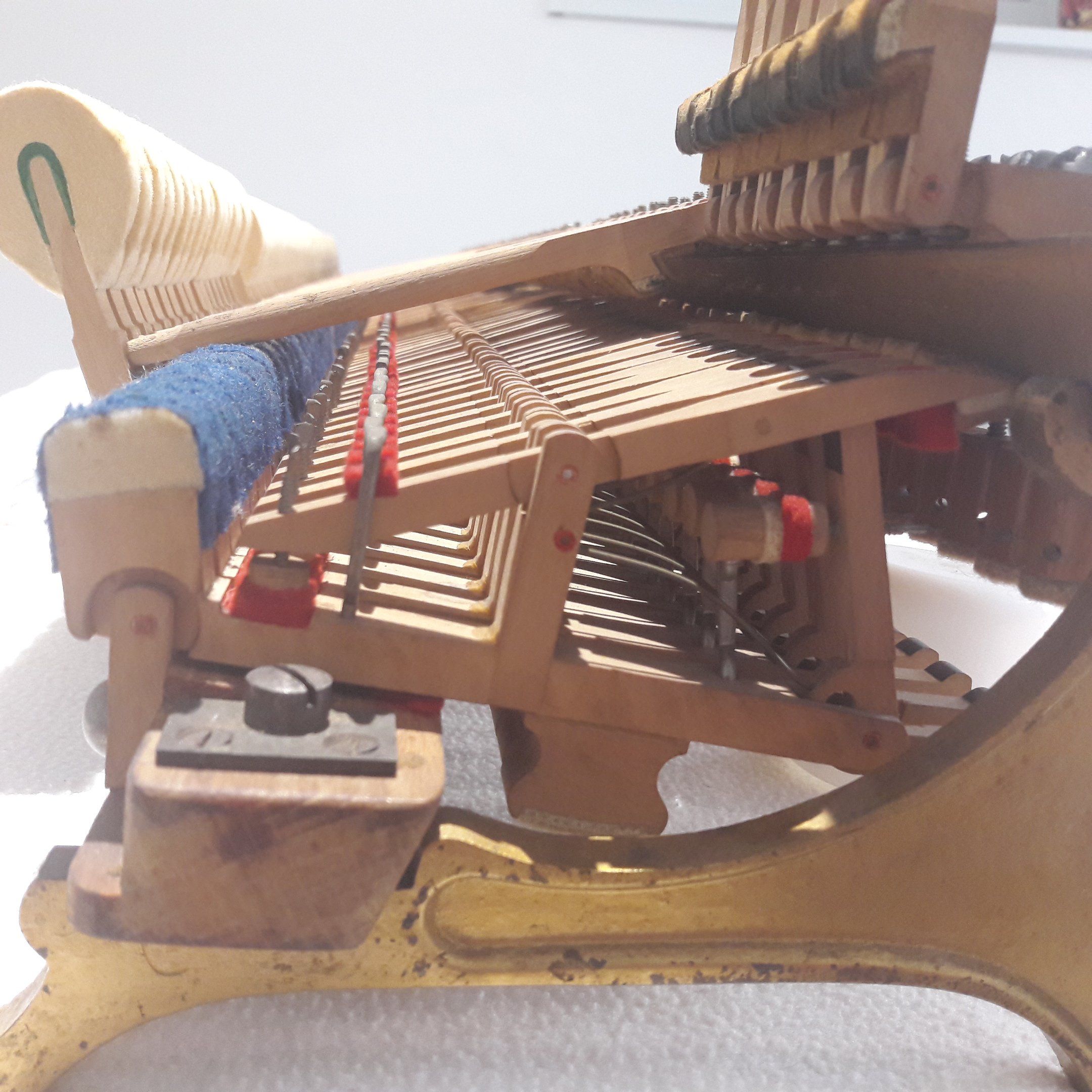
I will show you singular things: here is the back of the keyboard, the under-hammer area, the end of the key... everything here is layered!

AttachmentAttachmentAttachmentAttachment

Member

Reply 10 by giovannig

Posts
514
City
Monza

One must start again from scratch and do

things properly.

the dampers do not have the spoon for

regulation, so they added layers of felt behind the key to anticipate its lifting. It is better to use compensation papers, but glued under the damper holder.

Nothing strange that the last damper was never there. By choice. If the empty damper holder is still underneath, it means they really removed it. If even the damper holder is not there, it was born that way.

the blue cloth on top of the hammer rest felts (on the stand) is correct.

You must decide how you want to proceed and what you want to do before starting a revolution speech, otherwise it is all useless.

Moderator

Reply 11 by pianoexpert

Posts
3,876
City
rocca di papa

Above all, do not take down the keybed if you haven't first determined the thickness it creates. Everything has its own height and geometry that could be completely overturned.

I agree with Giovanni. You must decide carefully, because the work is demanding and should be entrusted to an expert. Blue... or red... or green... is just a visual matter of taste. The important thing is to restore efficiency to the mechanics and listen to the sonic result. If necessary, address the "strings and pins" work at a later stage. Even the front keybed parts (last photo) go against all good sense: guaranteed "accordion effect"... oxidized pins, etc... various little things.

Member

Reply 12 by Davide80

Posts
13
City
bologna

thanks Paolo, thanks Giovanni.

I play piano, I went to conservatory, I have had other grand pianos, which left over time due to various moves...

I have tried many pianos lately, even new pianos; what struck me most was the inefficiency of the action, even on new pianos (which perhaps have stayed in the showroom for 2 years without checking humidity, heat, cold, or any tuning) and at that point I preferred a great vintage instrument that could then be regulated or have it regulated as I wish.

The idea would be to restore the mechanical part to excellent efficiency.

I was surprised to find such a "usable" 100-year-old action; this probably confirms the quality of the design and that perhaps it wasn't kept in a cellar for decades, but was in an unused villa for who knows how many years.

Therefore, I accept any advice from experts.

Can you help me understand if certain things should be restored exactly as they are or if it is better to change them for something more "usual" and modern? I have to play it, it's not a museum piece anyway...

I will go in order

I am a nuisance, I know... ?

1) A damper was completely missing at middle C; they stole the last treble [note] (by cutting the aliquot felt) just to have the damper (which is too small anyway) in the central area. I don't know HOW one can lose a damper! They are 7.3 mm wide, is that a normal size or are they narrower than modern ones? In the treble part, the aliquot felts are there laterally, so it makes me think they are narrower than normal. Besides, I only know Renner, which manufactures mini shaped felts for aliquot; I cannot cut them to size from "standard" ones, also because they have the side notch to allow the next damper rail to pass through. Should I keep the damper heads and reconstruct the missing head...?

2) The wooden rail where the damper rails pass is without felts; however, I don't think this is normal and they will need to be put back (can this be done without removing the strings ?)

3) the keybed felt, is it better to remake it in layers or as a single strip like modern ones? (it is about 4.5 mm thick and 6 wide)

4) in your opinion, what purpose do those stacks of cardboard/paper/keybed/blue felt rosettes serve at the front of the keys? They are about 4 mm of cardboard/paper + 4.5 of felt + 2 of blue felt/fabric. Why is there so much paper? As Paolo says, the accordion effect is guaranteed. What do you recommend doing? Should a thicker green keybed be put in and almost all the paper removed? Since the center rosettes are just over 1 mm, I don't think all this thickness is due to subsequent raises, so why didn't they make the front part already 0.5 cm higher? 4 or 5 mm of paper is truly a lot...

5) rear key bottom felts: do you change the felts in layers with a single one and then adjust the damper assembly as Giovanni was saying?

6) Same for those white/blue combined felts of the hammer rest (is that what it's called? I hope I explained myself at least...) I haven't seen any others besides the old Blüthner in question; now they are all made with a single piece of white felt.

7) Hammers and shanks: wouldn't it be better to change them completely and put on modern ones with a roller and hammer of the same weight? Besides... the hammers of the first ...um 80 keys? They don't seem as bad as the last trebles, which, as a pianist, I don't understand—they aren't played more than the lower and middle parts...

then okay... the center pin felts will need to be reviewed. It's true, there are many things to "take into account."

I think other companies that restore pianos change everything wholesale; I have one nearby that they use for some concerts where they have installed a modern Renner action, an operation that is neither easy nor cheap... I don't know if it is the best choice musically speaking, economically, or philologically speaking (the latter being a matter of patience, it must be used for concerts and therefore needs maintenance more often than a home piano I think).

For the strings and tuning pins I know... it takes about 2,000 euros, it's the only figure I already have in mind as an estimate, but precisely you cannot do everything at once (at least not for my pockets...)

Thanks for every explanation!"}

Member

Reply 13 by giovannig

Posts
514
City
Monza

1) I would replicate the damper using 8 mm multilayer wood, well-shaped and sanded to reach the correct size. You will never find an identical replacement. After that, the head is polished, the wire and the ribbon are applied (adapting a commercial one), and it is placed in position with the proper folds. They are tighter and shorter than modern dampers, regardless of whether they have the Aliquot patent or not. So, this applies to ordinary models as well.

2) To seal the damper lever holes, all the dampers must be removed. They are unscrewed from the plate and, once removed, are accessible between the strings, without the need to disassemble the piano.

3) I would replace it with a modern strip of adequate width, but of the correct thickness. 4.5 mm, considering the time elapsed, can be considered 5 mm. Up front, I see they have added shims under the keys to compensate for the compression of the back of the keyboard.

4) Simple, see the answer to point 3.

5) They can be replaced if the originals are grooved. The keys are removed and arranged all closely together for each span or section, and a single strip of felt is glued on. Once the gluing is dry, you proceed to slice the felt with a very sharp blade along the spaces between the keys. The adjustment of the damper lift is instead performed using paper glued under the damper lever, in order to compensate for the lack of thickness. If, however, the damper starts too early, it is sufficient to sand the applied felt. This is done after positioning the dampers at the correct height, i.e., after adjusting the "all"

6) Those are correct; they serve to cushion the hammer fall, but the hammer must not touch them while at rest.

7) I haven't seen them all, but I would opt for re-felting, perhaps even only partially for the last two sections if the others are recoverable. By replacing everything, you would no longer be able to find that mechanical fluidity that you like so much...

Anyway, this is free restoration assistance; I believe it isn't even correct towards the professionals who work. I hope you want to use all of this to request an intervention from a technician. Because knowing how to do it or how to proceed is not enough; for an excellent result, great manual skill (meaning having done the same job several times before) and good sensitivity are required to obtain the right final setting of the action...

To replace the strings, the primary material does not exceed 700-800 euros... the rest is labor. Obviously, if you are not a technician, you do not have steel coils at your disposal and you must purchase them all just to use a minimal part... you obviously couldn't manufacture the bass strings yourself and would have to turn to a company (they cost from 350 to 500 euros plus the steel for the plain strings (1.5 kg - 150 euros) plus the wound wire (100 euros))

Bye

Member

Reply 14 by Davide80

Posts
13
City
bologna

Yes, in fact I am asking all this to get opinions from more technicians; in the entire province of Bologna and Ferrara, perhaps I will find only one, and having an extra "voice" from competent people helps in the final choice of work. A tuner near here, when I asked "have you ever seen a Viennese action?", replied "well, haven't pianos always been all the same?", so in his case, the fact of having a good ear did not go hand in hand with technical knowledge.

I might limit myself to a lot of theory, but I would never attempt to change strings, hammers, repetitions, or similar; I am aware of my limits. Those 1500-2000 euros are a generic estimate they gave me when I purchased the piano for the replacement of repetitions and strings, without going into detail (they weren't the right people anyway) regarding any potential work on the action.

It is a pleasure to speak with people who know what I am talking about, so thank you all anyway!

to have an idea of the original geometry, is it possible in some way to know what thickness the felts should have had?

i.e., assuming the center of the key is good (I don't think it has moved or compressed more than about 1mm), where else can some other reference be measured? for example the inclination of the key...

i don't think Blüthner has such a precise technical archive...

thanks

Member

Reply 15 by giovannig

Posts
514
City
Monza

I thought I had already replied that the only reference given by manufacturers is the key height (measuring from the lower edge of the cap key) to the keybed.

Now, since this is a historical instrument, there are no written measurements. It could be 63 mm for that piano.

Anyway, aside from millimeters, which don't always solve problems, you must observe how the key works (three samples are checked: two extremes and one in the center, then leveling everything) observing the following criteria:

1) there must be sufficient space for the background, between 9 and 10 mm for the piano in front of you; it depends on whether you prefer a more or less modern setting.

2) the correct background must be obtainable with the minimum number of paper slips; otherwise, it means that in the center it was set too high (there too, avoid a tower of paper slips).

3) if the inclination is correct, the key pilot will work on the heel without "scorching" but only in thrust.

You have to do some testing starting from what is already there and optimizing it; there are no recipes. If it were simple, expert technicians wouldn't be needed. When someone is an expert in mechanics, they don't even need to measure too much; they observe the mechanics—not just on the workbench but also how it works when installed in its place, which is fundamental—and see what is wrong... and then fix it with a lot of patience.

Even if I gave you a new Steinway with a nice official manual containing all the declared measurements, believe me, at the regulation level, if you haven't gained the right experience, you wouldn't achieve a good result. You keep asking for measurements because you lack experience; you think you are precise, that you have good manual dexterity, and you want to get your hands on it. You think local technicians don't understand anything and it's better to do things yourself. But precision and goodwill are not enough. In two years, you will still be there in front of the keyboard trying to understand what is wrong, and you won't enjoy that instrument at all. It will always be an open construction site, and when you decide to call a technician, they will have to deal with poorly done work without achieving results, because it is harder to fix someone else's mistakes than to start from scratch.

Do you know who the best technician is, in my experience? The one who speaks little and solves problems. If someone presents themselves by explaining all the theory of technique with difficult-to-understand words, they will probably not be able to pull a spider out of a hole once faced with the actual mechanics. And I repeat, in my opinion, these are jobs that must always be done with the piano in front of you.

Moderator

Reply 16 by pianoexpert

Posts
3,876
City
rocca di papa

I encourage the assistance of Giovanni, who is a competent person and not far from Bologna! It would be a good solution for you, Davide, assuming he agrees... and you too. What he says is right and I agree with him. Anyway, the right solution, as we both think, is to have an expert look at the piano and evaluate the costs in relation to the added value the instrument would gain.

Member

Reply 17 by giovannig

Posts
514
City
Monza

Good morning,

thank you for the trust, but I do not perform interventions as a tuning technician or repairman, except for the instruments in my collection or those that I have restored and then given to friends around here.

If it were my profession or if I had the time, I would have helped most gladly. These are also types of work that, if you want them done well, you shouldn't be watching the clock too much...

Member

Reply 18 by Davide80

Posts
13
City
bologna

Forgive the question, just out of curiosity, how did you learn the trade if it isn't your profession? I mean, is it a hobby for you? It's a beautiful hobby, but how did you do it?

I am an IT technician by profession; I also started as a hobby. There are no schools for these things; they are the result of experience, or even better, the experience of others. If someone asks me how to do something, I can explain it, and then I can add "if you don't feel up to it and are afraid of causing damage or losing data, call a technician". It will be up to the person to decide how to use the knowledge that has been given.

Forums serve this purpose. No one explains how to use a circular saw; people get hurt very badly, but they sell them to everyone anyway. With the proper tips and precautions, an average user can perform small tasks while trying not to get hurt. This doesn't mean you can build a wooden house, but perhaps you understand better what to do and what not to do, and you can better appreciate the work of someone with more experience than you. It is also true that if you pay attention, it is precisely the experts who get hurt most often, precisely because they are the most careless—they've done it so many times by now.

I don't understand; once made aware of how things stand, I can realize on my own that certain jobs are complex; in fact, I understand it even more if they are explained to me with care.

I have a book on piano restoration, but as I said, I didn't trust myself to do anything indicated in it, other than normal cleaning by disassembling the main parts.

But if one day I wanted to take an old cheap piano and take it completely apart, I could do it, knowing what I would be facing, even if perhaps throwing money away. I wouldn't do it with a Steinway or even a Blüthner.

If I never tried anything new, I would have remained in my first year at the conservatory saying I'll let other pianists who are better do it.

Now, despite having 25 years of study behind me, I leave certain concerts to other people.

Study makes one aware of one's own limits.

Then okay, some people just mess things up—I hope I am not in that case—but I humbly hope to learn from your knowledge as well; for me, it is an exchange, I don't want a restoration manual.

The Americans are much more DIY than us; they write manuals and share the trade, but being very easygoing, well... perhaps not everything is as carefully done as we Italians do. They are very much about "change everything and then 'more or less you'll see it works...'"

That is why I ask for your opinions; one single voice is not enough for me, and I always think a lot before moving a finger, perhaps even too much...

Come on Giovanni, don't scold me, maybe even you at the time asked questions like mine?

Member

Reply 19 by giovannig

Posts
514
City
Monza

The answer is very simple, I attended a workshop when I realized that the subject fascinated me and I practiced, even performing several restorations on fine pianos - which were mine, not other people's, so I wasn't causing damage to third parties if I made a mistake - and I did this in my free time, under the guidance of an expert and then adding my own touch, studying, and looking at other works and points of view.

I am not saying these are difficult things in absolute terms; perhaps the mechanical regulation part is where not only manual dexterity, but also personal sensitivity is required to obtain an excellent result. And alone, without ever having seen others at work... I think it would be hard...

But even replacing a pin, if no one has ever shown it to you once, has its complexity. It is true that there are videos of everything on YouTube today, but not everything is always shown and you cannot touch the result with your hands.

Then there are also the more onerous issues, where the right equipment and the right precautions are needed. I would like to see if, while disassembling your Blüthner, you notice a delaminated layer on the soundboard... what do you do? The restoration can go perfectly smooth or completely wrong. When you de-tension a piano that has been under tension for 100 years, no one can ever know what they will find... you can determine the path to follow, but then you also have to know how to deal with the unexpected.

Member

Reply 20 by Davide80

Posts
13
City
bologna

This is exactly the beauty of comparison; every person works differently.

Technicians, as we all know, are not many; the market doesn't have that much demand. Around my area, there was one quite renowned when I was younger who had performed services at the conservatory and also on my piano, in addition to regular tuning. A while ago, while looking for an antique instrument that nonetheless had "hope" for the future, I came across a 1930s Baldwin grand piano with 3 pedals. I opened it up and immediately noticed the rust—a lot of it; the strings were all brown, as were the pins. I played it; the entire lower section was (even today, it is for sale) dead, sustain absent on the bass notes, they would dampen themselves. The gentleman who had bought it had sought advice from a technician, but since he wasn't using it, he decided to sell it. So I called him personally, discovering that it was still the same (now somewhat elderly) technician from 20 years ago, who also remembered my piano well.

I explained that in my opinion all the strings were trash, full of rust; "no no, but they can be cleaned," both the seller and the technician replied to me. Out of curiosity, he went back to look at the piano. Verdict: "it's fine, but if one wants to be picky, the bass strings can be changed."

I may not be an expert, but I have heard many about century-old pianos; there were other problems, perhaps the bridge was half-detached; I have never heard strings whose sound dies after 3 seconds. "You just clean off all the rust and that's it." To avoid arguing, I simply said that 3,000 euros in that state was not a good deal for me, even if with 300-400 euros he would have changed 15 bass strings.

I don't want to be right, but I cannot blindly trust what they say; I prefer the disinterested sincerity of a technician who perhaps doesn't have to do the job.

Also because in this case, he could have told me "look, it's a good instrument, perfect soundboard, sound structure, mechanics not bad, but budget x euros because this and that needs to be done."

I am aware that many old Bechsteins had frame problems; sometimes, by detensioning them, they would crack completely... Yes, certain jobs I don't even dream of, I mean in reality I don't "nightmare" them (meaning a cracked frame isn't a dream XD) exactly: for goodness' sake, everything can be fixed, but at what price?

Even just removing the pins, if you do it incorrectly, you ruin the hole in the cap strip. True, these are simple operations to describe, but only if done the right way. Automotive comparison: taking off and putting back on a wheel, simple enough, right? I give you a tire technician's gun, you tighten and you snap a bolt because it's set to 300Nm? And then...?

For this reason, I limit myself to analyzing and measuring everything; it might be useful to any technician who puts their hands on it in the future.

Maybe I will change a single felt just to understand how the behavior of the mechanism itself changes on a note—let's call it academic curiosity.

In the Bologna-Ferrara area, I have heard quite well of Frignani; who knows... maybe I'll hear his opinion too.

Do you know SAP in Poland? If it were up to them, they would already be at the front door with a semi-truck to load it hahah

along with a blank check, though.

Log in to participate