Given the imminent arrival of summer, I have been thinking about this LAB. It will certainly be the most demanding one in terms of difficulty and the time required to dedicate to it, so I was thinking of proposing something immediately in order to make use of the summer.
Last year two proposals were made: a series by Berg (Frank) and a Prelude by Bach (Geppino). The vote went to Berg (even though I had voted for the minority ... which was Bach).
Also to provide variety, I would say let's not make too many preambles and take proposal 2 from the last edition as a given; barring strong objections, I would say:
- Variations for Orchestra: free instrumentation, at least a small orchestra
- The piece must be constructed taking inspiration from this Bach prelude:
More than anything, I was interested in understanding the approach...
C
cromatismo
Member
Reply 5 by cromatismo
Posts
79
One should identify interesting passages in the proposed piece to develop into one's own composition. For the composition diploma, they asked for something similar; I think the important thing in this type of initiative is that the material is somehow traceable to the original but becomes decontextualized... and perhaps, taken further.
... starting from Bach, the possibilities should be quite broad. If, as mentioned in the first post, one were to start from Berg, well, there would be a more limited range of styles and techniques.... and bringing the material backward is not always a good idea, even if there is an ironic aspect that should not be underestimated.
So one could take a melody, a bassline, a chord progression... as long as it is "justifiable"; to be clear: "I took this from there" and then move independently.
I also have difficulty understanding what the proposal consists of.
As variations, I remember the fourth movement of Brahms' fourth symphony
BUT the given theme is much shorter than this.
Am I wrong?
C
cromatismo
Member
Reply 8 by cromatismo
Posts
79
The indicated prelude is not to be taken in its entirety and varied
From that Bach piece you must derive a theme... let's say about twenty measures (given the orchestra) and you should then, from the theme (conceived by you based on the provided starting material), write variations. It is one of the freest exercises there is... apart from the last workshop... which only gave the instrumentation.
T
Talentuoso
Member
Reply 9 by Talentuoso
Posts
206
Take the first complete measure, reharmonize the second by removing the fugato, invent 2 others and you reach 4....double exposition (4+4) and then coda ....
So 4+4+4+CODA
Take them and write something like 3 variations ....
Some good suggestions have already arrived. In any case, it is not necessary to necessarily construct a theme; one can start directly from a small development of a thematic idea taken from the piece and propose it as the first variation (Webern, already a century ago, proposed variations without a theme... I would say that one can quite easily "dare" it a go) or other more evolved solutions.
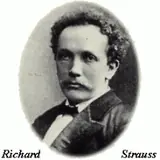
The more one deviates from the starting material (and the same will not be visible), the more explanations will need to be given later, in the sense that in any case it is an initiative based on sharing, for which, as RStrauss says, the traceability of the starting material must be highlightable. How this will be explained to us will be done by the composer, if necessary
No Raffaele, it's the theme (precisely 15/16 ... but also 17/18 bars)... do you really think that in variations you do it in 4-bar increments?
Look at the example of Rachmaninoff's [variations], even though they are for solo piano, he uses a 9-bar theme (clearly the orchestra requires more space) and then varies it an infinite number of times....in this specific case (ours) 3 would be enough (of variations... so Theme + 3 variations... therefore 15 bars of Theme + 15 bars VAR I + 15 bars VAR II + 15 bars VAR III)
He practically takes, practically uses Chopin (Prelude No. 20 Op. 28) and varies it....so, by the same token, you can construct a small A [section] of romance, orchestrate it, and then vary it