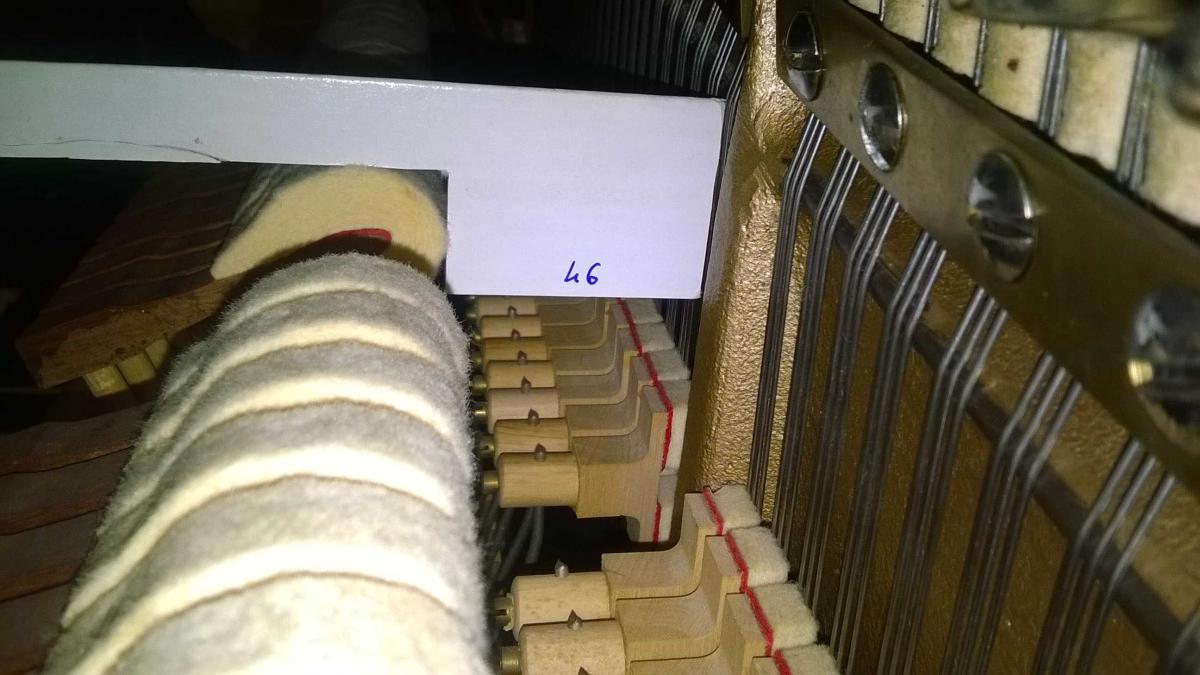
No, descent and ascent weight in order to understand if there is a proportion that makes sense between the two values
Member
Reply 21 by giovannig
- Posts
- 514
- City
- Monza
Started by
Member
Member
No, descent and ascent weight in order to understand if there is a proportion that makes sense between the two values
Member
So I measured the grams of different keys from the bass to the treble.
bass:
downstroke 118/120
upstroke 55
middle
downstroke 90/95
upstroke 45
acute
downstroke 75/80
upstroke 55
Member
with the dampers raised it lightens up quite a bit
in descent it goes from 60/65 for the bass and in ascent 25/28 up to 50/55 and 20/25 for the mid and high ranges
Member
The verification balancing without dampers could also work for me.
Verify the center pins and then adjust the mechanics
Member
It occurs without dampers, I meant to say... sorry for the rushed reply.
Anyway, going in order, according to my experience 120 grams on the bass notes including the damping is a correct resistance, scaling towards the treble where the springs are weaker. At the end of the regulation work, one can even be a little picky and try to uniform the values among all contiguous keys, so that there is a certain regularity, by acting on the damper rail springs. It is a minor problem, obviously.
To check the center pins, you can unhook the straps and see if any hammer does not return to rest after having it complete its excursion with your hands; in my opinion, there is no point going beyond this check considering the state of the piano, for an initial "rough adjustment".
After that, the first thing I would do is verify the leveling of the keys with a ruler as long as the entire keyboard; you should check that the keyboard does not appear warped in the central part because it is quite common in uprights, partly because it is the area where one plays the most and the key bushings compress a bit, and also because the keybed can curve, reducing the key inclination, and therefore also the backcheck. This condition makes the action feel apparently heavy, even if formally balanced with the correct weights as detected by a measurement. This is the first check to perform. Let me know
Member
So, I did the check with the straightedge, they are level; only the central key drops by an additional half mm and the one next to it by very little.
Member
Ok, they all need to be leveled by adding a center shim or more depending on the thickness under the rosette.
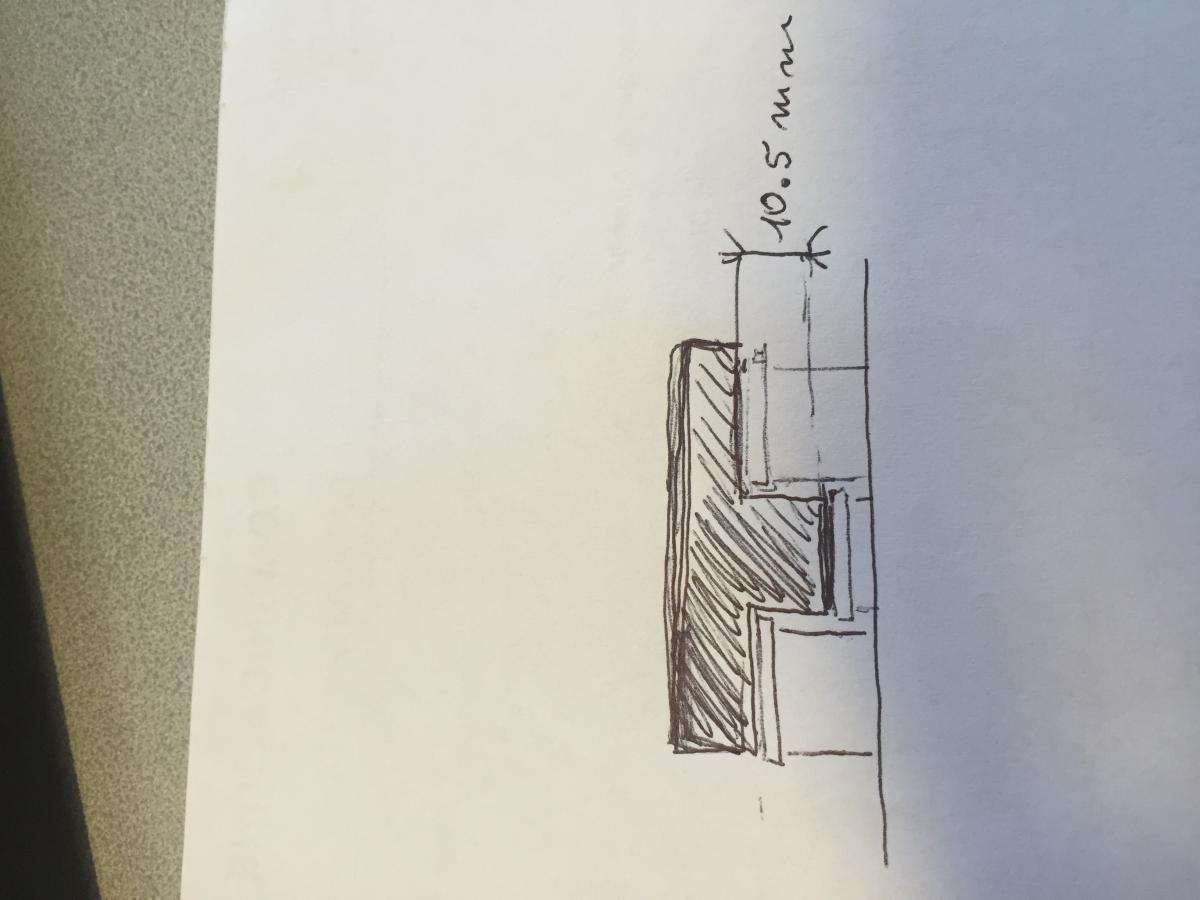
How much does the background measure at the moment? Do you have a template? Otherwise, you can make it out of plastic, or hard cardboard, so that it has a T-shape and works on three adjacent keys, from the front.
Member
You can make it as per the attachment, all you need is a sheet of rigid plastic and a bit of precision.
Member
I don't have the template. The one in the drawing is fixed, shouldn't it be adjustable?
Member
anyway, I'll make various sizes then, I'll update you later on the measurements
Member
You can make it 10 from 9.5 etc., but the SP goes to 10.5
Member
But even if you make one, you can see if it is scarce or abundant ...
Member
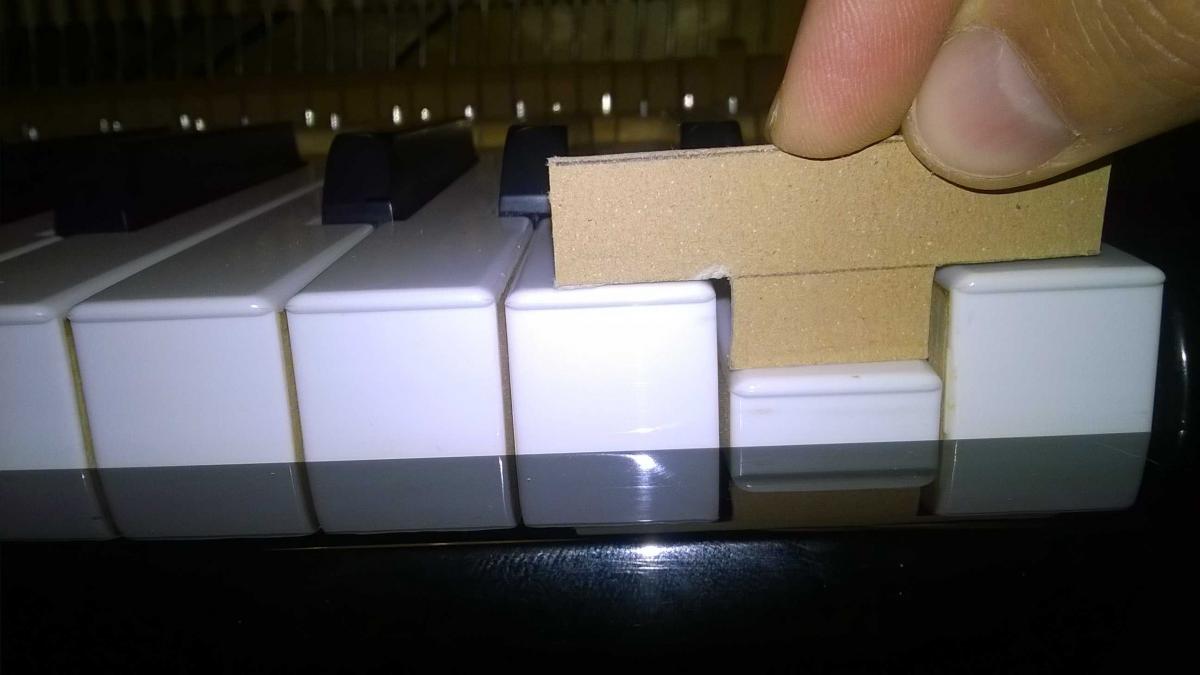
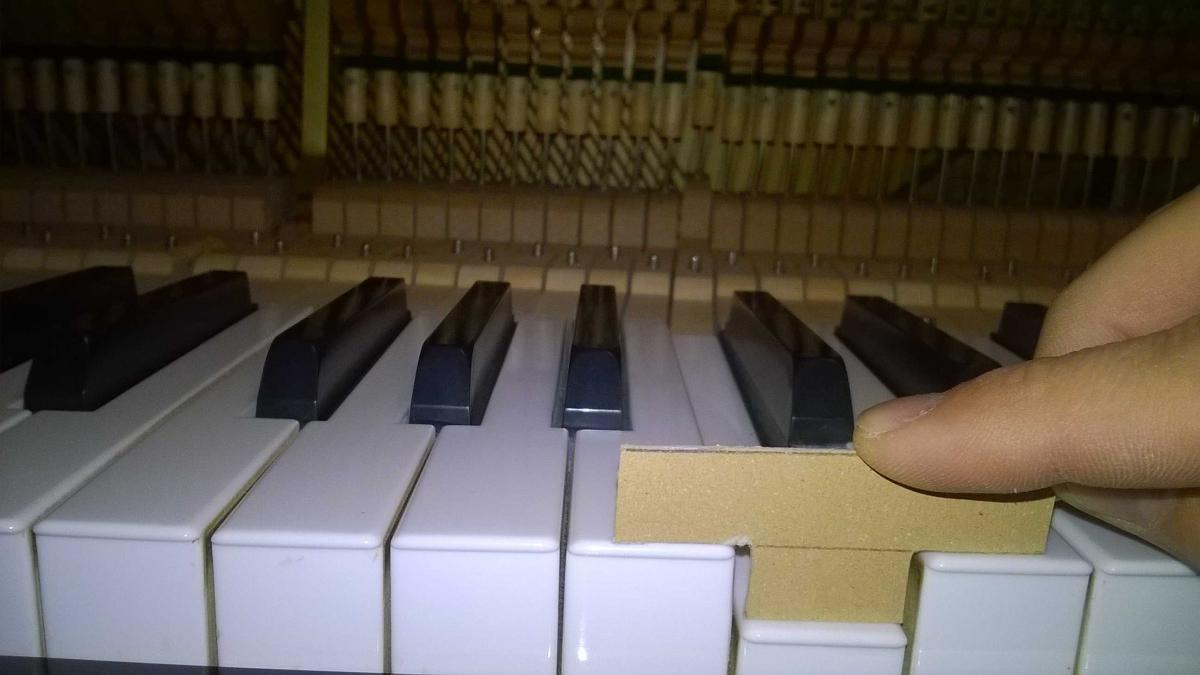
made the template and measurements. It is exactly 10.5. only a few high and low keys are a bit less
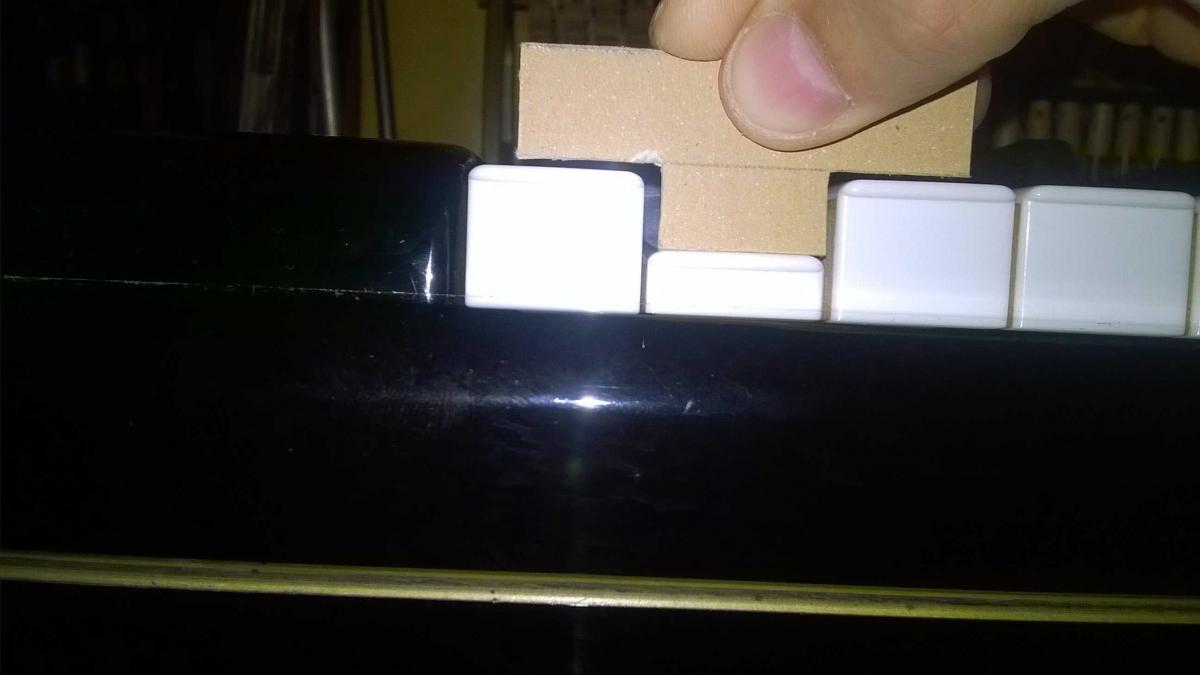
Member
ful wrote:made the template and measurements. They are exactly 10.5. only a few high and low notes a bit less
Well done, when you measure it you shouldn't press too hard but in a natural way as if you were playing. At this point you must make the template to measure the hammer-string distance, and verify
Member
You can do it like this, so that you will also have the half-stroke reference which will be needed later.
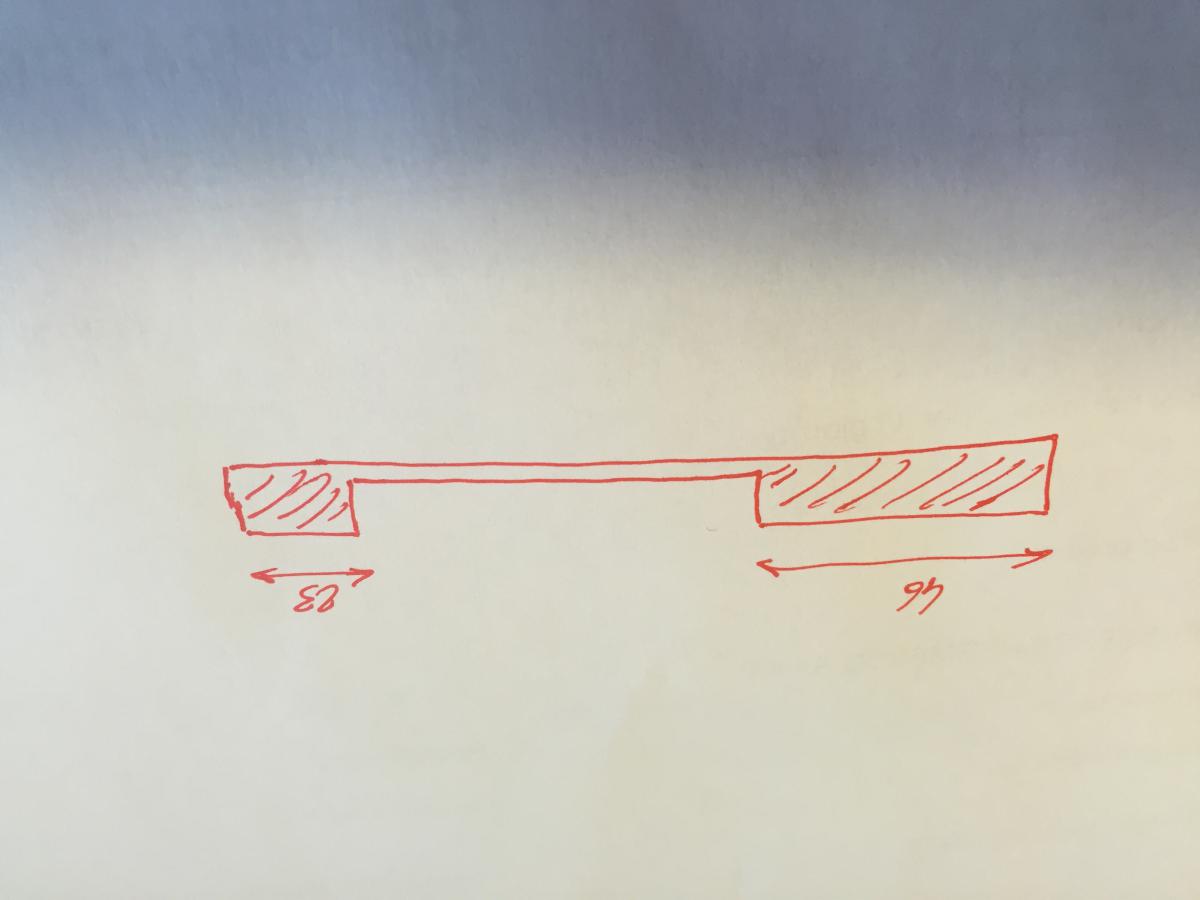
Member
Where the padding is insufficient, you need to remove paper rosettes under the key. For the black keys, I will explain more later.
Member
the spacer is done
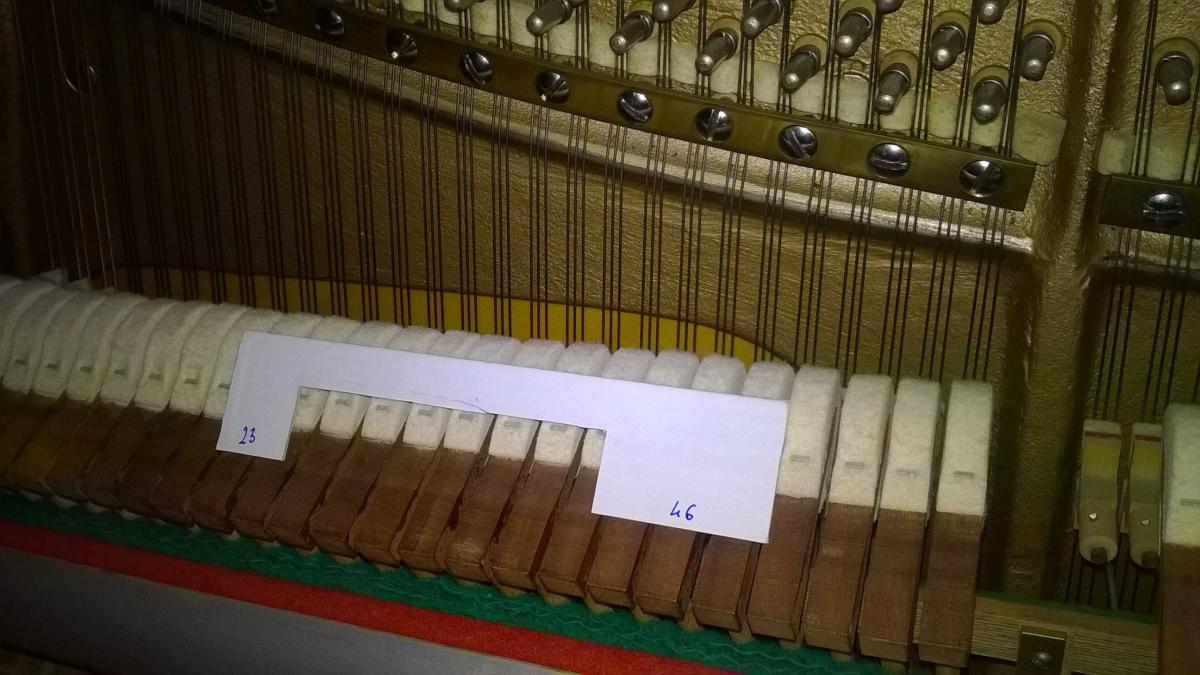
Member
Exaggerated, it must have the total thickness of a hammer anyway, it does nothing, you use it where a section begins and ends.
Put the 46 mm side between the hammer and the string on the side
Member
Make it thinner
Member
are you saying to thin out the double part?