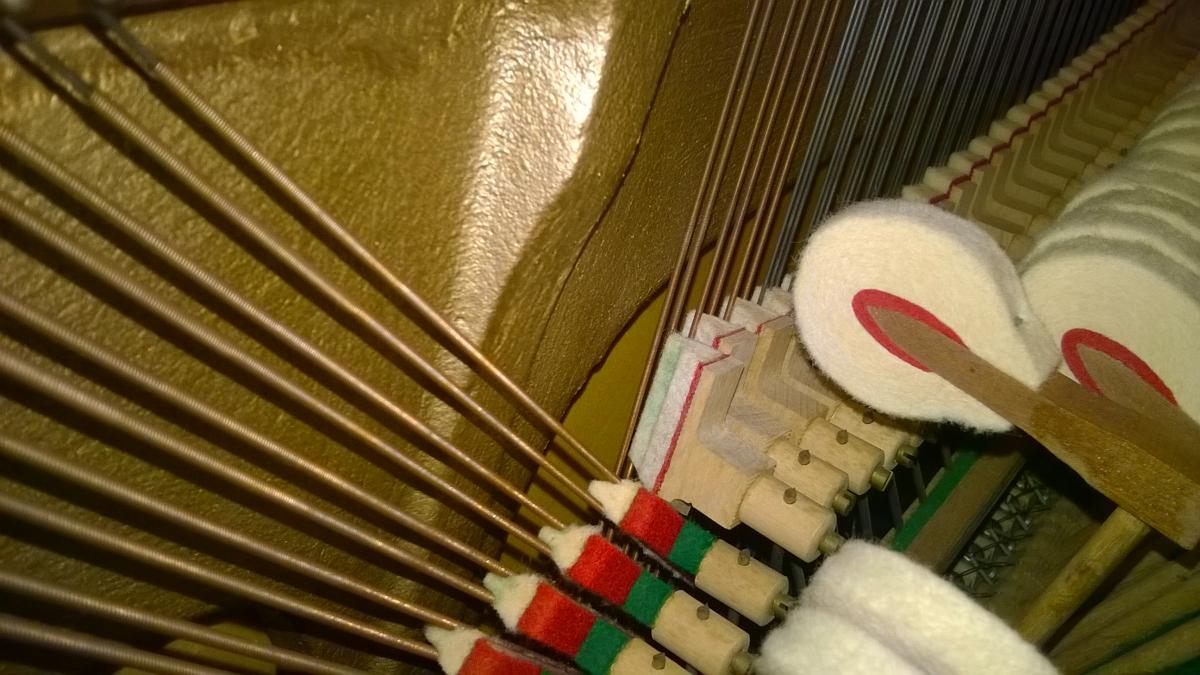
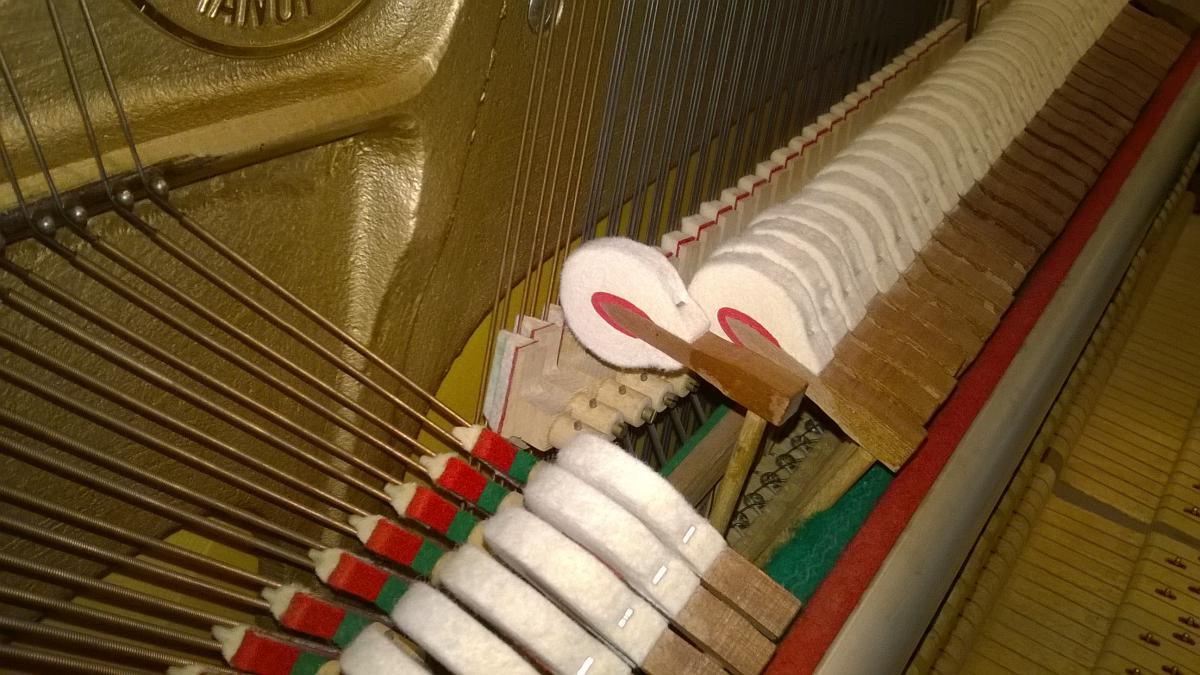
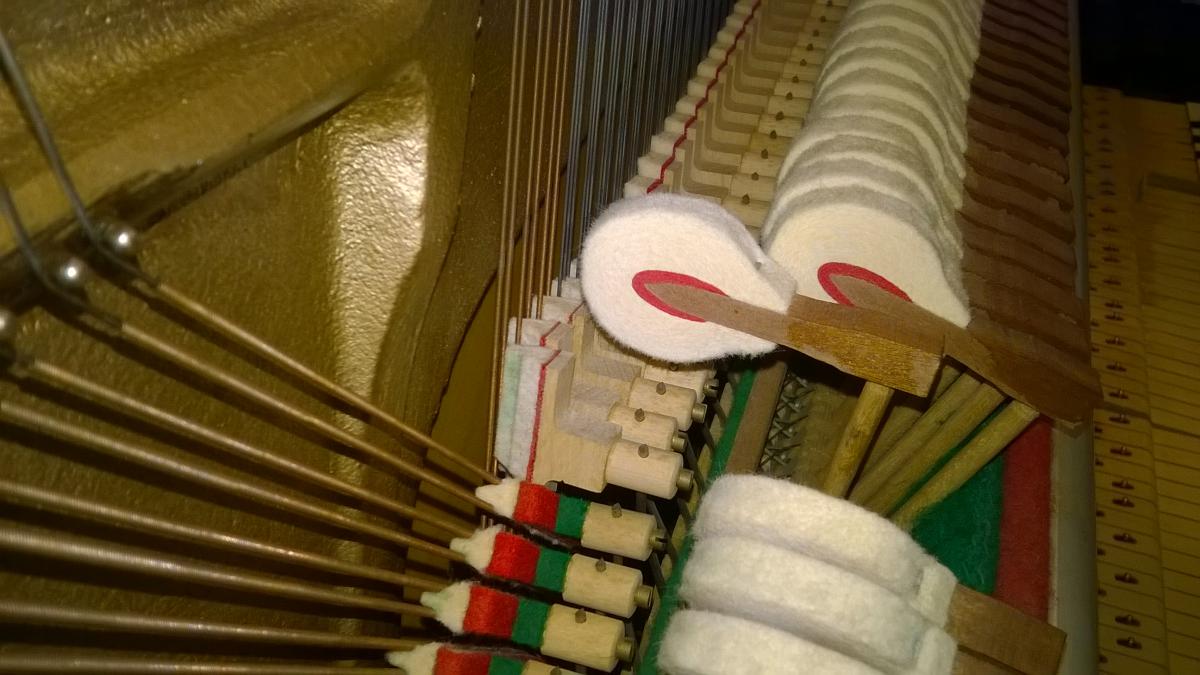
yes yes it stops further away
Member
Reply 161 by ful
- Posts
- 84
- City
- Rocca d'Evandro
Started by
Member
Member
yes yes it stops further away
Member
Member
It's fine, generally they should brake at 1.5 cm on average for the highs and the lows even a bit more; anyway, try to set them all so it seems to me that it works well. The important thing is that the hammer never wobbles, neither on piano nor on forte, and that it doesn't lose the repetition.
Then let's see how the action on the pilots is
Member
Then you will have to try to stretch those hammers, I'll tell you how
Member
Great Giovanni, this recording changes things much for the better. Tomorrow I will fix the rest better. I was almost about to ask you about the ironing, let's hope the sound of the bass revives a bit
Member
Let's see, it doesn't do much more anyway; you did the background well but to me it seems poor. The pusher, when the hammer is stopped and the key remains pressed after playing loudly, should be located about 1 mm from the cap, and it shouldn't remain exerting pressure.... Now, from the videos you make, I don't quite understand...
Member
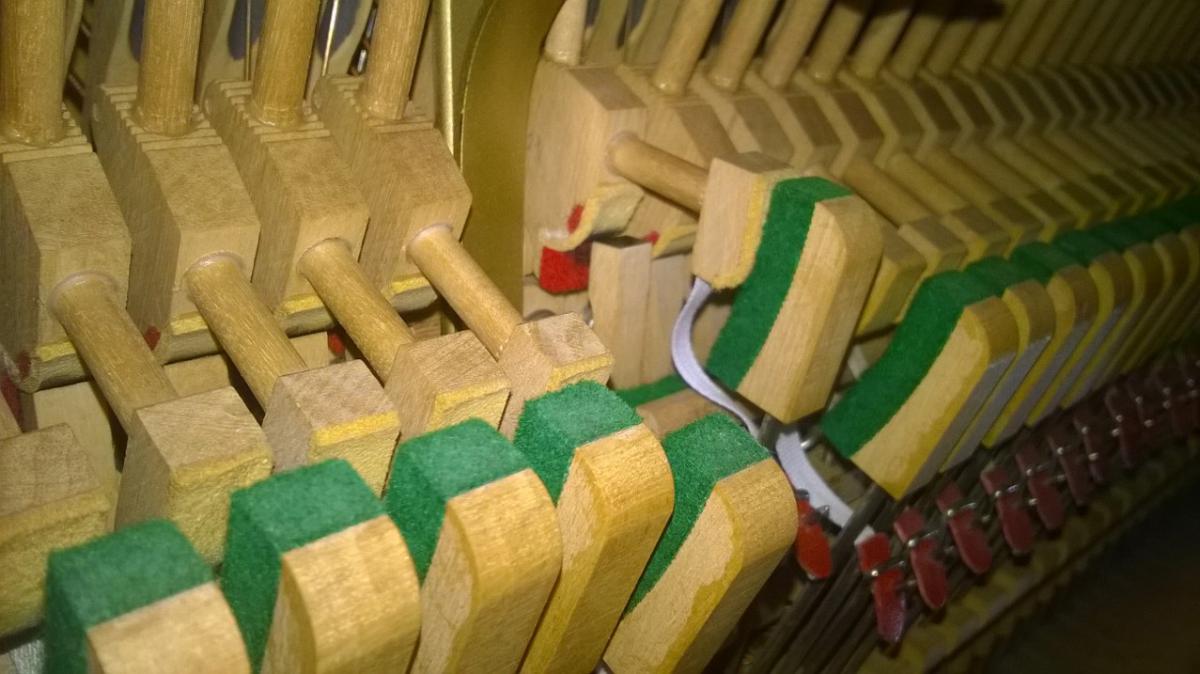
yes, in effect by removing 3 pieces of cardboard that were under the key, the pusher now distances itself by about 1 mm from the knuckle
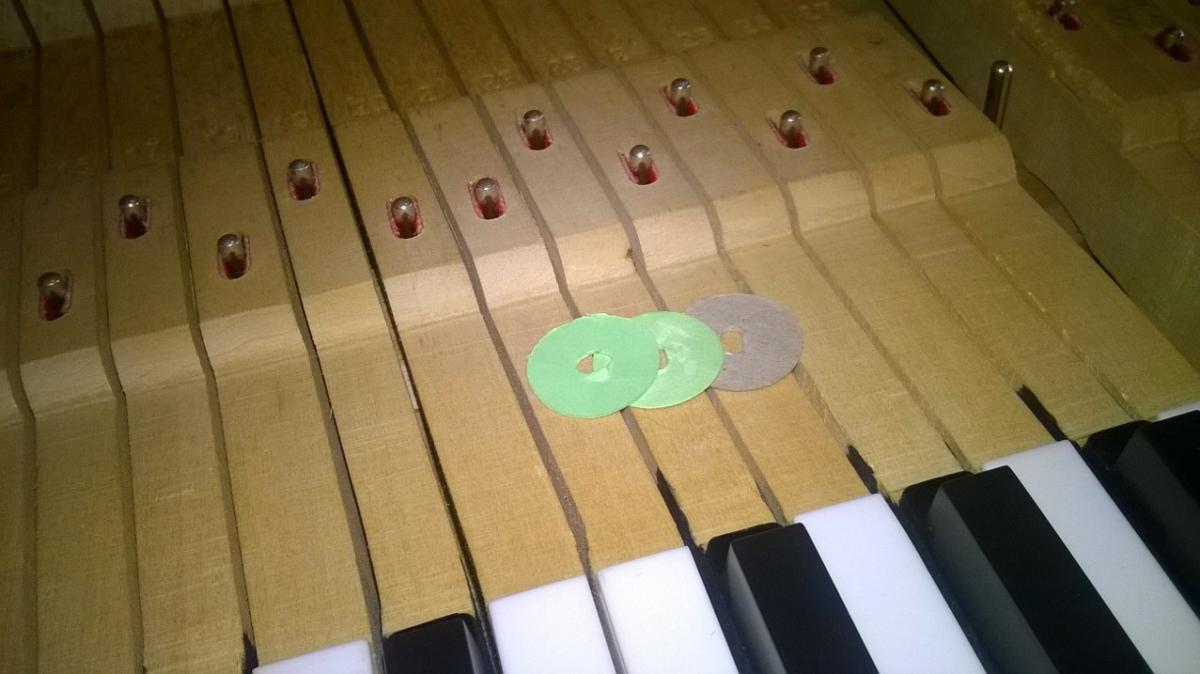
Member
Anyway, there are quite a few pushers that remain adjacent to the nut
Member
Yes, but what clearance have you achieved? If they remain tight, the pusher has no relief and the sensation is one of extreme hardness
Member
Anyway, what you photographed is a correct configuration, so if 10.5 isn't enough, 11 mm will also work
Member
ok. so you adjust the backgrounds, then the leveling? otherwise I have to accept a compromise. That is, precise backgrounds and leveling a bit less
Member
I adjusted two keys, the white one to 10.5 and the black one next to it in the photo is 1.5 mm above the white one
Member
You should have done it sooner though
Member
yes you said it, but I didn't understand, so do I adjust the white background and the black based on the heel?
Member
so I tune the first of the bass notes well and from there all the others? Sorry, but I've never done it..
Member
With the vertical, it is better to check it this way; these measurements depend on how the action was set up in the factory. 5 mm forward or backward can change the scenario even with the same hammer-to-string distance (the inclinations change).
Keep going and do the voicing well; once you have finished all this rough work, it will be good to recheck everything from scratch in the correct order and perhaps call a technician who can look at the instrument and give you specific advice.
Member
Ok, I'll try to do the backgrounds better, and then the escapements. Certainly, I can get so far, but then it's better to call a technician
Member
Here I am Giovanni, so I reviewed everything from scratch. I adjusted them in this sequence:
1. Backcheck (Barra di appoggio)
I noticed that the resting distance of the hammers was greater, due to the indentations created by the wippens, so I moved the backcheck forward by putting some felts behind it. Now it is at a distance of 45/46 mm. The first hammers in the center reach 47/48, perhaps the backcheck felt is even more compressed.
2. Let-off (Sfondi)
Starting from the right, I removed several pieces of cardboard to get 10.5, down to the last 8 bass notes which are at about 9/9.5. Perhaps flatter felt washers are needed. Then I also aligned the heels of the black keys.
3. Let-off jacks (Piloti)
I had to unscrew all of them because they had play, so I made it so that the hammer, at rest, sits on the backcheck without putting pressure on the pusher.
4. Escapement (Scappamenti)
Now better regulated thanks to the shorter hammer-to-string distance and the greater let-off. However, I regulated the treble to 3 mm. If I regulate them to 2 mm, the hammer jams too close to the string, even less than 1 cm.
5. Hammer regulating levers (Paramartelli)
Regulated so that they engage on both forte and piano.
What do you think? What else can I check?
Member
Why is there no background on the bass notes, have you checked the key leveling?
Member
Indeed, from the leveling of the keys, the first 8 are about 1 mm below