Exchange of Opinions

What is the purpose of music (today)?

100 replies 16,712 views

Started by

Frank

Moderator

Member

Reply 81 by danielescarpetti

Posts
1,032
City
Castel San Pietro Terme
Frank wrote:

@Daniele

Of course, dear Daniele, but I am increasingly convinced that the musical world is a rather "Strange" world; evidently, I must change my point of view.

It is more likely that it is the human world that is strange in its generality!

Member

Reply 84 by Viola

Posts
191
Viola wrote:

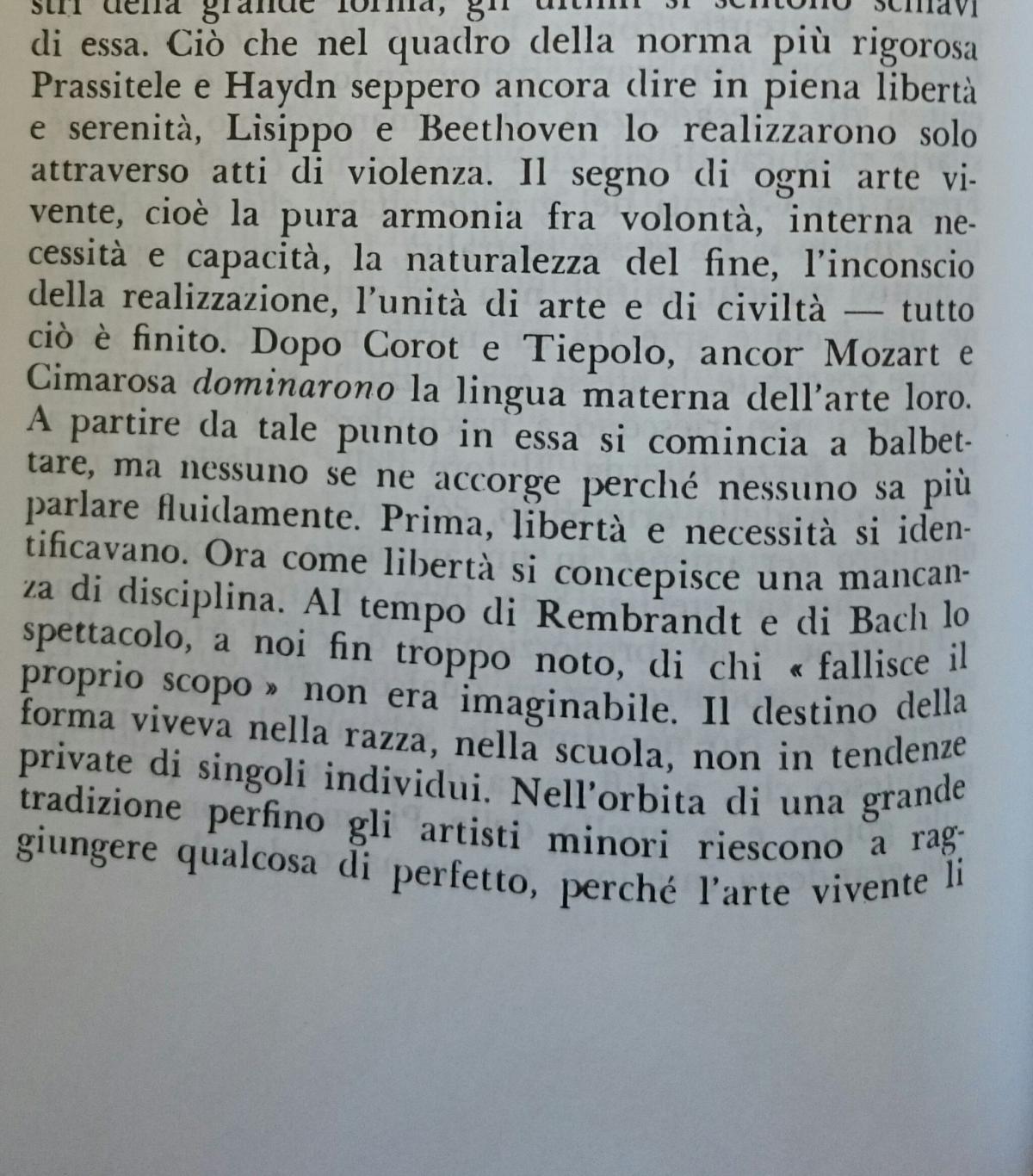
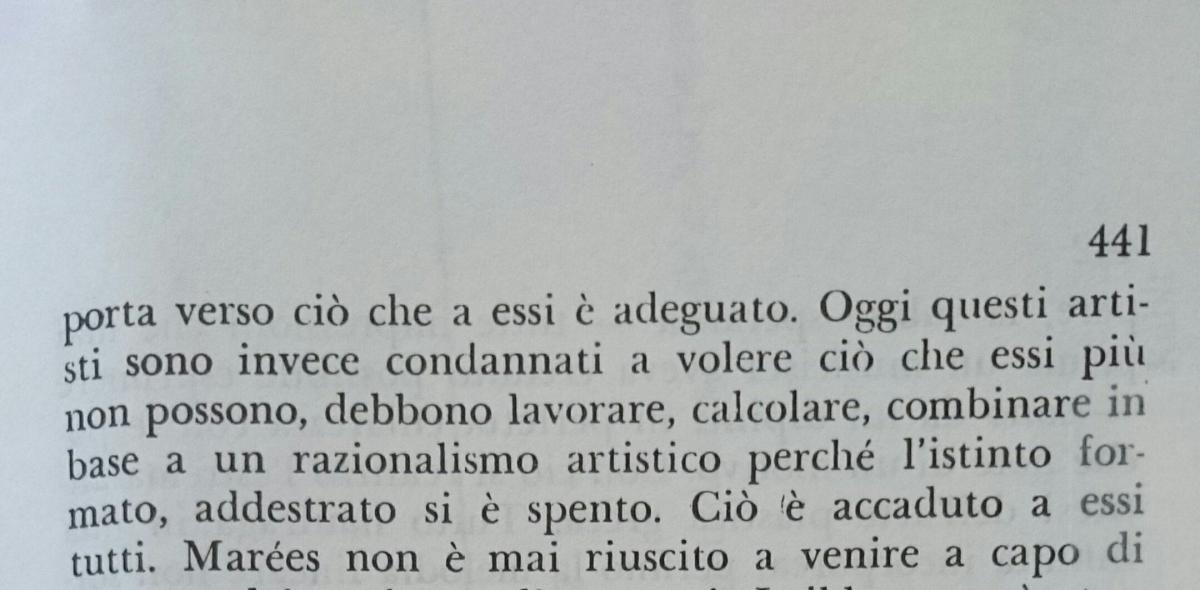
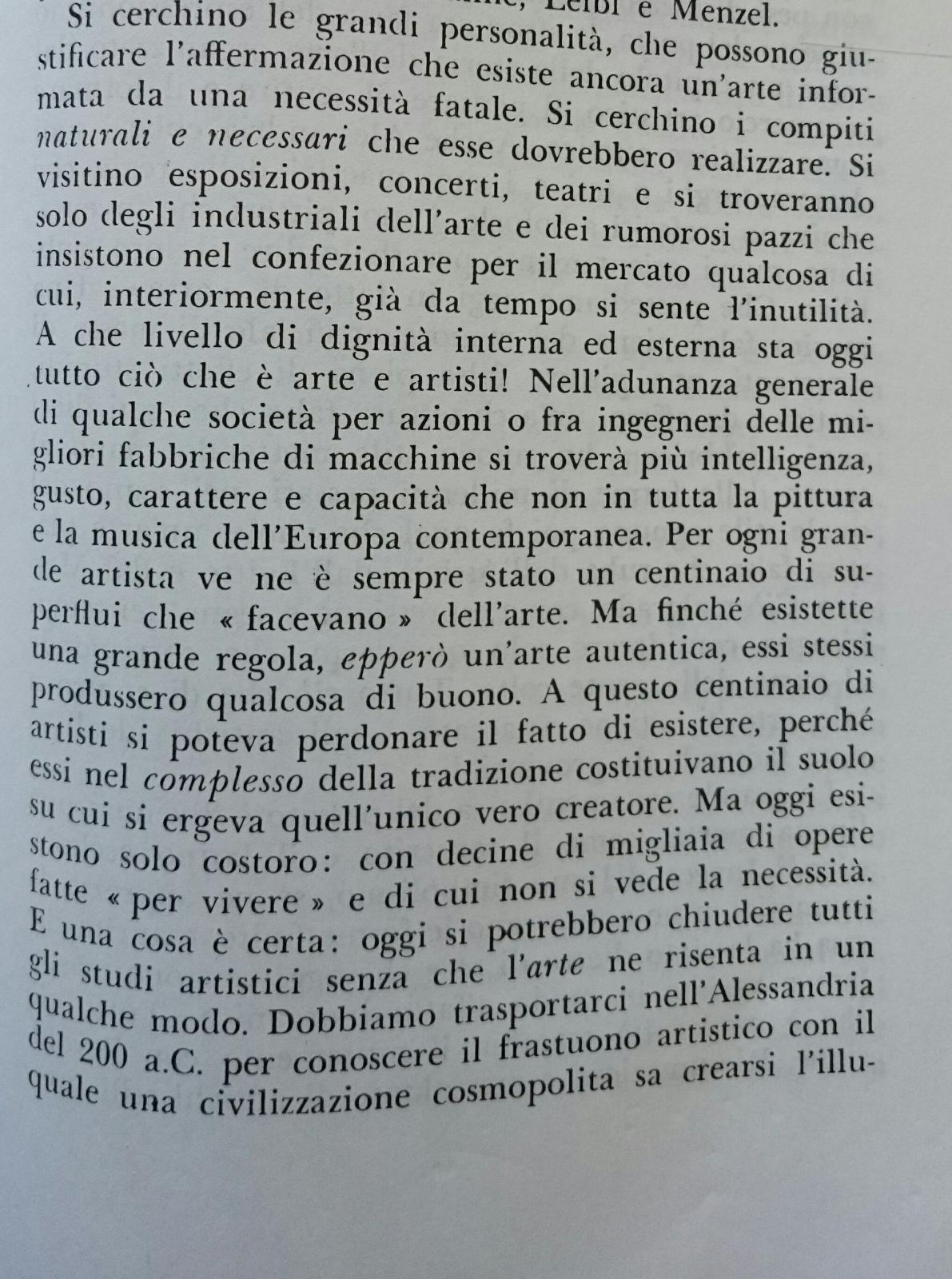
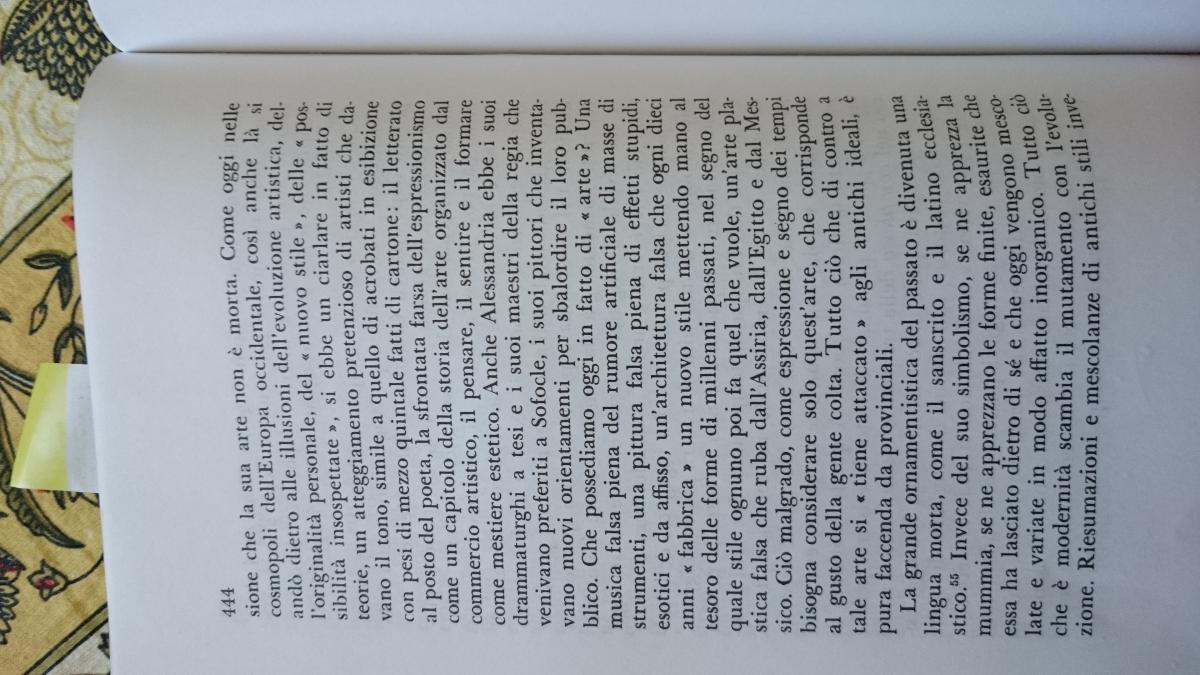
For those who have time (and desire):

The reading order is as follows :


Third ---→ Fourth ---→ Second ---→ First


Too easy otherwise ...

Member

Reply 85 by Viola

Posts
191

@Frank (see above)

What is the purpose of music today?

To make life more complicated for me/us/you in a classical music forum.

:-)

Member

Reply 86 by Gerardo

Posts
277
Frank wrote:

Here is the unsettling reflection: being a composer in freedom (I mean without any technical, aesthetic, market constraints, etc... perhaps expanding upon the Aristotelian consideration) is something for the wealthy (economically). And how many composers are truly wealthy?

It is the law of the market: who needs a professional composer of art music today, in this market? No one, nothing. There is no market on which to sell their products. And those who would like to make a living as composers are thousands, tens of thousands. People with no market value whatsoever. The more there are, the worse it gets, because a downward spiral begins: and who do you think you are, claiming to be paid for having composed music? Isn't writing for free good enough for you?

Master, behind you there are thousands who can't wait.

And I add: being a pure composer is a choice, like being a mountaineer, a yoga instructor, or a painter. They are professions without a professional register, devoid of immediate social utility, the usefulness of which is difficult to demonstrate unless entering the realm of abstract needs.

It makes me laugh quite a bit to hear quasi-union demands from those who have freely chosen to practice these professions, well knowing what they were facing, if only because many of the greatest composers in history suffered misery, marginalization, and humiliation during their lives. If someone wants to write symphonies as a profession, they can do so: but let them know that it is necessary to be born into a wealthy family

Member

Reply 87 by danielescarpetti

Posts
1,032
City
Castel San Pietro Terme
Viola wrote:

For those who have time (and desire):

I have had both and now I am asking you, do you agree with what is written there?

Member

Reply 88 by Viola

Posts
191
danielescarpetti wrote:

I have had both and now I am asking you, do you agree with what is written there?

I agree with almost everything.

That 'almost', however, is fundamental (or at least it is for me).

This book was published in 1918.

Member

Reply 89 by danielescarpetti

Posts
1,032
City
Castel San Pietro Terme
Viola wrote:

I agree with almost everything.

That 'almost', however, is fundamental (or at least it is to me).

This book was published in 1918.

I am referring in particular to what is written on the third page. And if you agree with it, I ask you to please provide me with your reasons why.

Member

Reply 90 by Viola

Posts
191
danielescarpetti wrote:

I am referring in particular to what is written on the third page. And if you share it, I ask you to do me the favor of explaining your reasons.

I will do it tonight.

(it is not something to be thrown together in a hurry)

(P.S.: have you understood from which immense work I extracted the pages I published?)

I wish you a good day, Daniele.

Member

Reply 91 by danielescarpetti

Posts
1,032
City
Castel San Pietro Terme

Thank you Viola, have a good day too!

ps: no, I don't recall which text you are proposing even though in the past I happened to read something similar. I don't know if it was the same one because in the years around 1948 those ideas reported there were circulating a lot. Thank you in advance then also for the title of the text and the author.

Member

Reply 92 by Viola

Posts
191
danielescarpetti wrote:

Thank you Viola, have a good day too!

ps: no, I don't recall which text you are proposing even though in the past I happened to read something that resembled it. I don't know if it was the same one because in the years around 1948 those ideas reported there were circulating a lot. Thank you in advance then also for the title of the text and the author.

Dear Daniele, I am trying to respond to you now.

Starting from the assumption that art is the expression of a society in a given historical period, I propose a (very schematic) analysis of the historical context in which we live.

- Supremacy of the mass

- Deformed masses without a defined style and a unitary feeling of the world

- Internal dissolution of nations into an amorphous population

- Fashionable styles in continuous change devoid of symbolic content

- Slow resurfacing of primitive stages in a super-civilized life

So:

A what is art (today) for?

Can 90% of the filth that is defined as such be called art? Does it nourish the spirit or the wallet?

Can an (artistic) product whose first year of existence will also be its last be called art?

What codes does it use? (art must be understandable)

---

I do not read contemporary authors.

I do not follow contemporary artists (painters, sculptors, etc...).

As far as contemporary music is concerned, I have started to follow (initially with great difficulty) the "weird music" of this attempted weird gentleman, whose brilliant weird thought still gives me hope.

___

Good evening.

Member

Reply 93 by danielescarpetti

Posts
1,032
City
Castel San Pietro Terme

Hi Viola.

Let's do this: first of all, I will propose to you my thoughts regarding what art is and what it is for (was and will be).

As far as the pages you proposed are concerned, I could tell you that they have already been widely refuted by facts.

They date back, as you told me, to 1918, and those writing there already demonstrate a great intolerance towards music from after Mozart (page 3, which I was telling you about), let alone for the music that was emerging at the dawn of the 20th century.

Art and the music of the 20th century were premonitory and representative in an absolutely wonderful and sublime manner of that period: a truly terrible century, the most terrible in human history.

Bernstein used to say that to truly understand Mahler, one had to undergo the first, the second world war, and the cold war, and this in itself already says a great deal about the power of Art's foresight regarding History.

.

And contemporary Art? Contemporary Art must deal with realities that are completely more complex, contradictory, and absolutely uncertain compared to the past, and above all with an heterogeneous and globalized multiculturalism that is not merely a product of one's culture of origin.

Ergo: everything must be reinvented, and this is the great challenge for contemporary Art today.

Good night!

che cosa è l'arte e a che serveBernstein diceva che per comprendere veramente Mahler bisognò subire la prima, la seconda guerra mondiale e la guerra fredda e, questo di per sé la dice già molto lunga

Member

Reply 94 by RedScharlach

Posts
496
City
-
Gerardo wrote:

If one wants to write symphonies as a profession, they can do so: but let them know that it is necessary to come from a wealthy family

Fortunately, it is not so. A wealthy family is neither a necessary nor a sufficient condition. It can be fundamental, in some cases, but it is not indispensable. At least a couple of recent examples come to mind of composers, or aspiring ones, who "started with a bang" because they had a wealthy or influential family in the cultural world behind them. Now, I don't know what became of them, but I doubt they continue to write. A wealthy family counts for a lot, just as the ability to move in the places where music is made counts for a lot, but in the long run, what really matters is the quality of the work. In fact, even more than the quality of the work, what matters is the strength of the idea, to which the quality of the work is subordinate. And in fact, even more than the strength of the idea, what matters is the will to act. Will, strength of the idea, quality of the work... If this is present, no wealthy family can stand against it.

Member

Reply 95 by Gerardo

Posts
277

> A wealthy family is neither a necessary nor a sufficient condition

On this I agree, but if one has the idea and the will to act, the times are infinitely shorter and situations of "compromise" are avoided.

Member

Reply 96 by maquieto

Posts
665
City
Massa Carrara

Music serves to say something to someone.

The pieces contain the words to say it but....it is generally up to the pianist or instrumentalist to say them.

And I would add...knowing how to say them well.

Member

Reply 97 by maquieto

Posts
665
City
Massa Carrara

Yes, perhaps I was also rambling as usual. I think that making "cultivated" music today is undoubtedly necessary. Just like any artist who feels the need to speak will not be able to remain silent about what they feel, learn, see, etc.

The artistic process in all eras will never have an end. Consider that there are those who had the audacity to claim that according to examinations (conducted via software) of all pieces written from the origins to the present day, all intervals, chords, harmonic variations, etc., have already been written.... all of them... if you know what I mean.

That is to say, nothing new can be written anymore?

I was seriously stunned..

It is true that since the early 1900s there has been debate about the crisis of art, the exhaustion of themes.... the classic saying... everything has already been said and discovered.. and what do we do? Do we sit on the sidelines admiring the wonders of the good old days?

I think this type of approach to art is of the worst kind... in art, it's not about making a round hood and then making it pointed... then making it out of glass etc. etc... in art, nothing is disconnected. It is not all based on "doing new things". The new lies in the artist who knows how to see the same things in a different way... think of De Chirico (I speak from personal experience in the artistic/pictorial field), the avant-gardes, minimalism etc... the futurists... everything seemed to be going in an obligatory direction when he, in those same years, went backwards rediscovering the Greeks, 17th-century painting but..... in a new key!!,

If we look at a glimpse of nature from a window, this glimpse will not be very different from what a Plato or an Aristotle could see... a tree... is still a tree.

This is to say that the world will always be similar (so to speak) but works of art will always travel based on a "new man" who will feel the same things in a different way...

For me, making cultivated music today is necessary, as it has always been and always will be, to translate a historical moment and a "feeling" into music, fixing its cornerstones for posterity... giving them the beauty of this relationship (man, nature, humanity).

I have always lived, like a thousand other artists, on what was done before me.

How will the artists of tomorrow fare?

Member

Reply 98 by danielescarpetti

Posts
1,032
City
Castel San Pietro Terme
fabio73 wrote:

So, does this mean nothing new can ever be written again?

I am seriously stunned...

It is true that since the early 1900s there has been debate about the crisis of art, the exhaustion of themes....the classic saying...that everything has already been said and discovered..and what do we do? Do we sit on the sidelines admiring the wonders of the good old days?

The new lies in the artist who knows how to see the same things in a different way...think of De Chirico (I speak from personal experience in the artistic/pictorial field), the avant-gardes, minimalism etc...the futurists...everything seemed to be going in an obligatory direction when he, in those same years, went backwards rediscovering the Greeks, 17th-century painting but.....in a new key!!,

If we look at a glimpse of nature from a window, this glimpse will not be very different from what Plato or Aristotle could see...a tree...it is still a tree.

This is to say that the world will always be similar (so to speak) but works of art will always travel based on a "new man" who will feel the same things in a different way...

For me, making cultured music today serves, as it has always served and always will, to translate a historical moment and a "feeling" into music, fixing its cornerstones for posterity...giving them the beauty of this relationship (man, nature, humanity).

I have always lived, like a thousand other artists, from what was done before me.

How will the artists of tomorrow fare?

If you think about it carefully, the world that Plato saw from the glimpse of his window is actually completely overturned compared to what we see today, starting from the cities and ending with that very tree which, in Plato's time, was where Nature wanted it to be, and today is almost always where man puts it.

But then think about the innumerable noises that Plato could not even imagine and with which we live today; not to mention the stench that surrounds us, which back then was linked to animal excrement and today to quite different and more terrible excrement...

And precisely in this sense art, philosophy and, more generally, our being human beings on Earth has changed and modified itself. Art - and therefore also Music - will never end, neither today nor tomorrow, but it will change, as it has always changed, based on how humanity changes.

Member

Reply 99 by maquieto

Posts
665
City
Massa Carrara

Exactly.. I agree. Perhaps I didn't explain myself well because of the glimpse through the window. I meant it figuratively. I was trying to say that the deep substance of things is always the same; it is logical that the ways of understanding it change.

There is a beautiful aspect that Giorgio De Chirico spoke about in an essay related precisely to the ancient world, and it proves extremely useful for understanding what I was talking about. Have you ever watched a historical film (Greeks, Romans, etc., etc.)? If you observe the represented things closely, it seems as if everything has its own temporal course. Let me explain better. While everything works regarding the actors and the objects used in the historical reconstruction, it only takes one scene where reconstructed elements are filmed together with natural elements (that is, for example, the sea, tree branches, etc., etc.) to reveal the Mystery... well, at that precise moment everything collapses and the reconstruction goes to hell... precisely because of the fact I described above... you cannot make the sea move as it did in the time of the Greeks... precisely because it moved in the same way it moves today... it's just that for our minds it is impossible to Accept it... or rather.... to see it.

The actors work perfectly, in fact.... insofar as they are false.

Only Fellini in Satyricon succeeded, through various techniques, in recreating the illusion.

These are very complex semantic aspects, but seriously, I am convinced that the problem is not created by things, but by people.

The art of creation is just beginning, and all the avant-gardes, in my opinion, are already prehistory. Personally, I do not feel the castration that many artists complain about nowadays.

Those who have something to say will say it, regardless of whether it is important or not for posterity.

Anyway, these are complex arguments that, in my opinion, cannot be discussed in a single post.

Thank you for your interest.

Member

Reply 100 by danielescarpetti

Posts
1,032
City
Castel San Pietro Terme
fabio73 wrote:

Personally I do not feel the castration that many artists today complain about.

Whoever has something to say will say it, and this is independent of whether or not it is important for posterity.

I really like this statement of yours, and my interest in what you have written is due to the fact that you write ... interesting things. So, I am the one thanking you in turn.

Log in to participate