

ok, no problem
http://www.pianoconcerto.it/forum/index.php?/topic/3514-strumentazione-e-righi-musicali/

Started by
Moderator
Moderator

Member
Frank wrote:@Bianca
Before commenting, I need you to better contextualize your choice of tempo in the playback in relation to the tempo indication shown on the score (besides, you know that others have used it, but we will talk about that). Let me explain better: with Finale you could have gone much further in speed, but you didn't... so deep down, what held you back in this, and what was the determining factor that made you choose the tempo you proposed in the mp3?
i am still waiting, though
Abate also seemed a bit absent in this workshop
Moderator
Bianca wrote:i am still waiting, though
Abate also seemed a bit
'absent' in this workshop
You know I am about to arrive (and I don't know if you will be happy about it), I have already gone into detail but in terms of executability, at the time of playback (we will talk about the score later) it is feasible (there are some 'buts', though! But we will talk about that, right now I am extremely busy/messy), it can be improved but once a few points are removed, the rest does not present abysmal difficulties.
Member
Bianca wrote:Abate also seemed a bit like a fugitive in this workshop
Only in this workshop?
It's true, I'm a bit messed up with some exams.
I especially like the idea of your escape.
Member
AbateFaria wrote:Only in this workshop?
It's true, I am a bit messed up with some exams.
I especially like the idea of your escape.
But you know that I am more interested in what you don't like
Anyway, in what sense do you like the idea?
Moderator
@Bianca
Here are my considerations; as always, they are some reflections inspired by your work.
Tempo Indication
Get yourself a copy of Donatoni's score: Argot. The 2 pieces for violin (1979) where the composer prescribes “Il più veloce possibile” [As fast as possible], does not indicate a meter and presents a writing where clearly this indication makes sense. (However, I have one criticism: at a certain point, it makes no sense to write “presto” in parentheses; if we are already at the fastest possible, what is the use of writing “Presto”?)
But in effect, you prescribe “Il più in fretta possibile” [As quickly as possible], without a tempo indication, which in my opinion is ambiguous with fast... Furthermore, unlike Donatoni's, in your case the context leads to ambiguity; for this reason, I would at least put in parentheses the metronome marking that you (later) indicated in the posts (the one from the playback), alluding to haste rather than speed. This should contribute to evoking a hasty gesture which, however, must be managed; in your score, this concept is betrayed by the articulations. Precisely, where are they?
Articulations
To me, the score appears poorly cared for; there is only one slur on part of a subject re-presented without criteria, or rather, what is the criteria?
I ask this because, since there is no performance practice, I would execute everything portato in the 3 or 4 points where you indicate the slur, even if the one at 28 seems inconsistent to me. We are on the subject, but just like in other points.
Returning to the
keep the attention alive and best represent the only indication present in the score (remember the haste). This also aligns with dosing the material.
Orchestration: if you choose an ensemble, it must make a difference. You have 2 keyboards, a pedalboard, and many colors. Get the technical specifications of an organ that actually exists (the web is full of them) and then try to stick to what the instrument truly offers you. You will see that you will become very demanding. If there is a piccolo flute and you want to do something witty with it, all you have to do is indicate using the piccolo registers and your idea will be best valued. Think about it: if in a moment where you have a trumpet in mind I put a principal [stop], would you be happy? Would I be able to respect your idea? Your orchestral design?
I say there is nothing to gain. I know that choosing leads to increased awareness, but in my opinion, you are at a point where you must aim to better care for your works in many different aspects—things that you currently neglect but that will surely allow you to make a leap in quality.
Member
Bianca wrote:But you know that I am more interested in what you don't like
Anyway, in what sense do you like the idea?
I wouldn't know how to explain it better than Frank; I think it is a way of supporting the original idea. I don't know how effective it is—technicalities aside, the piece strikes you in the very first moments, after that it is almost "self-declared," one just waits for the end.
Member
Frank wrote:The idea is good, the harmony has its points of interest but it is a very raw work and this condition persists to the point of being a bit tiresome, you need to dose your resources better.
Frank, I would also like to respond to the rest of the observations you made, but first I would like to understand if what is tiresome is the fact that I continue to neglect the scores or something else....
Moderator
I didn't understand

Member
Damn, Frank wrote almost a treatise earlier, with suggestions that followed the excerpt you quoted. That seems to be what he was referring to.
Member
I was saying, it seems clear to me what he/she was referring to.
Member
Frank wrote:I didn't understand
volevo dire che non ho capito cosa è che stufa, se il fatto che non riesco a curare le mie partiture, o il pezzo in sé.
Member
Piccinesco wrote:I was saying, it seems clear to me what he was referring to.
not to me obviously
It's been a long time since I've been discussing with Frank the way I prepare my scores and I wouldn't be surprised if he might also be tired of me pointing it out, and that's what it seems to me he means. However, I also had the doubt that he was referring to the piece itself, which perhaps he finds boring...
Member
Read again, I don't think he would have written all that if he hadn't glimpsed some potential in the escape. Sometimes advice must disregard the effect a work produces on the person analyzing it.
Member
Piccinesco wrote:Read it again, I don't think he would have written all that if he hadn't glimpsed some potential in the escape. Advice sometimes must disregard the effect a work produces on the person analyzing it.
I understood it that way immediately as well. Then, rereading, especially Faria's post, where he says that "he expects the end," I began to have doubts. In order to try to improve what I write, I believe it is important to clearly understand where there are margins for improvement, and I try to understand this even at the cost of becoming pedantic. Let's say that there are deficiencies in the notation; that is established, I have no doubts, but if there were also problems at the level of the "musical object" (which are not related to matters of taste), then the matter would be different and I would have to address it in another way. Let's say, for me, it would be secondary, if not superfluous at that point, to refine the score, and I would dedicate myself primarily to other aspects. And that is why I am interested in clarifying the matter.
Moderator
Piccinesco hit the nail on the head. Bianca, the score is a mirror of what should be heard. Care is not intended only in a strictly graphic sense. The absence of indications shows the absence of many things that contribute to making a passage more or less interesting and, by extension, the entire composition.
From my point of view, when you say: "I would dedicate myself in the first instance to other aspects," you are aware that you are indeed "in the first instance." Okay, the harmony holds up, you have chosen a formal structure, the listening "itinerary" is almost defined, but despite this, from my point of view (of course), you clearly show that you have abilities and lay the groundwork to propose a piece that can become very interesting. From experience, it always happens that when one section of a piece improves, the flaws of another section become more evident, which perhaps survives precisely because the rest is not yet at its best. In this phase, it happens that the listening itinerary changes slightly, even the formal structure, all for a more effective result.
I don't want to repeat myself, but I propose a couple of additional parallels.
Reading one of your scores is like being faced with a string orchestra that plays fluidly for 5 minutes, without dynamic differentiation, always in the same register. Who wouldn't get bored? Consider that even just the bowing can be the deciding factor to differentiate two identical melodic fragments... think about the fact that you have a lot of other resources without even touching the dynamics.
Let's broaden the field so we also approach the organ; it is as if one were faced with an orchestra and the same played with only one timbre, without dynamic differentiation, the same instrumental gesture, always in the same register, etc. Who wouldn't get bored?
Given that I wouldn't touch many notes of your fugue, except for what is already indicated plus a little something more, I would make clear choices and try to honor them. Primarily regarding the instrumentation, the tempo, and the character. You will see that the rest will be a consequence; you will start to employ instrumental gestures, timbres—sometimes it would simply suffice to transpose some notes up or down to create situations that would make listening more interesting and contribute to the success of the piece.
We know that the organ is not able to manage dynamics (a drawback that in itself is quite limiting), but it has its own timbral variety. Ignoring this resource, as well as instrumental gesture, is enough to weaken a composition. In my opinion, there is very little missing, but if you want, let's do an experiment... let's take Mozart's best composition and play at making it worse while keeping the notes unchanged. You will see that it will be very easy to mess it up and very difficult to improve it (clearly in this case it is probably almost impossible to change it for the better, as always happens with what are the best compositions). Sometimes, simply removing a sudden piano from Beethoven is enough to strip a piece of its effectiveness. This is a reflection we should all make, myself first, obviously. In fact, I thank you for giving us the opportunity to speak freely about it without taking offense... you have no idea how thin-skinned composers can be.
As always, however, I remind you that these are just my considerations; I write them only because I believe they might be useful to someone. The fact that I am writing them does not automatically mean they are "mandatory," of course not.
Member
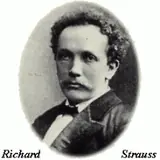
In this regard, I would like to add that in the fugue I wrote, contrary to my usual practice, I did not indicate anything, but rather specified that it is up to the performer to choose dynamics, legato, staccato, etc. ... and therefore I expect whoever performs it to have this sensitivity. But it is necessary to specify it.
Moderator
From my point of view, RStrauss is an alibi; we have all taken a look at the Schumann piece ( http://www.pianoconcerto.it/forum/index.php?/topic/3543-analisi-armonica-e-melodica/ ). It is infinitesimal in terms of what needs to be done, and we are talking about a language that today appears practically self-describing. And despite the fact that there was a partitura at the time, he indicates the pedal measure by measure, slurs, agogics, etc.
Despite everything, it remains a framework; if we remove even these indications, what is left?
Are we saying that Beethoven should leave the performer free to choose the dynamics (and the agogics), so that I can perform the fifth symphony however I want? It might not even sound like Beethoven anymore, we all know that, right? It's like playing Bach with Chopin's rubato. So, we are very good when it comes to others' works, but with our own, anyone can do anything. I don't think that argument holds up much.
I can only acknowledge that by choosing to write in a "common" musical context, some requirements diminish (anyway, tonal works are right before our eyes; we can observe what composers indicate or have indicated in the score), but what? The cadenza passages? Since time immemorial, the composer has been a little "tyrant" who delegates as little as possible in support of their cause, their musical idea (obviously, if one has it). Even less so after Debussy and Ravel; I doubt anyone appears credible without indicating anything in the score.
Member
Engaged and interesting discussion, following your suggestions I looked at a 19th-century fugue, Franck's
Indeed it is very well crafted
I think our Frank has put his finger on the wound, for me it is also the fault of teaching that stops at harmony. Composition courses that seem like complementary harmony courses.
Member
The technical aspect was captured, but there is (for some I think, for me it is also so) the aspect of non-total control (much like I think RStrauss did, at least in part): many years ago, when I began writing something, I took great care especially in the metric division, even if and often making mistakes, but I did not indicate expression marks, let alone agogics; lately there have been moments where I have taken a bit more care with everything, but in others I haven't, and the main reason is that I often do not imagine a passage in a definitive way, then besides this I would like to leave freedom to the performer to grasp the character of the piece (then maybe I have second thoughts and want to specify everything), living in almost total insecurity also entails this. I have nonetheless tried something like this with a piece for piano, which Simone played practically as I would have played it.