

Most are copies of original instruments, although often adapted to the customer's needs

Member
Reply 21 by antares86
- Posts
- 1,414
- City
- Bologna
Started by
Member
Member
Most are copies of original instruments, although often adapted to the customer's needs

Member
Beautiful, these constructions are incredible. You know, ever since I was a child I have always loved wood and I also worked for five years as a carpentry manager but in the naval sector. I created many marquetry pieces. It would be wonderful for me to be able to build instruments. You have a great opportunity. Make the most of it.
If I find them, I will send you some photos of the marquetry I used to do back then.
Pianist, painter, carpenter....I know, I know....I am a damn eclectic person...
Compliments.
Member
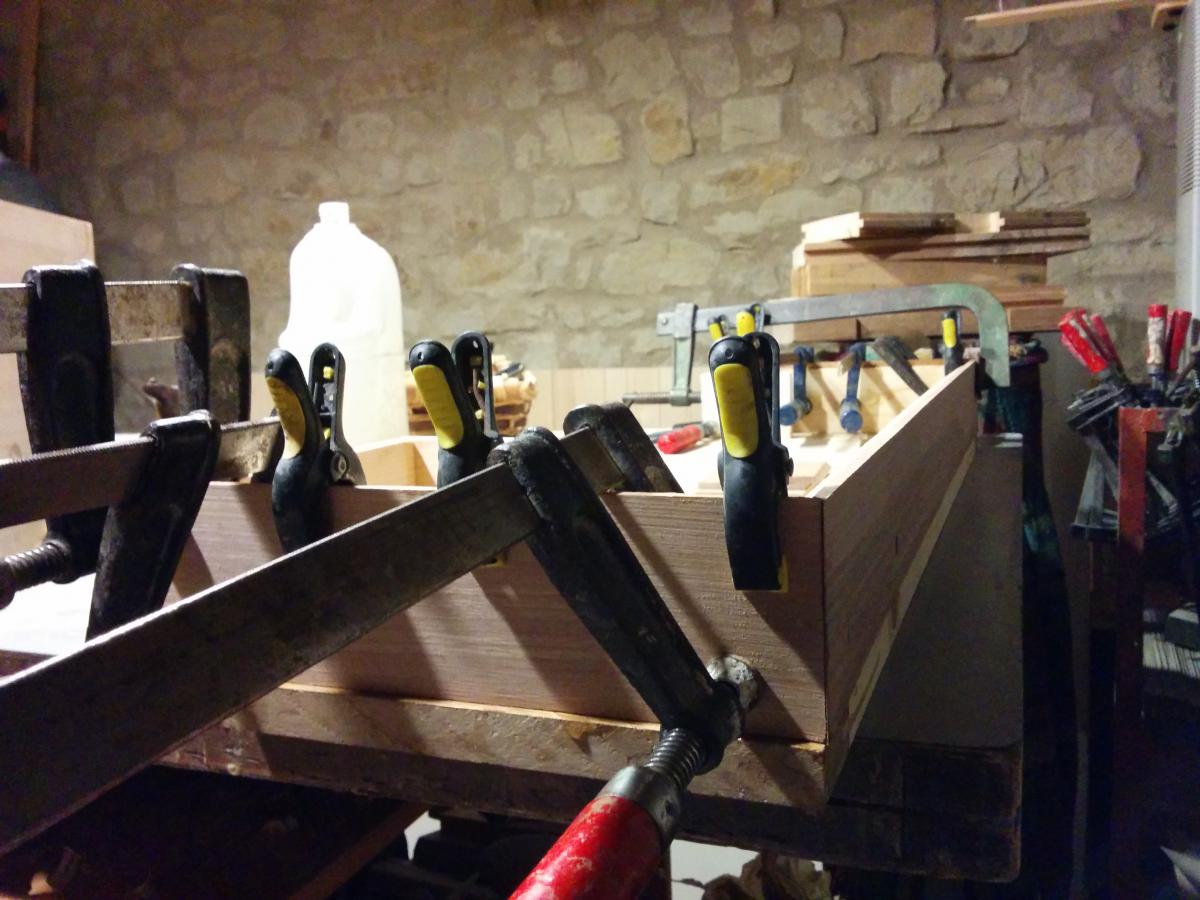
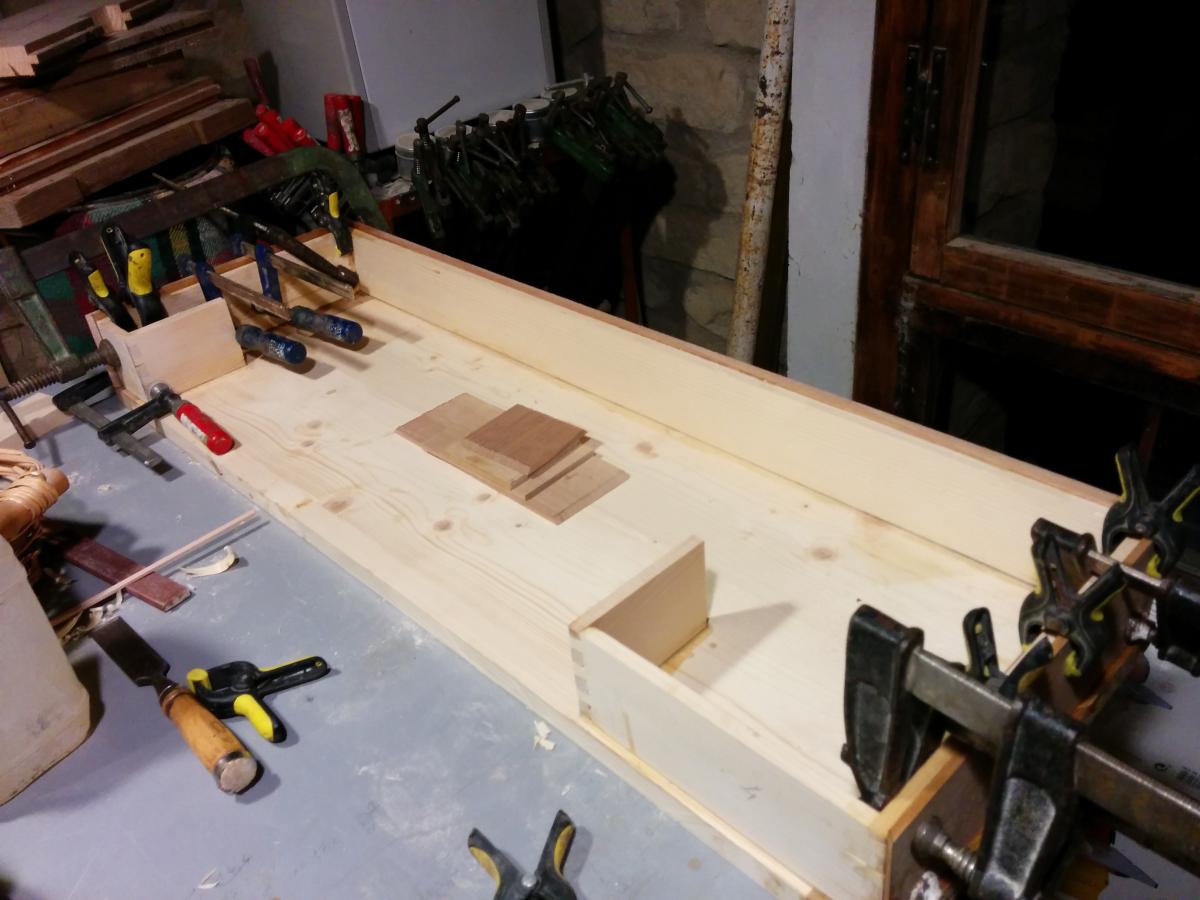
Ehhh I'm continuing!!! Yesterday I glued the sides... On Thursday if I have time I'll glue the walnut veneer onto the sides... Then I haven't decided how to proceed yet, though... I will certainly have to install the maple strip for the pins and the thickness to support the soundboard.. and obviously install the string attachment guides... Without forgetting the keyboard, of course!! That will be a real hassle!!!
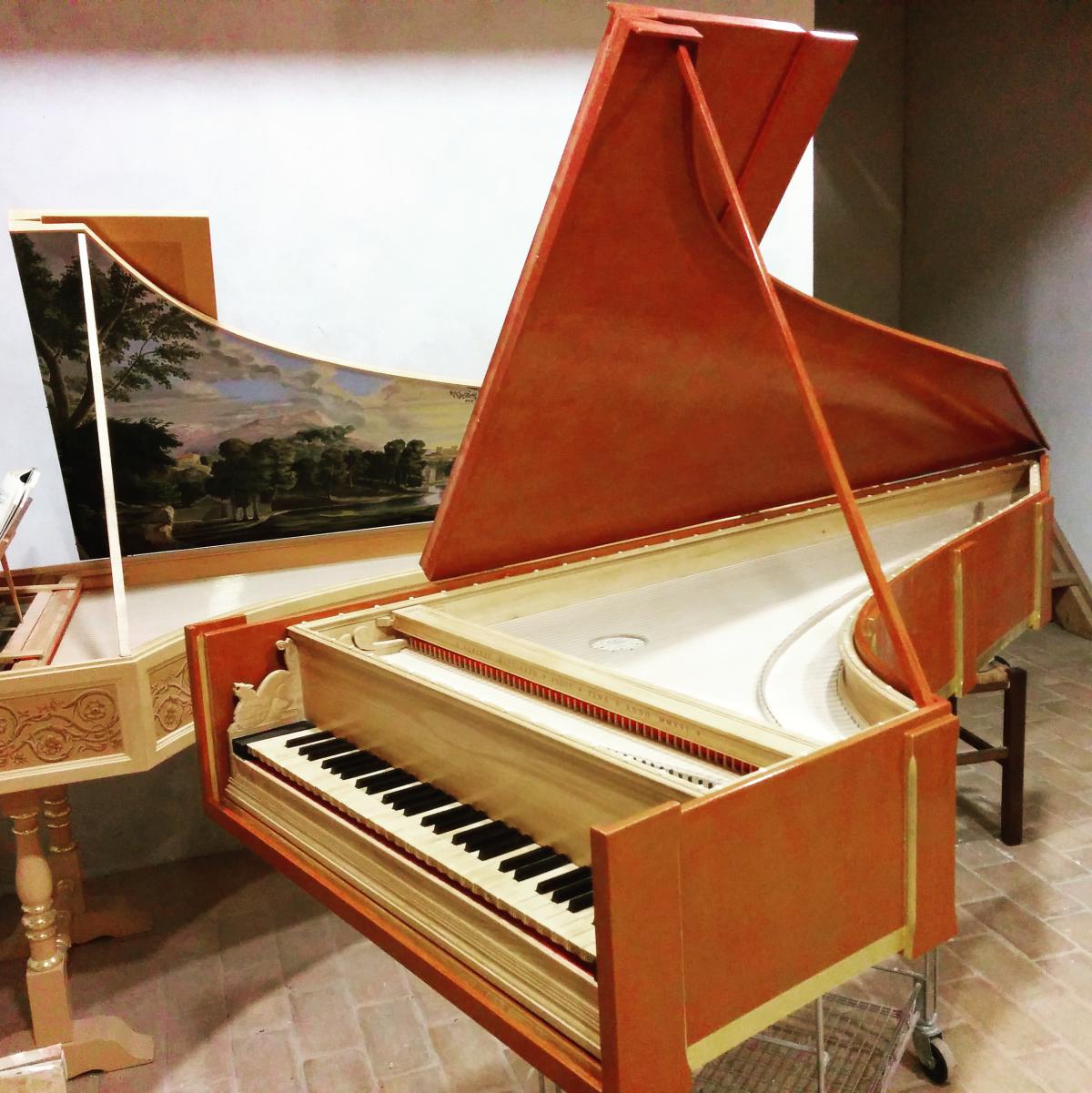
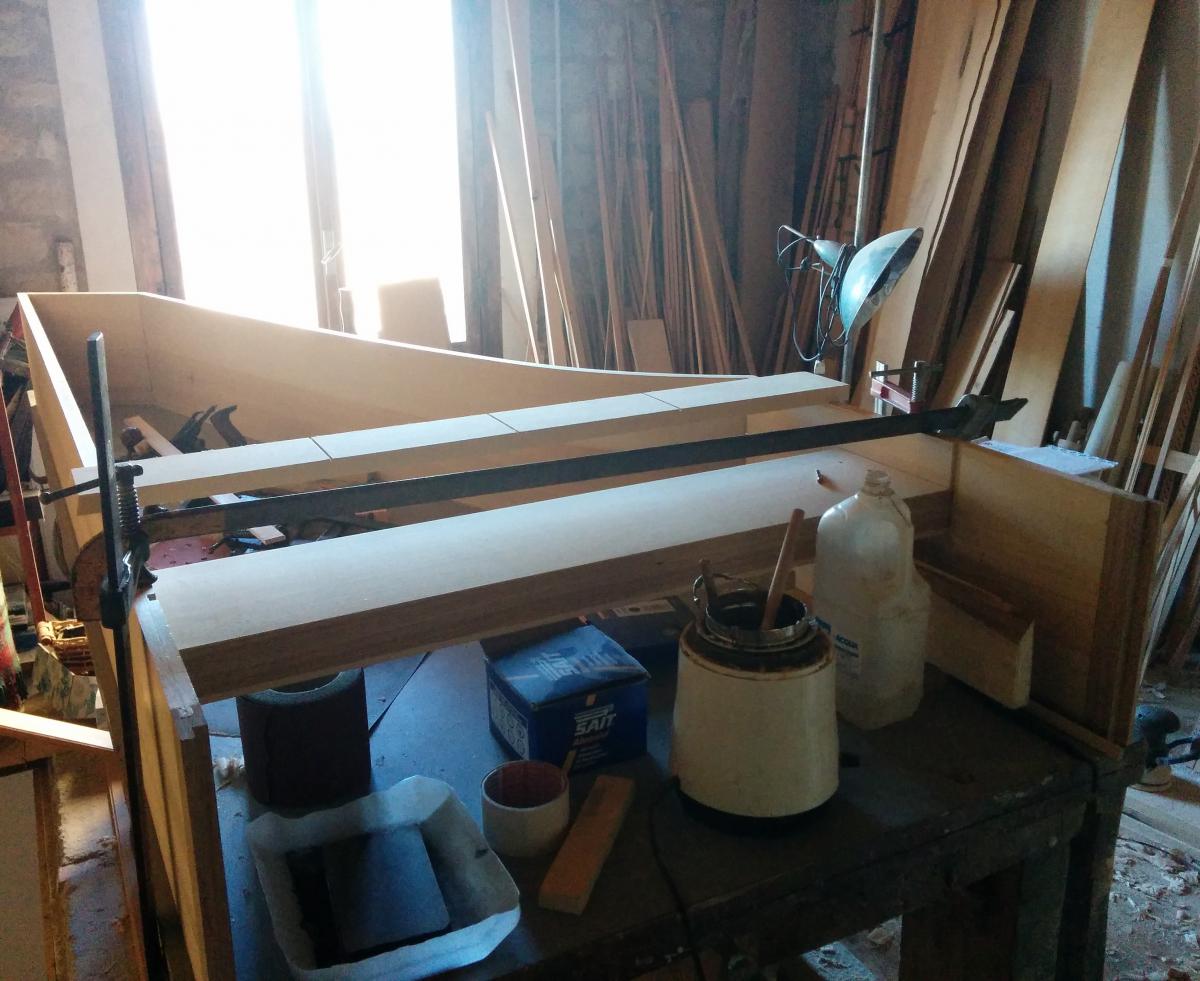
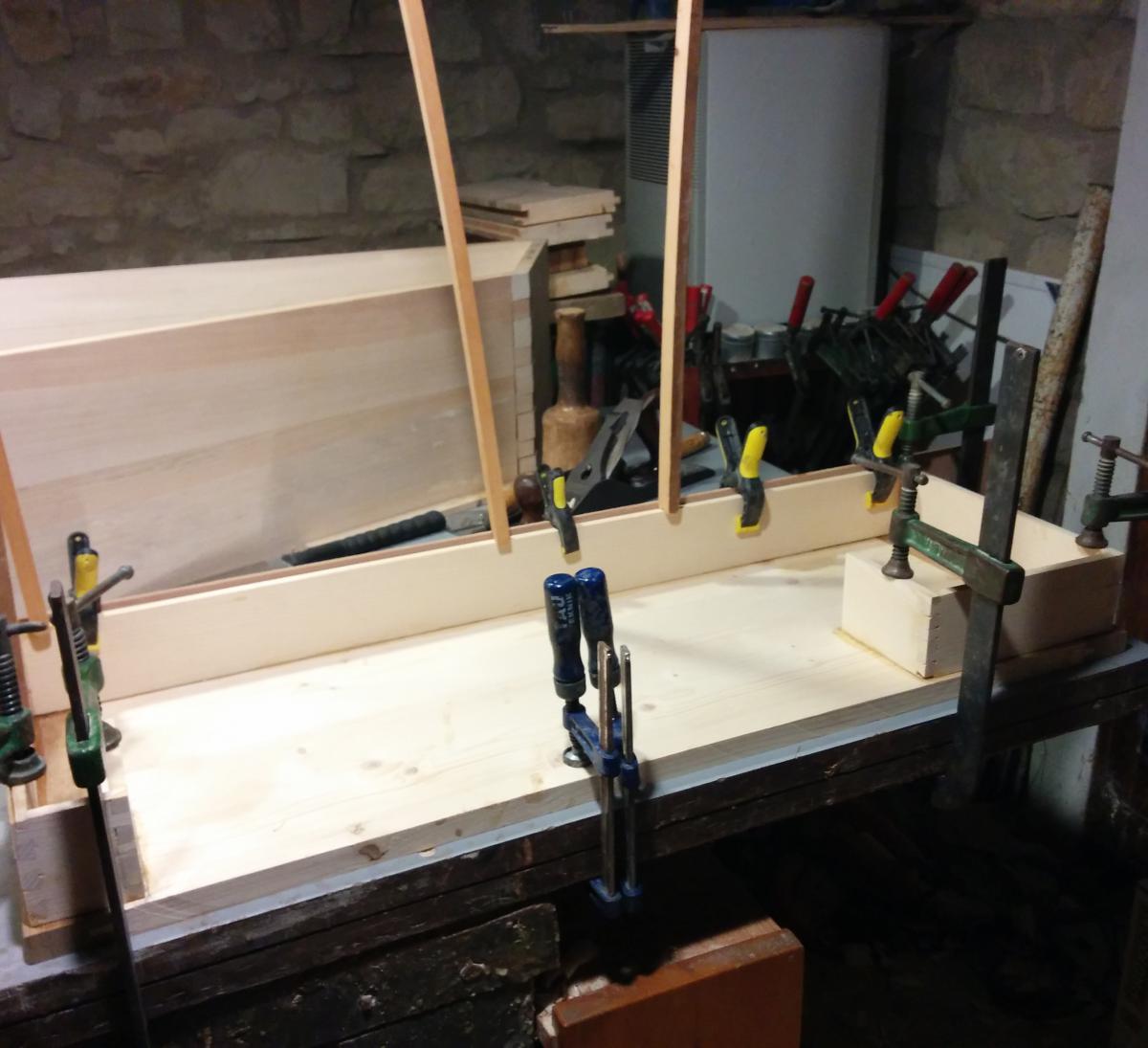
The first photo is the last Italian harpsichord we finished, the second is the French cembalo started recently, and the last one is my clavichord with the sides just glued.
Member
Thank you for the updates. Beautiful.
I wanted to build one from a kit a while ago... but then, not having the space...
I am curious about the part regarding the strings, pins etc... for all the calculations... isn't it something very complex?
Please post whatever you can. I am truly very interested.
Thanks again.
Member
Well, the kits are just to be glued... and eventually adjusted if they aren't cut well... These are made entirely by hand by us.
On mine, there are no calculations to be made... It is an exact copy of the original so I have nothing to calculate... Two courses of yellow brass strings, the dimensions of pins and tuning pins are already marked... We usually use 3 cm diameter tuning pins and brass wire for the pins; in my case, however, I will have to use 3 types of tuning pins with a pitch from 2.5 to 3.5 cm... Calculations must be made in case one needs to insert transposition... But it's not even complicated because often the key size is reduced just enough to insert 1-2 extra transposition keys, especially on Italian instruments... The only thing... is that on Italians you have to lengthen the tail of the instrument by a few cm... On others, you can incline the strings a bit more and keep the dimensions the same... In my case, since there is no need for transposition given the small measurements and the fact that it is a solo instrument... It's one less problem!! So far I have only seen the measurements taken for the harpsichord in the photo (finished), so I don't know if there are big differences between a French or an Italian [instrument]... but you do the string spacing directly on the instrument after positioning the soundboard and marking the string paths mainly on the bridges.
Member
Ok fine.. I really care a lot about the updates.
Thank you.
Member
I'll have it as soon as I can move forward with the instrument... Thursday, if it doesn't snow, I should start cutting the walnut to veneer the sides; I have to make 45° angles and veneer the entire exterior, but with that harpsichord that needs urgent work... I don't have much time, then a walnut covering frame must be placed over the spruce side, along with the external ones... It will be a beautiful piece of work when it's finished, I hope I can even manage to sell it ahahah, so I could start a new one, maybe a larger clavichord from the end of the 1700s or a spinet...
Member
Ok but one thing... from a tuning point of view, are these instruments boring? Can you do it yourself or is it like the piano where you need preparation and great experience?
Member
I habitually tune clavichords, harpsichords and fortepianos... It also depends a lot on the temperaments
Member
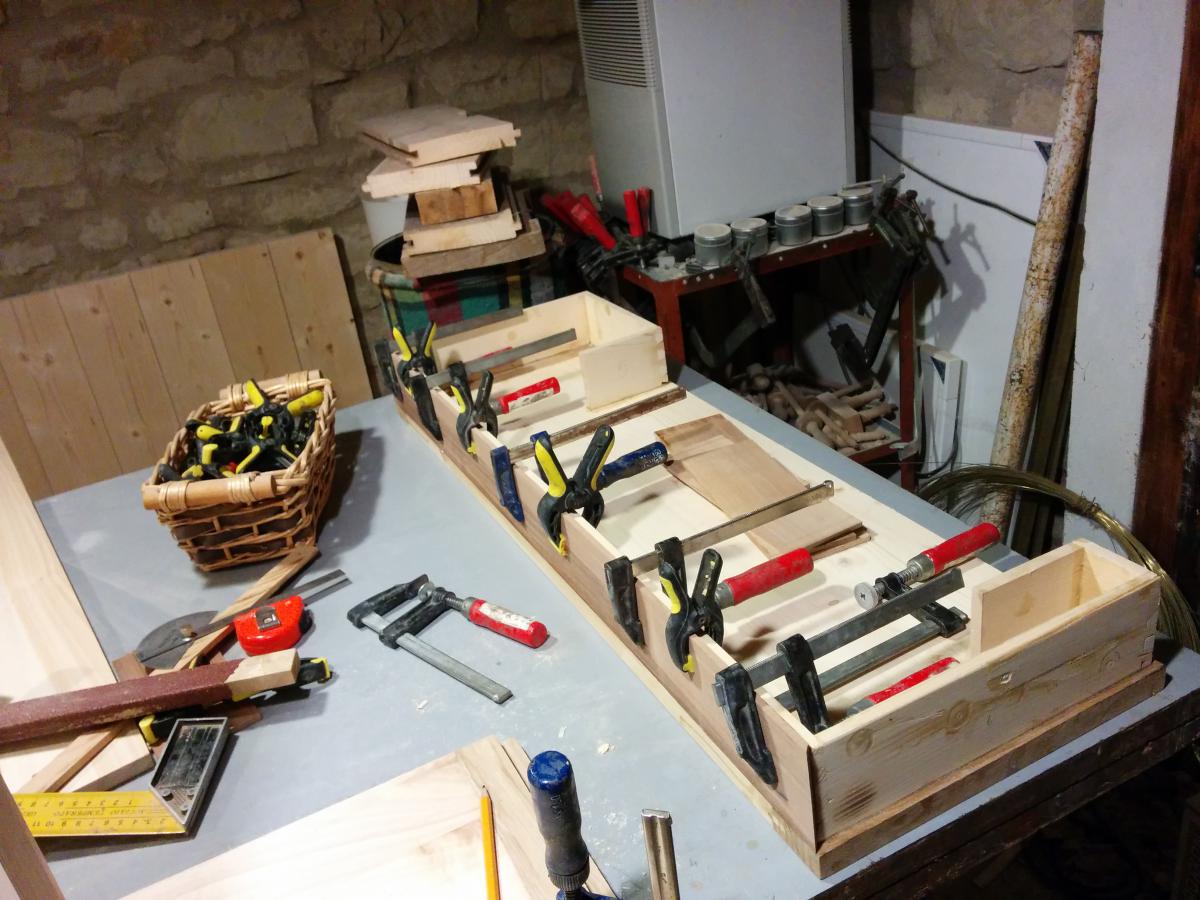
Brief news, today I started cutting the walnut pieces that serve as side cladding and glued the outer one; on Monday, if there are no unforeseen events, I will finish cutting the corners of the others and continue gluing them, but I doubt I will manage to glue them all at once...
Member
It's coming along well, I see.
Question.
I see the dehumidifier in the corner, or am I mistaken?
In practice, does the environment need to be set up so as not to have excessive humidity?
I ask because some time ago I wanted to adapt an old cellar into a laboratory.
Do you use heated Caravella pearl glue or rabbit skin glue?
For fine arts, we used animal glues regardless.
Thanks for the post.
Member
So we only turn on the dehumidifier when there are soundboards to glue, which is definitely better if they are glued with a maximum of 43% humidity... Otherwise it's problematic; if the cellar isn't humid it's fine, if it is humid it's a problem, gluing instruments in a humid environment risks them all cracking when they move to a dry environment...
We use both, rabbit skin glue for gluing instruments and rabbit skin glue for preparing colors and gesso for decorating.
Anyway, that dehumidifier is obsolete now, it's just acting as a paperweight hahaha the boss has bought a new 500-watt one, I forgot... Instruments like these (including fortepianos) if you don't want to tune them every day or almost every day should be kept at a fixed temperature and humidity.
Ah, I forgot one thing: the calculations for the string diameter of a harpsichord must be done because if it doesn't have the right tension you won't be able to tune it... And obviously, you also have to learn how to tune.
Member
Ok good. So glue and Bologna gesso to prepare the boards as a support for the decoration and then egg tempera, fatty ..or even oil?
A question..but do varnishes affect the sound? If more or less heavy?
I would like to try to build (an idea I have been nurturing for years) a small virginal ...if I find an available little room..
Then as soon as I have a minute I should ask you some things about tuning..
Bye, thanks.
Member
Mmmh, I don't know much about colors, but they are certainly not oil; they are powder... Varnishes affect the sound somewhat, but not that much; if you wanted to, you could use other types of colors, but often the result is not optimal, more than anything...
I have an English spinet to build; I might deal with it once I've finished the clavichord, maybe, for the tunings, whenever you want.
Member
So I was saying... are you a piano tuner by profession, or do you do it personally on your own instruments?
In practice, I would like to experiment with building some instruments, but my doubt is that by using pins to pull the strings and not having a metal anchor, as the string tension increases, everything might smash...
Some time ago I had tried...
So, for example, I know that on pianos we talk about tons of tension when summing all the strings.
Well... regarding this problem, for instance, how is the harpsichord soundboard structured, and how does it react?
Regarding colors, if you need tips... no problem.
Surely you will use powdered pigments later mixed with water and casein glue (an ancient tempera used as far back as the 1400s/500s) or powdered pigments ground and mixed with tree gum or gum arabic... there are a thousand recipes, which even De Chirico discusses in his treatises. But Cennino Cennini also offers excellent insights.
As for humidity, okay, I actually have too much...
I await updates, and if I can, I will send you the photos of the inlays.
Bye, thanks.
Member
I know he uses an ancient treatise from the 1500s, I think, I'm not sure, perhaps De Chirico himself...
But the tension of multi-course steel strings on a piano is not at all comparable to that of a fortepiano or a harpsichord which use brass and/or iron strings; in a finished harpsichord, the pins are all anchored directly into the wood, and it will be the same for this construction... The same 1700s fortepianos are still all anchored to the wood, and the first bass strings are still yellow or red brass... So it doesn't cause problems; instruments began to have iron reinforcements from the mid-1800s, partly because the number of courses increased, partly because tensions increased further; anyway, whether you build a harpsichord, a virginal, or one of the oldest fortepianos (Cristofori, Stein, Walter, perhaps even the early John Broadwood ones, but I'm not sure), you can anchor the pins directly into the soundboard wood (usually spruce) or, if there isn't much, use an elevated attachment rail, but always in wood; this was used more on Italian instruments, I believe...
Member
Ok then you'll show me.
Brass or iron, but they are specific materials. It's not like you can use simple wire, right? There will be harmonics.
Coils... are you referring to the three or two strings for each hammer, or actually to the thickness of the strings themselves which is spiral... so to speak?
Answer calmly... I don't want to stress you out.... even though I already have...
Giorgio De Chirico, however, should be considered as having drawn from old treatises from the 1500s or 1600s.
His writings, however, are from the early 1900s.
Member
I forgot... I don't do tuning as a profession for now, but I might in the future.
No, it's not simple iron wire (although old phosphorus iron certainly sounds different from modern carbon iron) and brass; I don't know what the percentages of chromium and zinc are, but it doesn't seem to me that they are very different from those normally used industrially... No, I am not referring to the number of strings per key, the strings are all straight, no spirals or internal twists that risk breaking; the only spirals are those in the eyelets on the pins.
As for the treatises, I'm not sure; I know he partially copied ancient keys from the 1500-1600s, I believe Venetian... I should ask.
Anyway, don't worry, I like talking about antique instruments
Member
I always and only respond in Italian. Even if the user uses another language or attaches documents in English, I provide the response in Italian.
Member
Hi, things are starting to get interesting.
I can already see the body of the instrument..
Basically, if I understood correctly, you make a complete soundboard in spruce and then veneer it in walnut.
You apply the frames afterwards, right?
All in walnut.
Then how do you proceed after that?
But for the keys and the levers, do you make them yourselves or do you purchase them already finished or rough-cut?