Small inaccuracy, usually it is used as in the video 3-4-3;4 ascending and 3-2-3-2 descending...

Member
Reply 61 by antares86
- Posts
- 1,414
- City
- Bologna
Started by
Member
Member
Small inaccuracy, usually it is used as in the video 3-4-3;4 ascending and 3-2-3-2 descending...
Member
I forgot one thing, among other things the clavichord was the instrument of choice for testing the skills of clavichordists and organists; when two arrived at a tie, an additional test on the clavichord was performed, and usually one of the two was superior, so it could be said that playing the clavichord keyboard is more difficult than that of the harpsichord and the organ.

Member
Yes, I was reading about Schobert regarding writing for fortepiano, but you know how it is... surely the instruments were intertwined as a period and therefore they played many things. He composed for fortepiano in general, right?
I've seen some videos and it seemed to me that building a clavichord would be good, actually. The tangent mechanism as percussion seems simpler to me. You can do vibrato by applying pressure to the key and stretching the string, but what isn't clear to me, for example, is how the string vibrates if it's attached to the tangent that stops it...
I'll see if I can find the link.
Here it is... apart from the Portuguese guy being quite unpleasant... he shows the detail of the mechanics and the vibrato.
https://m.youtube.com/watch?v=8uMLm3MFNxY
Member
Mmmh well yes, especially the German composers more or less all had to do with clavichords and harpsichords; undoubtedly, Schobert's writing is not yet pianistic anyway... The first to write pianistically were indeed Clementi and Hummel... I'm only talking about Schobert, in the last 7 years he had assignments as a pianist... I'll elaborate later, I'm having dinner now haha
Member
Ahahahaha I remember this video... I stopped it immediately, I can't stand it; anyway, technically, by performing vibrato on a clavichord, the tangent moves away from the string slightly, just enough to achieve the effect. Building a clavichord is relatively simple, it is small and compact, it can be made with scraps from harpsichords; the most complicated part to make is the keyboard, at least mine is full of angles. A free clavichord like the other drawing I have, of a 1775 Silbermann, is larger—5 octaves instead of 4—so it also has more strings and tuning pins.
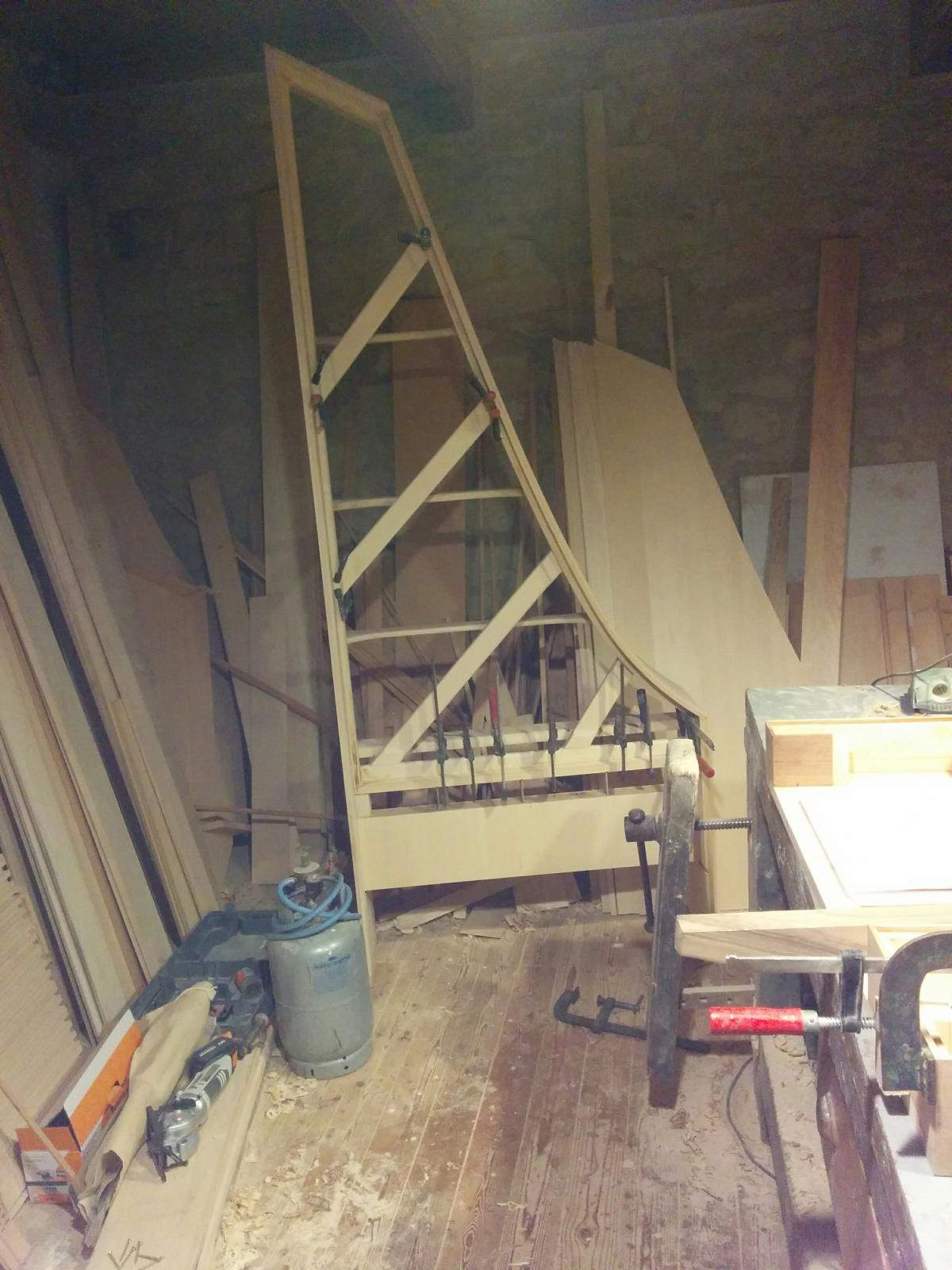
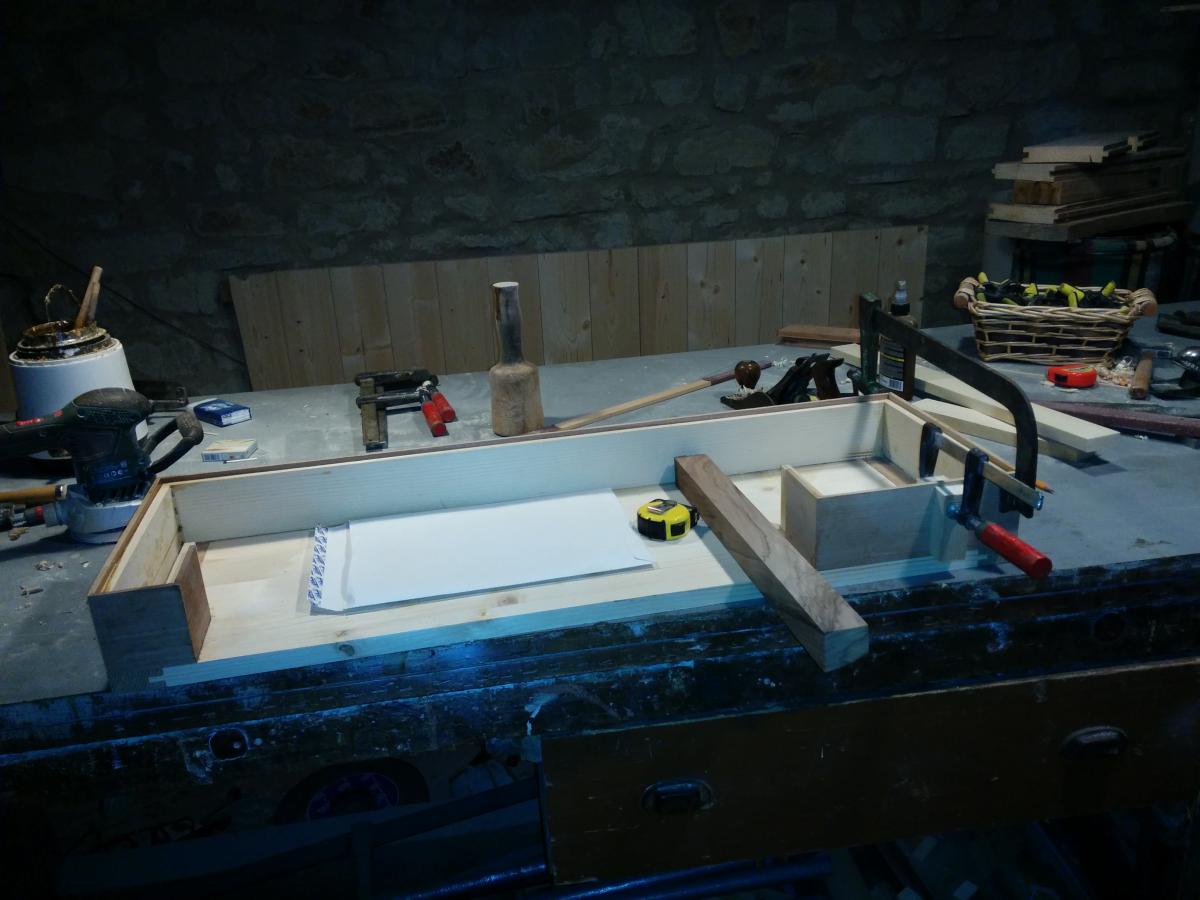
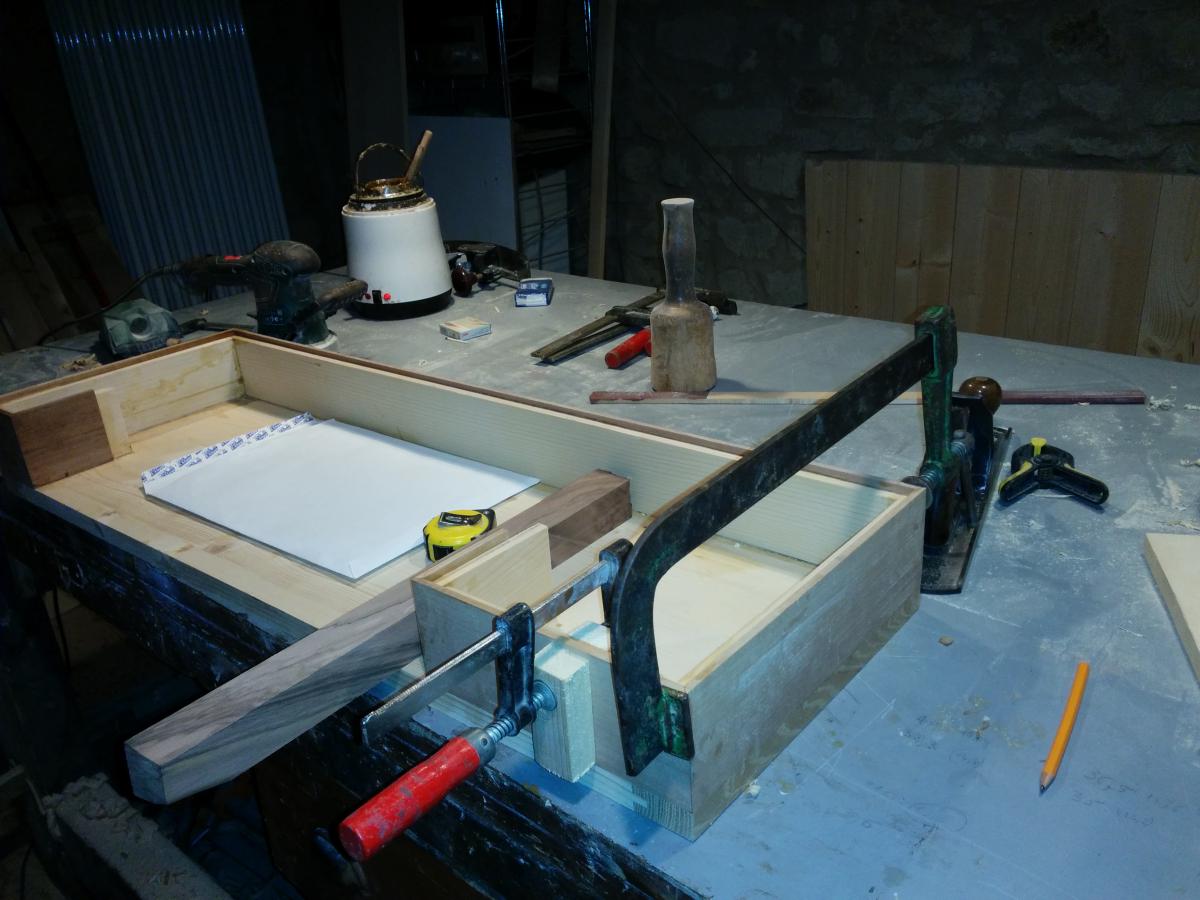
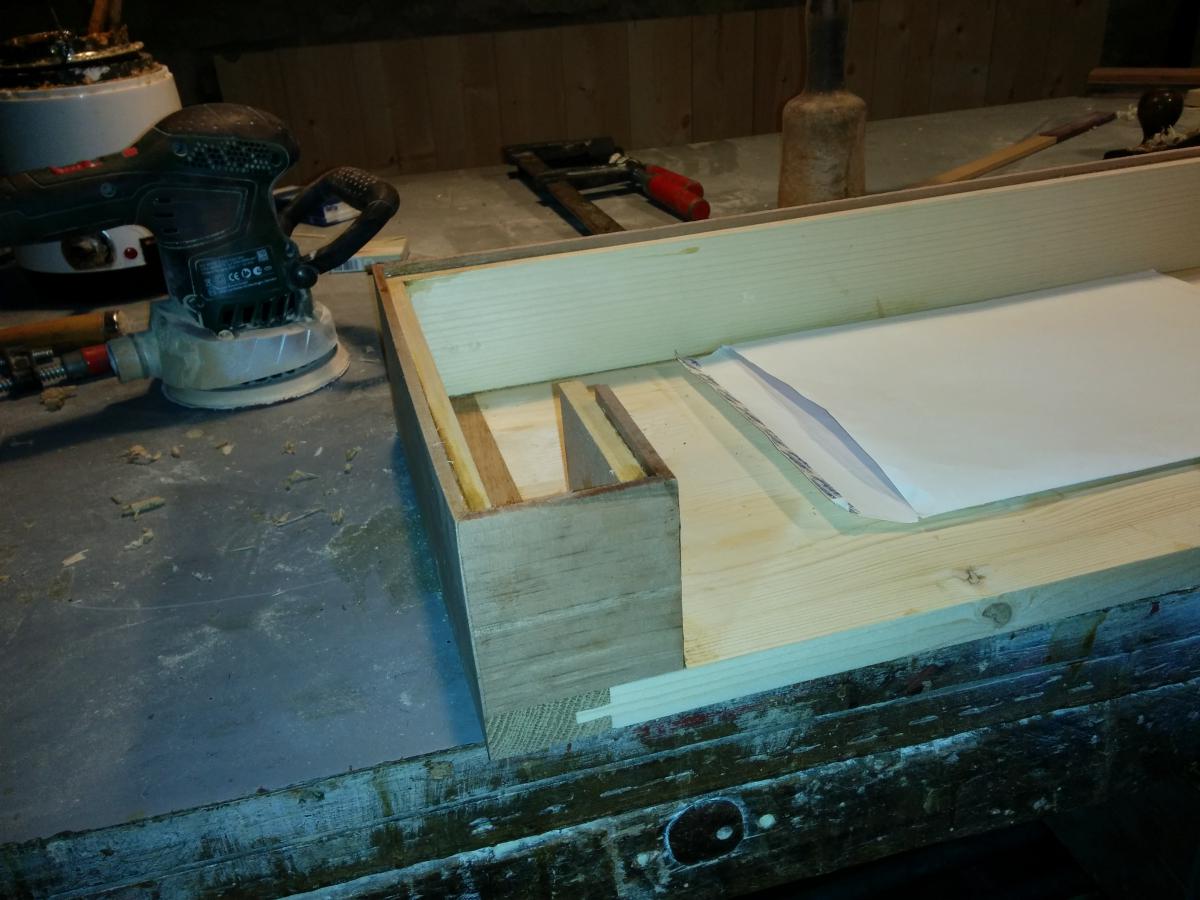
Small update for today: today I washed away the excess glue from the clavichord and planed everything to join the bottom and sides; then I put a bit more glue in a corner that hadn't bonded well, and finally, I started preparing the soundboard. The drawing indicates it should be made of 3 layers: a thin sheet of spruce followed by walnut and beech; since I don't have any beech, I will make it entirely of walnut (we considered that with all the strings and tuning pins, the instrument will have a tension of about 250kg; a Giusti Italian harpsichord has a tension of about 500kg, while for the Taskin we are building, we estimated almost 1000).
The instrument has 47 keys in total, it is missing the C# and Eb of the first (split) octave, and it has exactly 60 tuning pins.
Maybe there won't be any updates tomorrow.
Member
Thanks in advance.. it looks quite well-formed now.. did the walnut fail you on certain corners? Sometimes the veneers do that because they are quite temperamental.. anyway, it looks like it turned out great. What do you think?
A doubt... I've seen some keyboards that have very high and thick chromatic keys, but the keys themselves also seem "stubby," so to speak.. is there a reason regarding key resistance to torsion and displacement, or is it due to technical requirements of the hand?
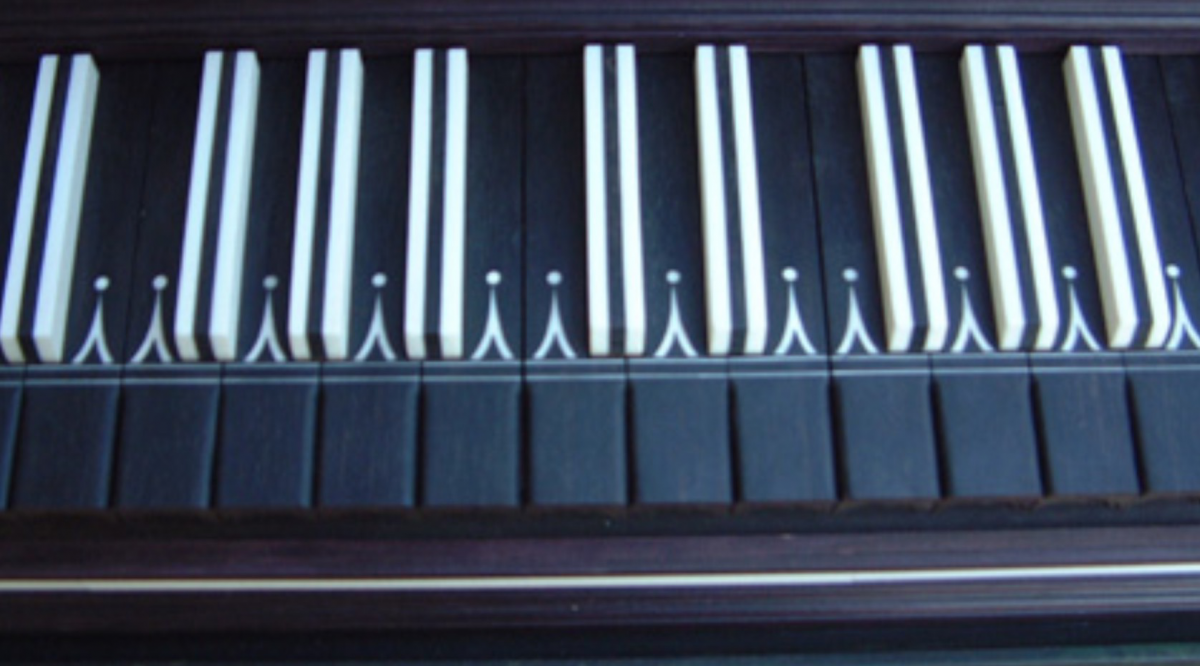
I really like light chromatic keys and I've seen versions with ebony and two small white stripes... great refinement... but perhaps not in line with a clavichord.. were those perhaps decorations used more in French claviers? Or German?
On modern harpsichords, am I mistaken or do I see keyboards that are more agile and closer to those of the piano? I'm talking about key size.
Regarding the keyboard and key dimensions, do you have any parameters that you don't compromise on?
Member
So far it's going well, if the right slab attaches properly... And since it has a horizontal grain, when you glue it, being damp inside and dry outside, it can curve slightly and not close properly... But it is so small, only 8 cm, that it shouldn't have done that... In any case, I put in some wooden plugs to compensate... Curiously, this clavichord shows the spruce from the side near the legs... I didn't understand which keys you might have seen... Upload a photo...
Usually, that chromatic decoration is typical of French and Flemish styles when the chromatics are black... Many are made of bone or boxwood on the chromatics, like the Taskin in the photo.
Mmmh wait, what do you mean by modern? Actually, Italian harpsichord keys are often exaggeratedly large, partly because they have dimensions of 80-90 cm in width and 4 and a half octaves without transposition... The keys become quite wide, but in reproductions, customers often ask for more keys and 1-2 transpositions... And to avoid making it too wide, the keys are narrowed; on a standard copied harpsichord, the keys are around 2.5 cm wide with a travel not exceeding 7 mm (between 6 and 7).
For my dimensions, they usually come out at 2.5 or whatever is marked on the drawing (as for the clavichord, I haven't measured the key yet); I've become used to keyboards like these, so when I have to play a piano, everything seems exaggeratedly large ahahahah, the problem is if the dimensions decrease too much... The French usually have smaller keys, I believe they are slightly more than 2cm, it's not easy to play on them.
Member
In any case, my keyboard will be classic, boxwood on the diatonic keys and ebony on the chromatic ones; I just measured the diatonic ones, from the edge to the chromatic key they are slightly less than 3 cm by 2.1 in width... This speaks volumes haha when on a piano you have about 5 in length and at least 2.3 in width, as the estimate of 2.5 is on the board; once cut they become less...
Member
I was thinking about the next instrument to build... I have two designs that I would like to make... A 1775 Silberman clavichord or an English spinet...
http://www.animus-cristofori.com/imagetypes/slider/adr_4066.jpg
Member
Colzani... hi hi I know him...
Beautiful.. I would like the Silbermann..
Member
Well, for me Silbermann is just a larger version of the current one ahahahahah I already have the pin ready and also the soundboard wood; for the Silbermann, I would have to look for all the materials, even if there are fewer.
If I'm not mistaken, the Silbermann has 59 or 60 keys and it is a free clavichord, so it has 120 strings and 120 tuning pins... Poor me ahahahahah and then the dovetail joints there are exposed.
Member
I found this photo, it's not the same instrument, but very similar; it doesn't have the split low octave, it only has a short octave and has some different details; mine, instead of the rolled cloth on the strings, has an upper plate of that shape resting on the non-vibrating portion of the strings, and the drawing says that the inside of the lid is simply lined with yellow paper.
Member
Beautiful though... I like it..
Yellow paper? They were surely decorated papers from that era... very thick maybe... I don't know..
120 strings because in that case each key strikes two strings, right?
I have seen, for example, that in some harpsichords two keys work on the same string to be able to use fewer strings... but some chords result in being impossible. Either one sound or the other... strange, no?
First I will also do two experiments trying to build some keys and making them work... I wouldn't want to tinker with the whole case and then get nothing out of it. Do you know what I mean?
I'll see if I can find the photos of the keyboards I was telling you about.
Member
I like... while looking for the photo to send, I lost the entire post I had written..
I want to try to the limit to do a test of mechanics, keys and strings... to see what I can manage, without touching the whole case and then getting nothing out of it..
You say yellow paper? It must be decorated paper from that era... very heavy for sure.. idk? They were truly strange..
I am attaching the photo of the keyboard I was talking about... it doesn't have the two thin lines of light boxwood on the accidentals... but just so you understand.
The keys must be made of boxwood, right? It's not easy to find though..
120 strings because each key strikes two, right?
I read about some clavichords that have two keys per string... to use fewer strings... except that from one string you get two sounds but you will never be able to play certain chords... have you ever found these?
Another strange thing... I saw some clavs with the diatonic keys hollowed out... I don't think it's wear... they really looked hollowed out specifically.
But what varnish is used for the keys in contact with the fingers? Shellac?
Photo.
Member
Sorry, but I had already sent the post... more or less similar...
Member
Alright then... One thing at a time... The keyboards like in the photo are [unclear/typo], my teacher's harpsichord is like this... Truthfully, regarding the paper I don't know... I would have to ask whoever saw it... I can't find any photos and the drawing only shows a brief note...
Wait, is the boxwood or the bone just the facing... I know. It isn't found that easily; the soul of the keyboard is linden, all clavichords from the 1600s-1700s have a double chorus... But if you noticed in what I am building there are 47 keys and 60 jacks in total... Double chorus means 30 single strings per key, if we consider only one... So it is one of those clavichords... They are the tied clavichords of the 1600s, usually 2-3 chromatic keys strike the same string, like C# and D... Now I don't remember exactly which tied notes mine has... Anyway, they are all chromatic semitones, I have no problems playing chords; the only thing is if you play a chromatic scale, make sure to release the previous key or it won't sound ahahahah, they weigh less, they have fewer strings and jacks, since the music of the 1600s-1700s provided for chromatic dyads there is essentially no problem, they weren't created randomly, they are perfectly playable
Hollowed keys?? I haven't seen those, or I didn't understand what you mean; nothing is used on the keys, they are simply sanded and that's it.
Member
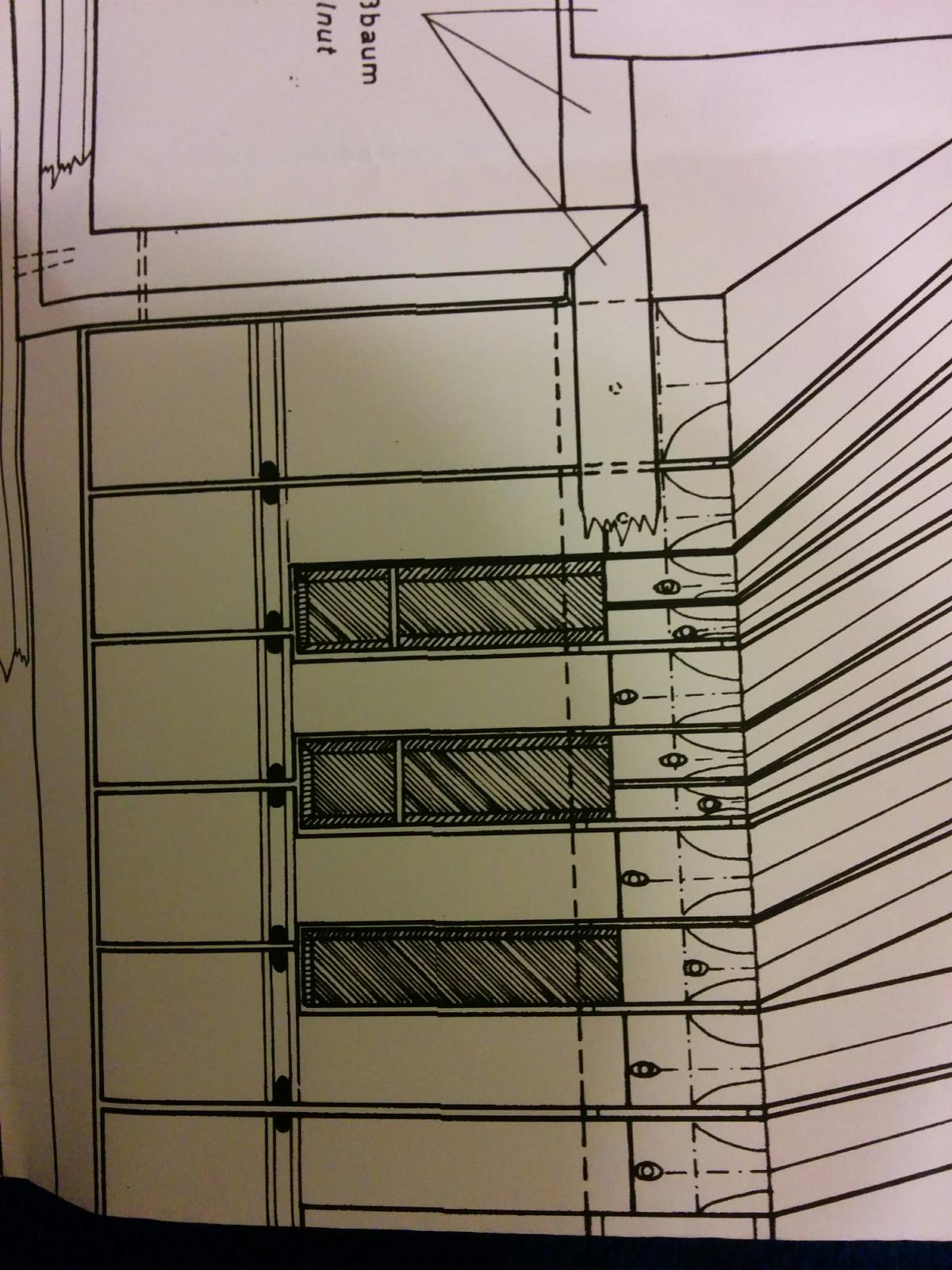
This is a detail of the clavichord drawing.
Anyway, what you want to do isn't that quick, or rather it depends on how you want to do it... You should prepare a piece of wood as a soundboard and the board, glue a piece of wood for the bridge, fix the pin, tension the string by securing it... Make sure it is well tensioned though... Prepare at least one key with the tangent... Obviously, you don't need to shape or cover them much since it's just a test... But it isn't something that fast.
Member
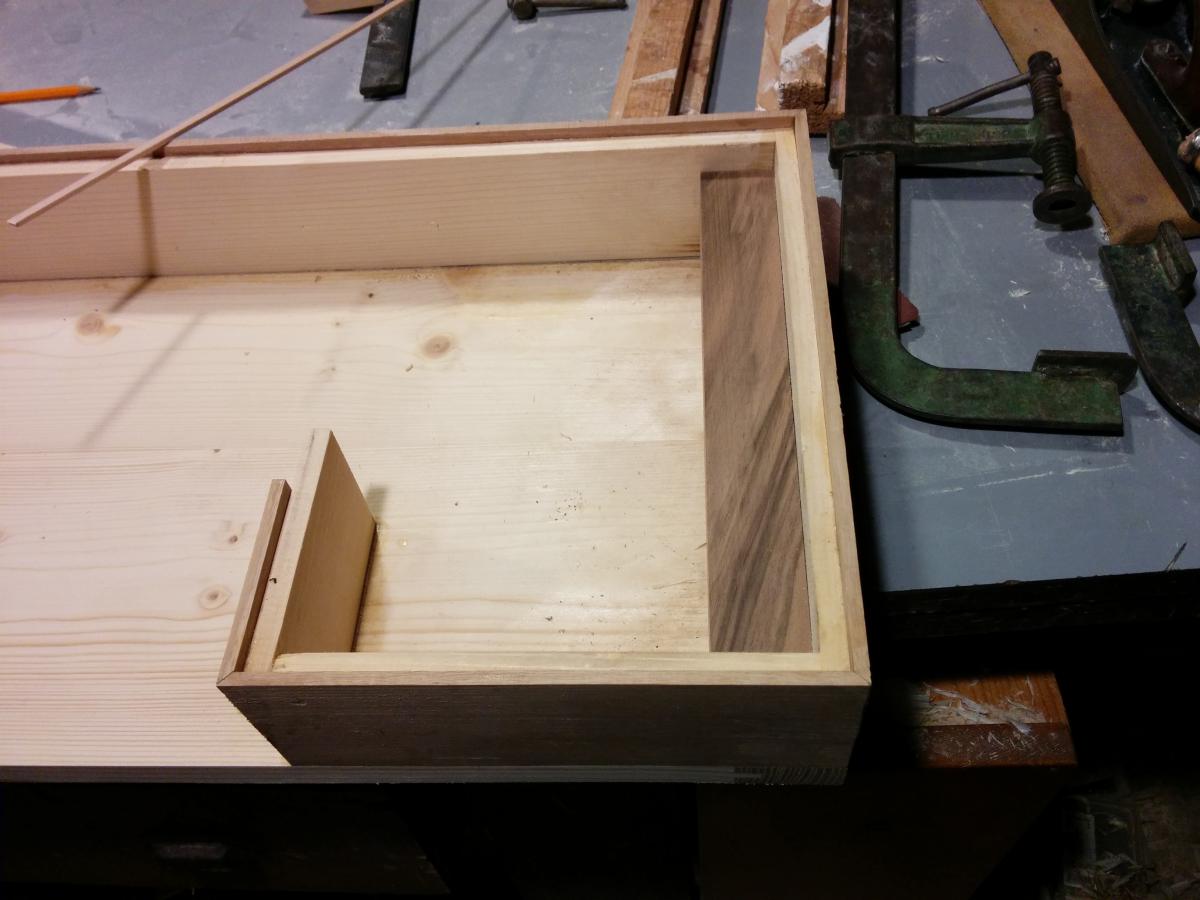
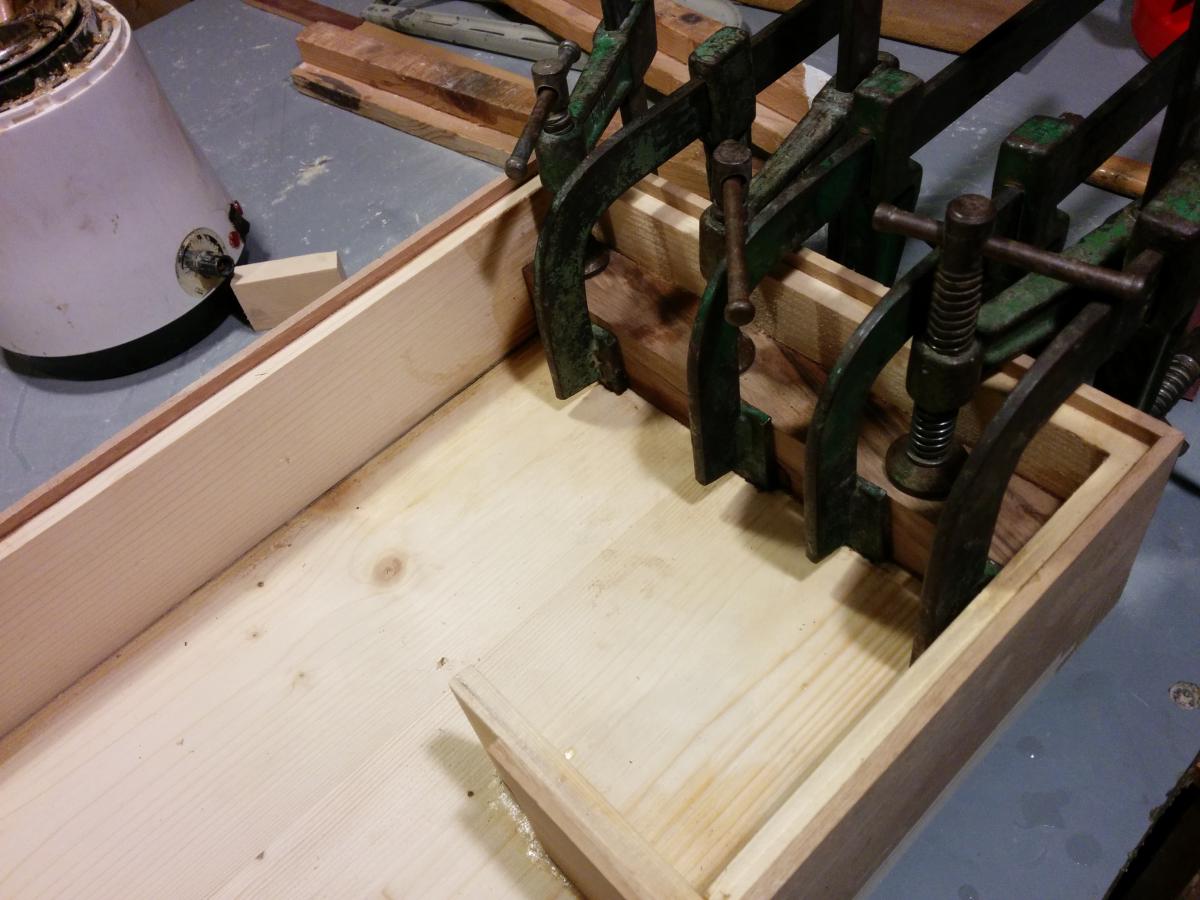
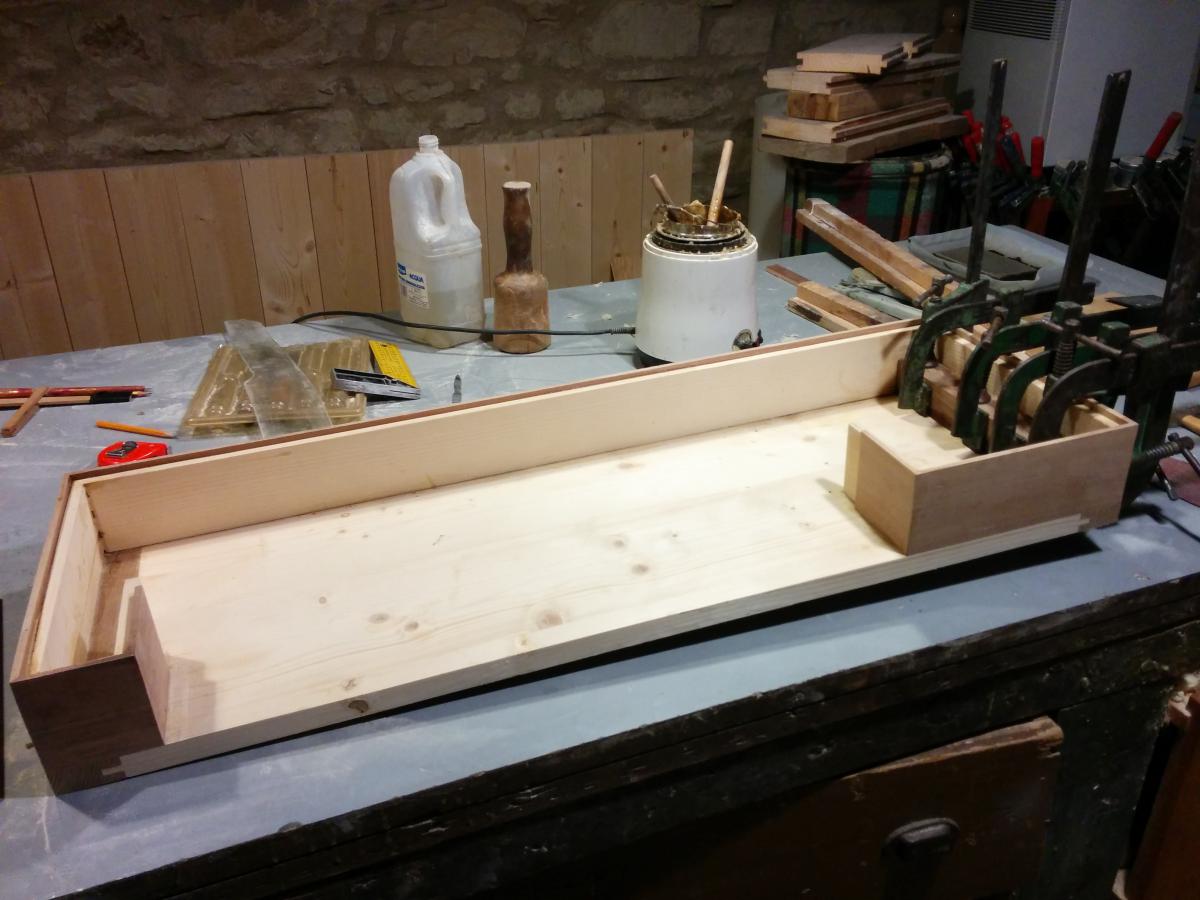
Good evening everyone, new update, today I managed to cut and glue the soundboard rib, all in walnut, even though the project had about one and a half centimeters of beech on top of the walnut, but I didn't have any beech... The next step I think will be gluing the supports for the soundboard onto the sides and the back of the instrument, then two spruce blocks to hold the rib in place.
Member
Evening everyone, a brief update without photos (I forgot to take them ahahah). Today I prepared the front panel, walnut wood cut and calibrated; I cut the inner part of the sides to size and glued a small strip of beech to the spruce which will serve to hold the front panel together, I just need to make the groove on the front panel.
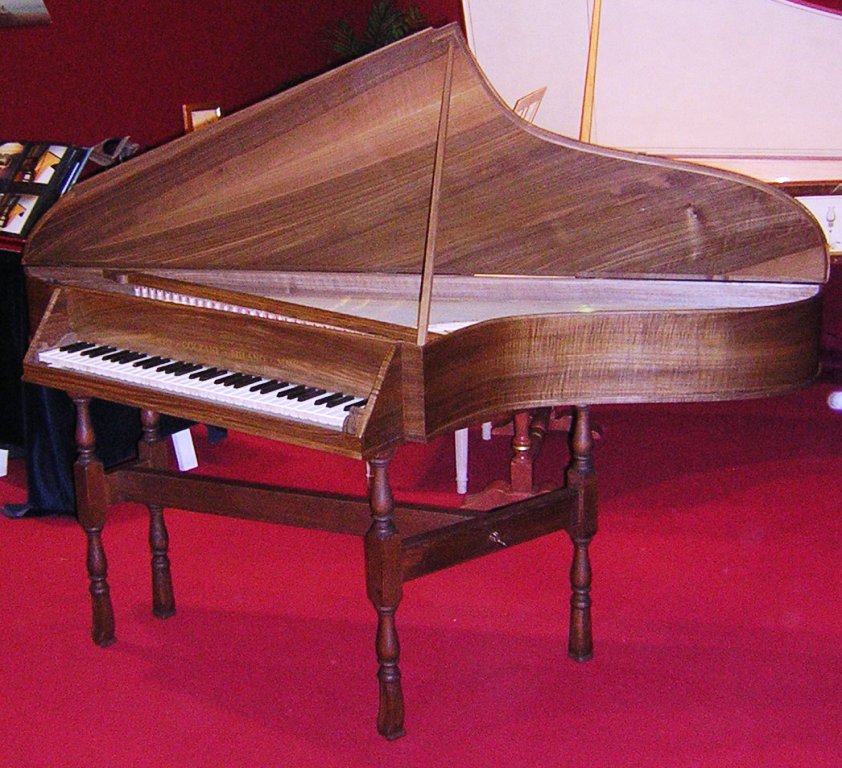
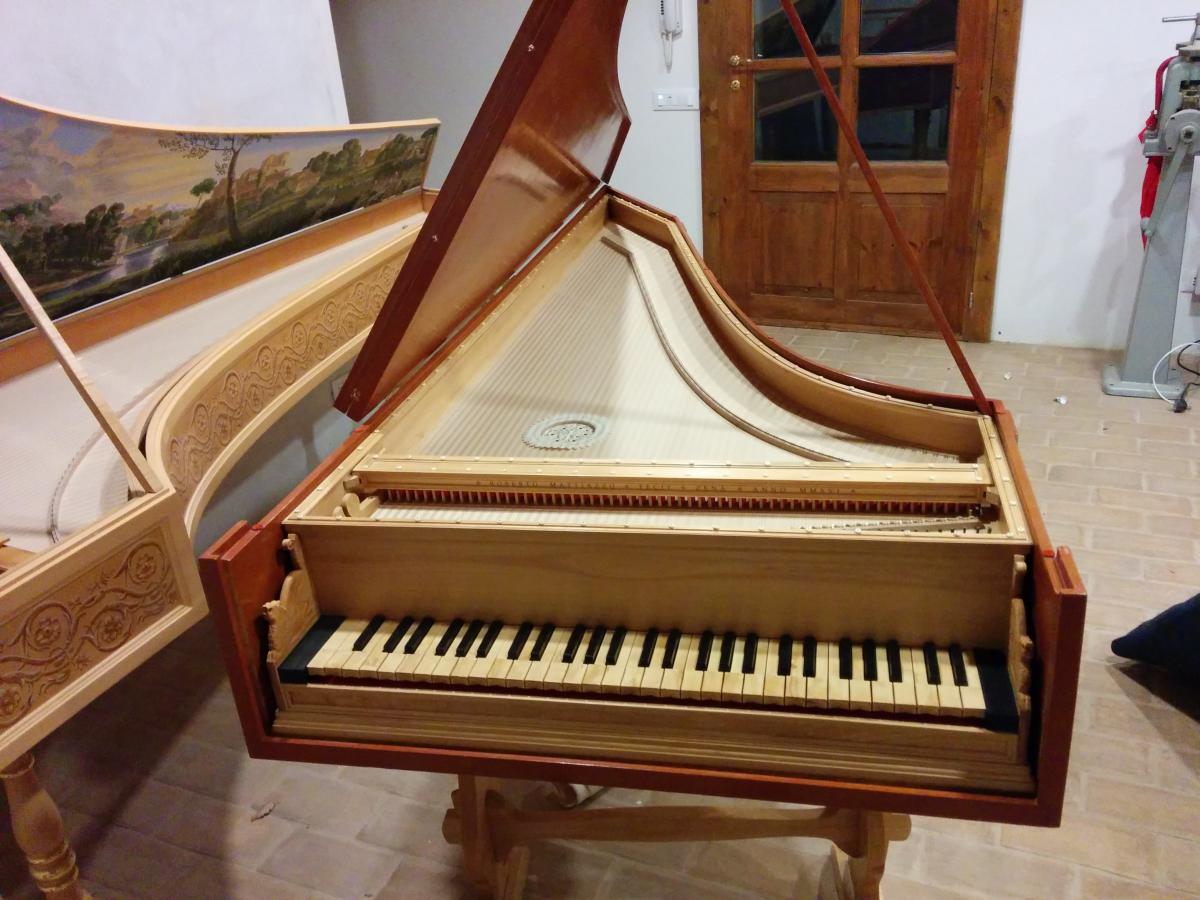
I also wanted to show you the final result of the other harpsichord inspired by one from 1584 by Nicolò Albana, which has returned to the workshop for a while because the outer case has shrunk too much due to changes in temperature and humidity; in short, there are some maintenance jobs to be done.
As for the clavichord instead, tomorrow I will start preparing the support strips for the soundboard; from a 70 cm spruce strip I must obtain 3 strips to glue to the sides and then also make the left support, which will also be perforated to allow a greater volume of sound between the keys and the harpsichord case.
Member
How beautiful though... they are truly beautiful.
Does yours also go forward? I see it coming up well..
I'll take notes in the meantime and then you'll see what I pull out of my hat... ha ha..
Keep me updated.
I have to go listen to the sonata you posted...
Darned weather ...always in a rush..