Keyboard Instruments

Harpsichords

253 replies 29,269 views

Started by

antares86

Member

Member

Reply 41 by antares86

Posts
1,414
City
Bologna

Yes, basically it is a spruce case with two oak reinforcements at the edges of the bottom to prevent twisting, veneered in walnut... As for the moldings, I don't know if I will put them right at the end before stringing it or before making the keyboard; only the visible parts are in walnut. In fact, on the thickness of the spruce side, there goes another small 5 mm visible molding that is only walnut, but you have it and it sounds better, so the soundboard is spruce, and the bridge also sounds just as good.

Afterward, the other internal pieces go in: ribs, the soundboard attachment strip, the soundboard itself, the pin blocks for the string pins, and the keyboard pin block; hard wood is needed, spruce won't do. These will be the next steps, I would say.

All clavichords don't have jacks, eh? Anyway, we make the keyboards and the jacks entirely ourselves: the keyboard from a piece of lime wood and the jacks from various shaped woods. The only things we buy are the tuning pins, and the iron and brass coils for the strings (among other things, we also sell brass and iron strings for harpsichords and fortepianos; we get the coils, thanks to them, of 1mm diameter and we file them ourselves).

Member

Reply 42 by maquieto

Posts
665
City
Massa Carrara

Great... oh yes, it was cut, I didn't remember that it was a clavichord but you can see it from the case.

Good, good. Hardwood, do you mean beech?

Member

Reply 43 by maquieto

Posts
665
City
Massa Carrara

The keyboard is now spitting out whatever words it wants... maybe you could post the functioning of the jack mechanism for the clavichord or the percussion body for the clavichord. I also saw them years ago as diagrams and drawings, but certain details are not understood very well.

I understood, for example, that the jack has something like a small plectrum (if I am not mistaken, they used to use crow beaks or feathers) and after plucking the string (which continues to vibrate until the performer releases the key), it returns to position. By doing this, the jack touches the string again while it is still vibrating, and this point of contact generates the classic clavichord noise (release buzz) in which the string is silenced once more. I noticed that there is a little wheel on the jacks... does it serve to facilitate the friction with the string so that the jack doesn't jam, or have I misunderstood?

Member

Reply 44 by antares86

Posts
1,414
City
Bologna

So, one thing at a time or I'll end up forgetting: usually for the pinblock we use the hardest wood possible, oak or maple; we have oak but not maple, so I will definitely use that, same thing for the soundboard, even HR [high resilience] oak would be just as good I think.

Regarding the operation of the mechanisms, the clavichord is very simple: on the key lever itself, there is a brass tangent that strikes the string and thus produces its sound with a single lever without intermediaries; this is the reason why you can obtain vibrato. Then, the non-vibrating portion of the strings is wrapped in cloth or, in my case, there is a wooden board covered in cloth that dampens the sounds where it does not vibrate, shaped so as to cover the parts to the left of the tangents.

First, a jack is utilized: there is a hard wood core and a rear brass spring that allows the movement of a wooden balancer in which the quill is fixed; once it was made of raven feather, but now Delrin plastic is used, which causes fewer problems and wears down much less. To the left of the balancer is the damper, so the entire system is on the jack; when you press the key, obviously the string vibrates and continues to sound until you release the key—within a certain limit, the sound is not very long. When you release the key, the buzz is nonetheless contained by the balancer and the spring which, rotating on the spring, returns to position, also causing the damper to rest on the string. For example, yesterday there were problems with some keys that were not dampening well; this happens in winter, and in instruments that have a regulation screw under the jacks, you just need to tighten it and lower the entire jack so that it dampens; if there isn't one, you have to file down the jack to reduce its size.

So the only roller you might have seen is the regulation screw, I believe... The spring is flat.

Member

Reply 45 by maquieto

Posts
665
City
Massa Carrara

Ok very well. Understood..

When you have time, if I'm not asking too much, a video of the two mechanisms would be gold for me.

I can also do a construction experiment on something small to try it out.

Waiting for news.

Thanks again.

Member

Reply 46 by maquieto

Posts
665
City
Massa Carrara

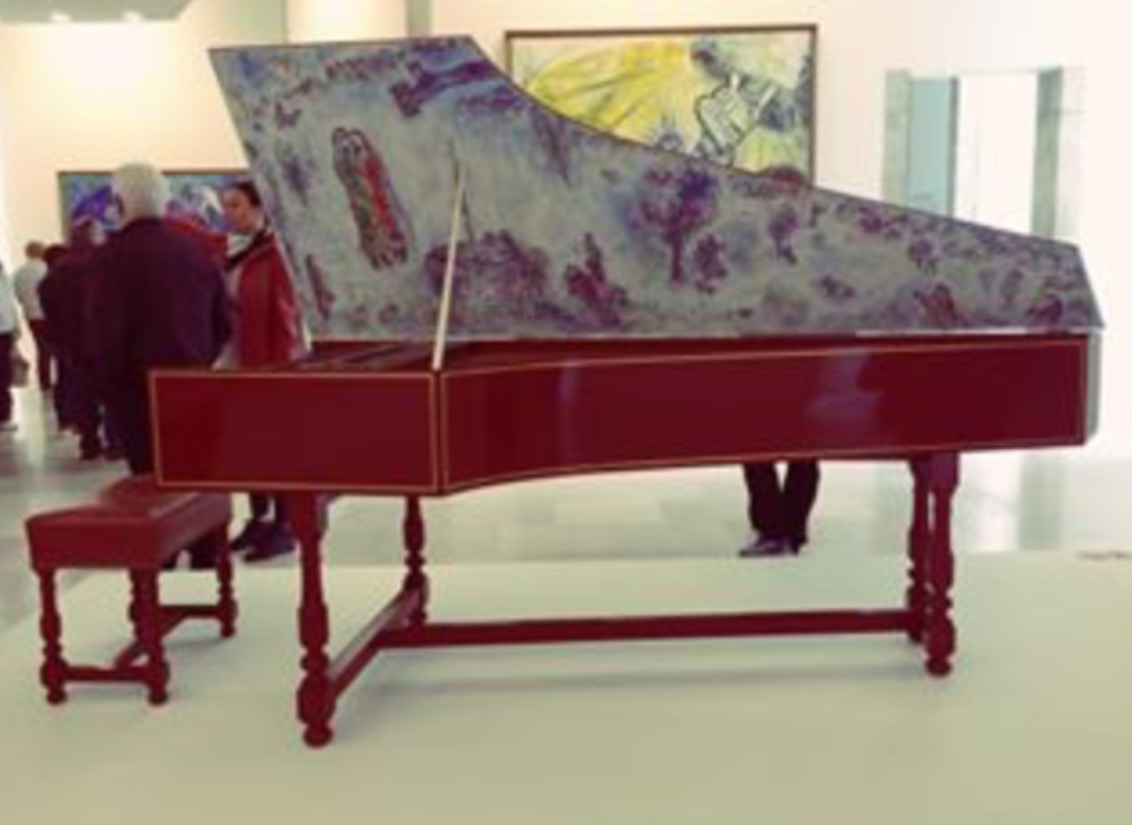
I forgot... maybe you won't like it because it is a modern harpsichord, but anyway Chagall decorated it..

Attachment

Member

Reply 47 by antares86

Posts
1,414
City
Bologna

When I have time I'll talk to you about it, maybe I have some photos of the spinets somewhere, of the clavichord certainly not instead... As for the design, that harpsichord reminds me of the Flemish Ruckers family.

Member

Reply 48 by antares86

Posts
1,414
City
Bologna

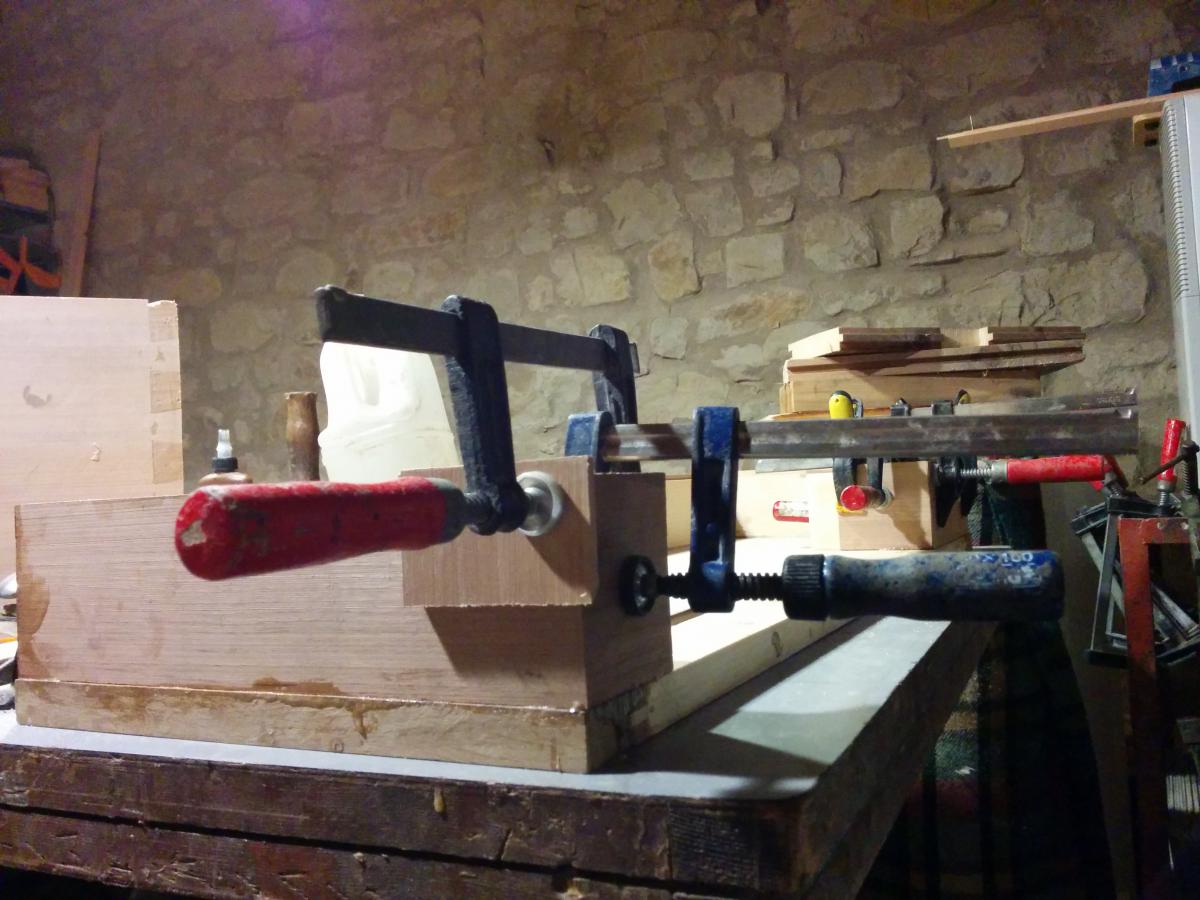
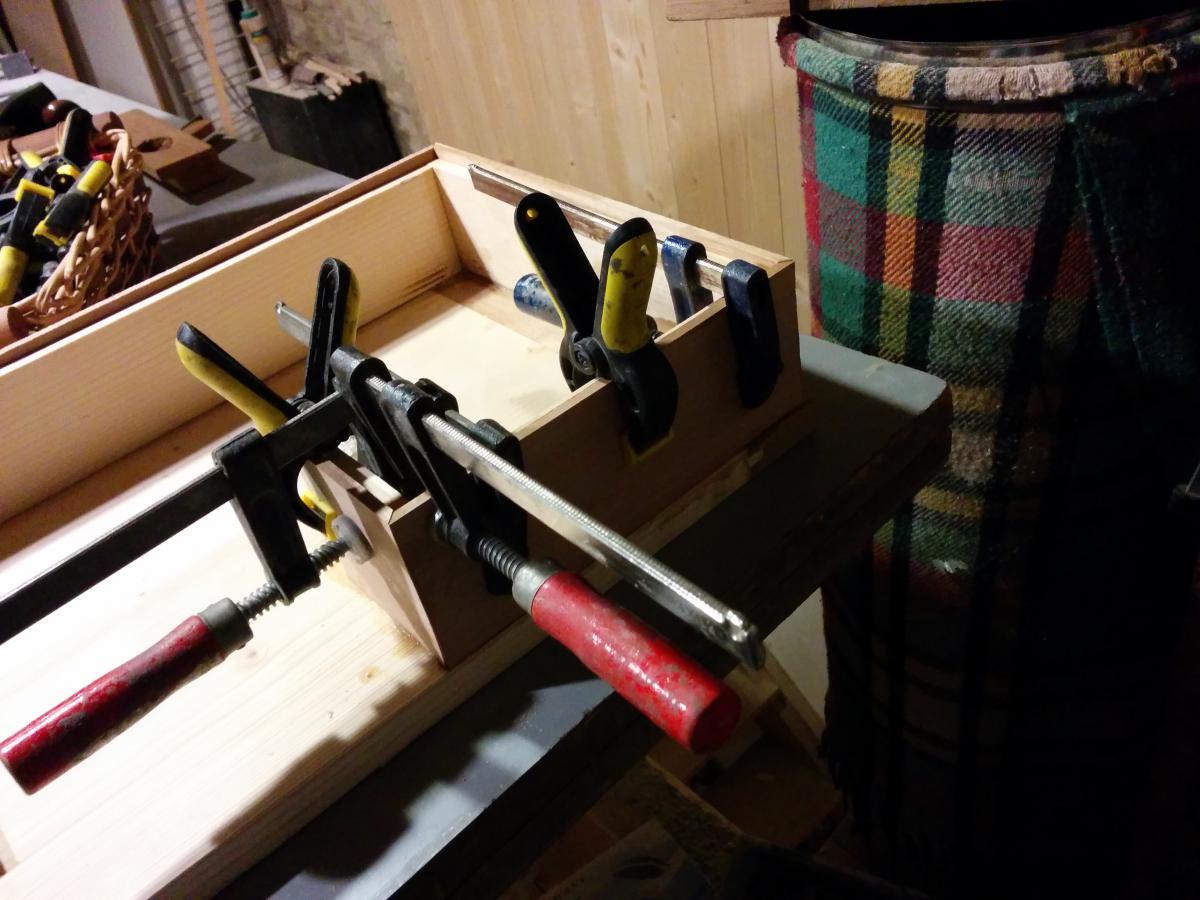
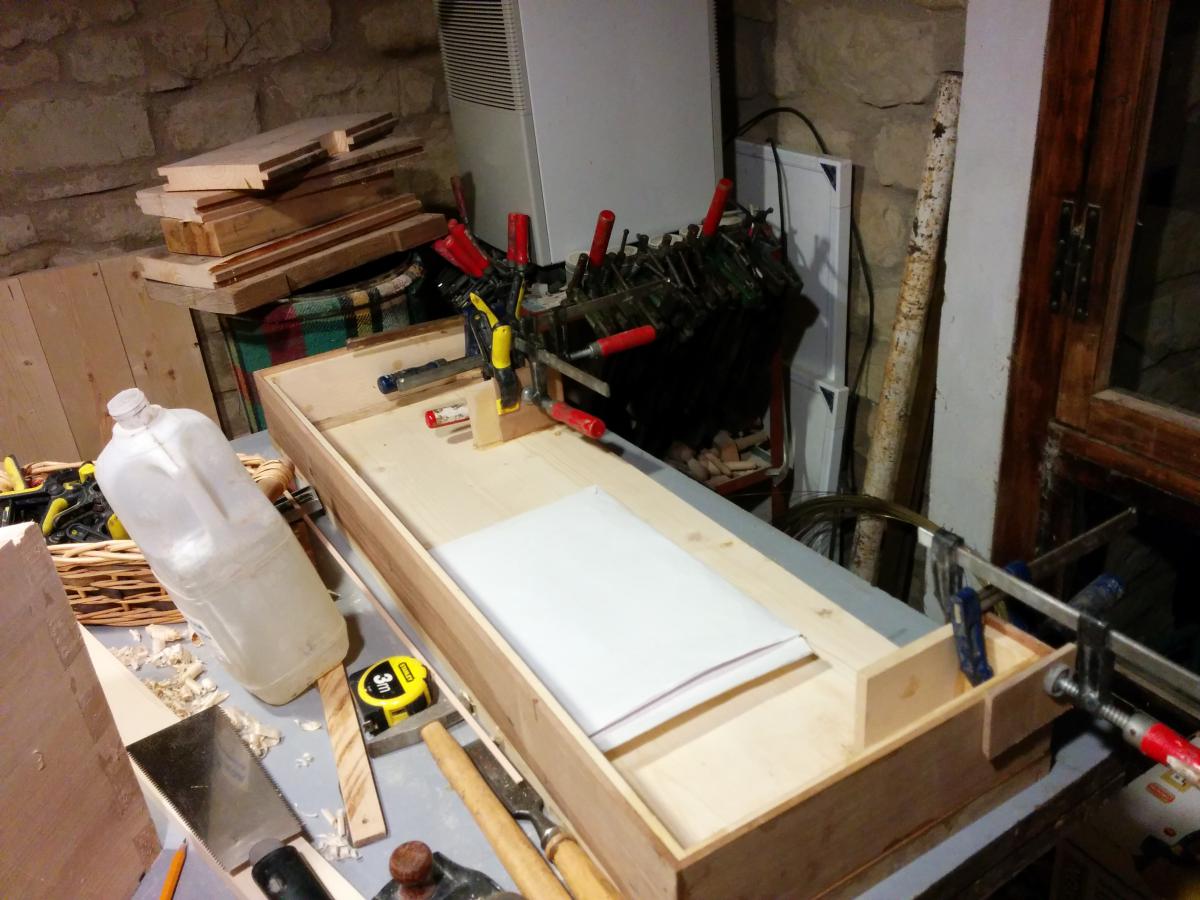
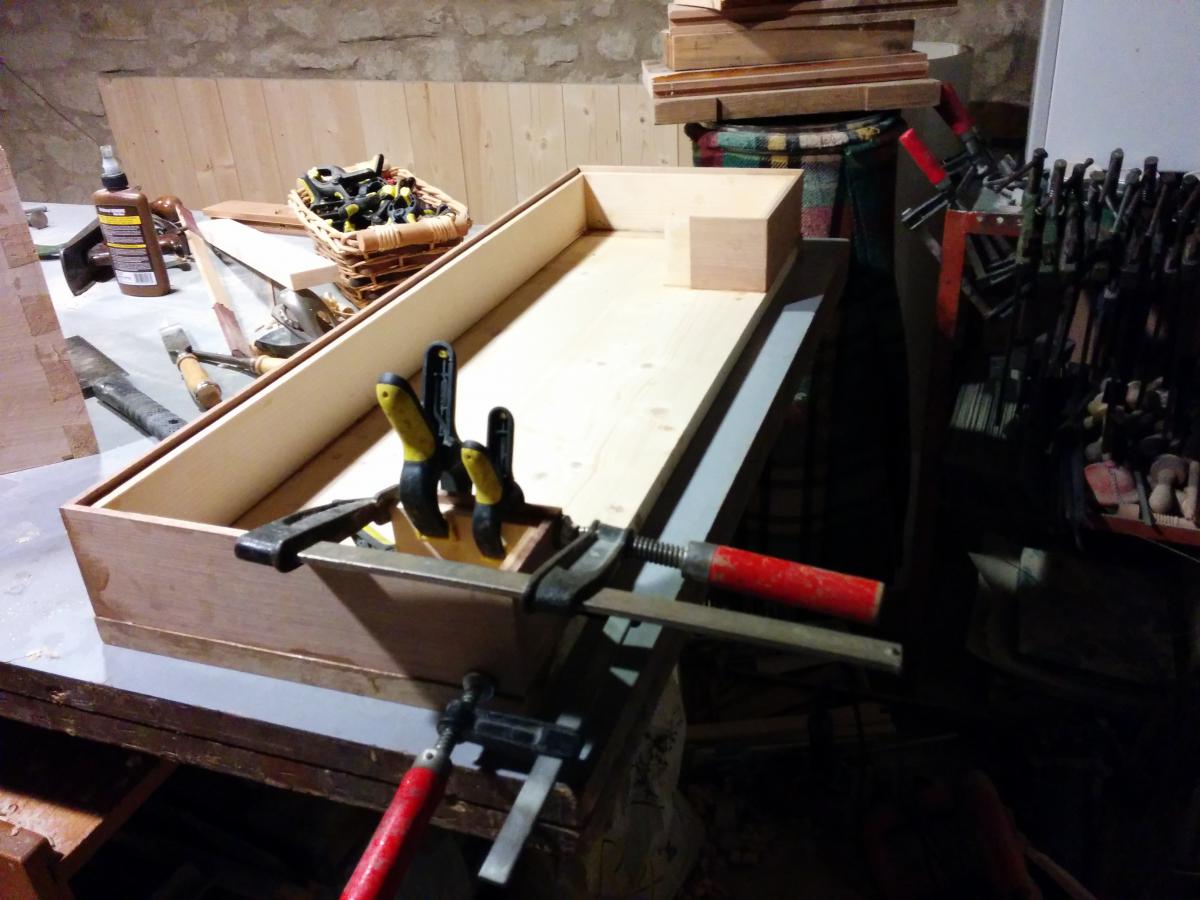
So first of all I'm adding 3 photos from today, I have glued 3 strips out of 4, I am sure I will glue the last one before speaking again, as it was cracked, tomorrow I will glue that one too.

AttachmentAttachmentAttachment

Member

Reply 49 by maquieto

Posts
665
City
Massa Carrara

Beautiful... I can already see the instrument.

And then what after? C ph Bach... and why not Schobert? He composed a lot for clavichord, didn't he? Friend and teacher of Mozart..

Member

Reply 50 by antares86

Posts
1,414
City
Bologna

Bach for sure... As for Schobert, I wouldn't bet my life on it, but they were certainly models for Mozart along with Johann Christian Bach..

PS. Maybe seeing the instrument already is premature ahahah since it's just a little house ahah

Member

Reply 52 by antares86

Posts
1,414
City
Bologna

It depends on how much time I can manage to work on it... Once we get the hang of it, a clavichord like this can be done in a month and a half or two... But I don't have the knack yet nor all the materials I think ahahah let's just say I hope to finish it by the end of March... When I get to making the keyboard, it will take about 2 weeks just for that.

Member

Reply 54 by antares86

Posts
1,414
City
Bologna

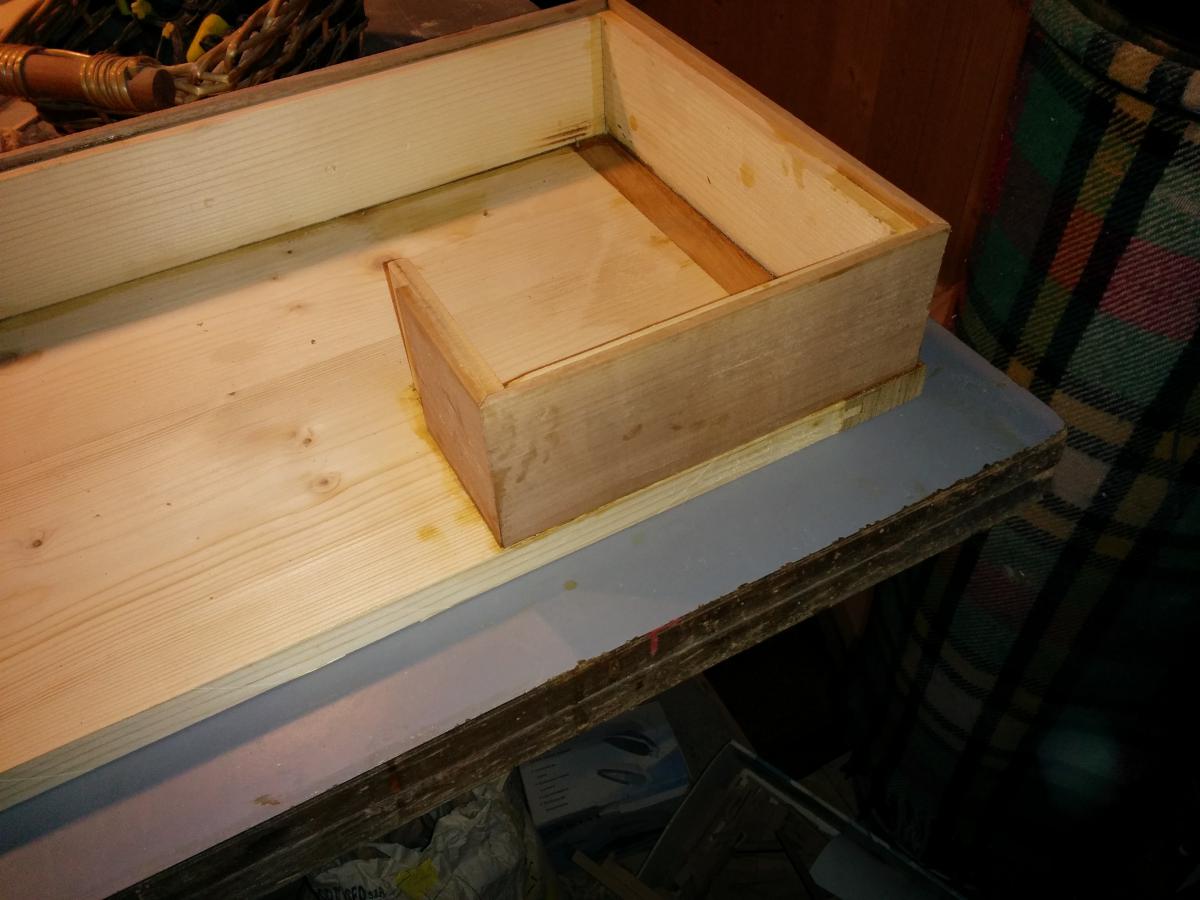
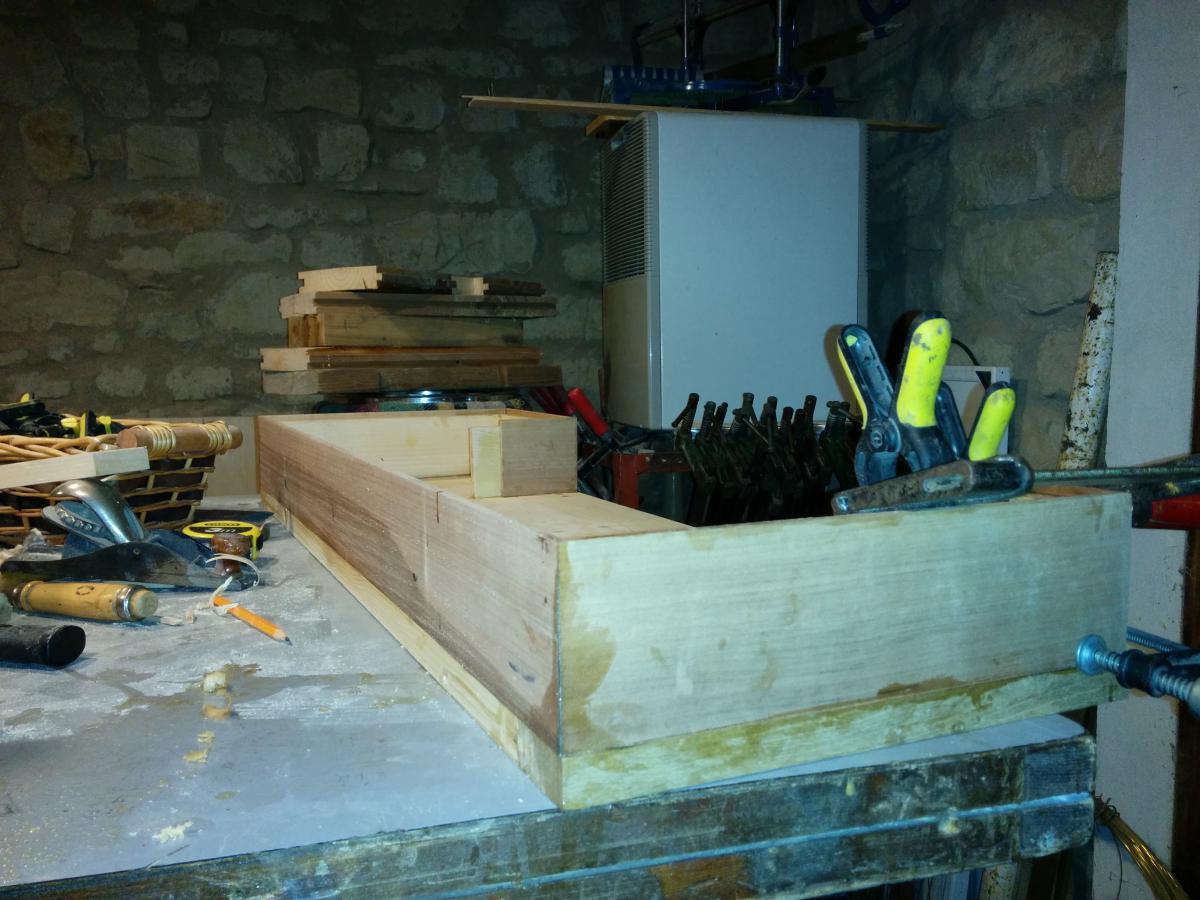
New update: I glued the last piece on the side (it was a hassle because the piece was cracked, I had to fix it with an insert, putty, and sand), the first thing to do tomorrow is plane everything to properly join the bottom and sides, prepare the joints for the front panel, and start preparing the soundboard.

AttachmentAttachmentAttachment

Member

Reply 55 by maquieto

Posts
665
City
Massa Carrara

Well, I see you held your ground with the walnut shoulder pieces... old fox... then at least put the top frame on to cover the spruce edge so you don't have the joint visible from the outside.

The visible side is always better without joints.

For the crack, did you use the classic plaster filler? Sanded down..

Member

Reply 56 by maquieto

Posts
665
City
Massa Carrara

Here I also found the period technique without the thumb pass.

Interesting... but do you play with this technique or do you use piano technique? But are you even playing the right piano?

https://m.youtube.com/watch?v=Pb_2O6yAltQ

Member

Reply 57 by antares86

Posts
1,414
City
Bologna

Yes, I kept it high because in the original the spruce is 6 mm lower and a frame goes on top of it, as well as around the soundboard.

Mmh, I didn't check what kind of putty it was, he passed it to me ahahah but I think so.

Member

Reply 58 by antares86

Posts
1,414
City
Bologna

Well, on a clavichord you are almost forced to, given the size of the keys; you use the thumb as support if you have space, otherwise nothing... You certainly don't thumb over an instrument like that hahahahahah. I use a mixed technique, from Bach's era to put it briefly; it depends on the convenience of the passages on the harpsichord, sometimes I use the thumb passage, sometimes not... But it's not a passage I usually use... It becomes much more comfortable to go 2-3-2-3-2-3 and 3-4-3-4-3-4

Member

Reply 59 by maquieto

Posts
665
City
Massa Carrara

Now many things are clear to me, including the engraving you posted. The technique also affects the phrasing, etc.

I am building up a lot of knowledge in this field!!! I knew them well as instruments for recordings etc., but not in the detail of mechanics and craftsmanship.

For example, are the keys drawn on an entire board and then all the cuts are made, or are they shaped strip by strip?

And don't they warp after being cut?

Member

Reply 60 by antares86

Posts
1,414
City
Bologna

Technique decisively affects the phrasing; the same Baroque and Classical phrases are relatively more or less breakable depending on the fingering... Leaps are practically all detached up to and including the Mozart era, unless there is a slur... For example, slurs of portamento are usually done with 2-3-2-3-2-3, especially when you find them in succession.

For the keyboard, they are usually all made starting from a single board with the entire keyboard drawn on it, for the instruments. They have straight levers; my boss sometimes shapes them strip by strip and nails them to the frame, saying it's faster... I wouldn't know, in any case, the two keyboards of the Taskin he is building, he had to build them from two boards... And I also have to build the keyboard from one board given the angles the levers take; no, the keys do not twist, linden wood is not that soft, but it is used mainly because it doesn't "sound" unlike spruce and others which vibrate very well.

J.S. Bach, from the few fingered manuscripts, used partly ancient harpsichord fingerings and partly modern ones, which is what I usually do as well... C.P.E. Bach, on the other hand, left an entire chapter in his essay on fingerings; he was the one who almost systematically adopted the moderate fingering, despite there still being some passages with the ancient ones, especially in keys without or with few alterations... For example, if I remember correctly, for the C major scale, Bach reports that 5 different fingerings can be used for the right hand and 4 for the left... If I recall correctly, but the more alterations there are, the fewer possibilities you have to modify them, and they move closer and closer to modern ones.

This is for the harpsichord; for the fortepiano, I tend to use C.P.E. Bach's fingerings, even though harpsichord fingerings can be used quite easily—in fact, they are decidedly more suitable than pianistic ones, truth be told... Considering especially the travel of the key lever; speaking of Bach, it is Schobert; it doesn't seem to me that Schobert played clavichords, but it is possible, surely in his later years he played fortepianos at court... In the period 1761-1767, those particularly suitable for the clavichord are the Bach family, J.S. and especially C.P.E.; clavichords were also found in the Bach house when they inventoried everything post mortem... It could be very interesting to study the well-tempered harpsichord with it, the Suites, Partitas, and Inventions and Sinfonias, for example... Mozart's music is also suitable for it...


Log in to participate