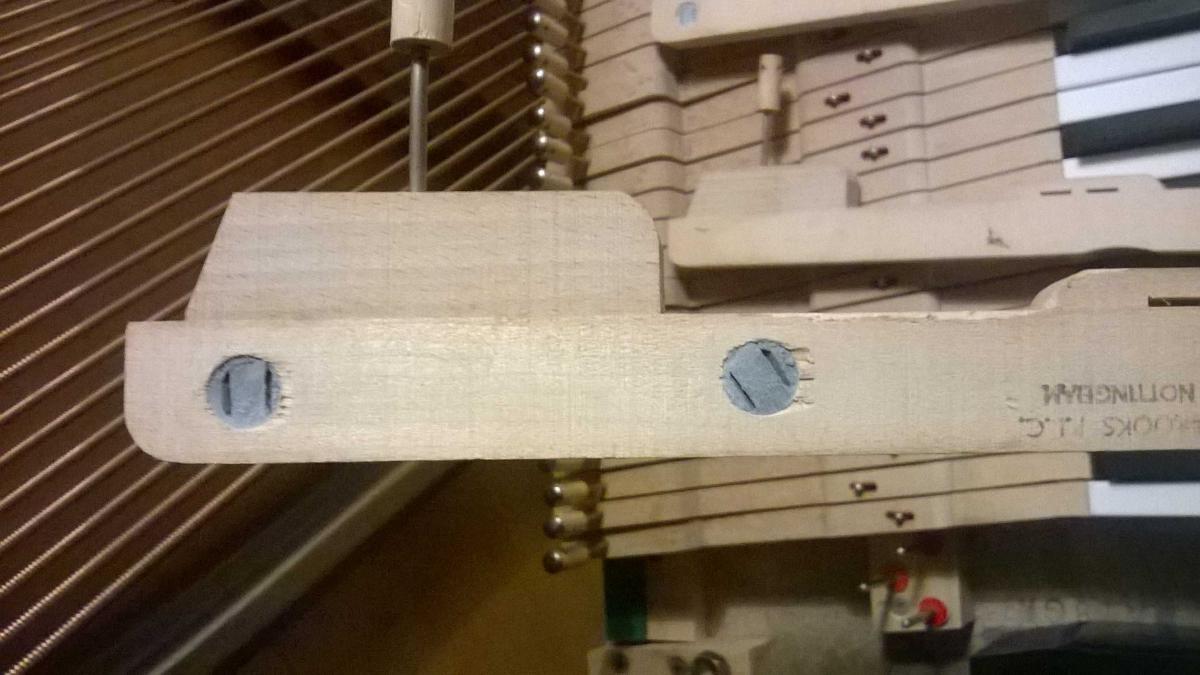
Hello, I own a 1988 Schulze Pollmann upright that needs to be restored, which has been little used and tuned very few times. I have read many posts on the forum and decided to register and present the problems I have noticed:
1) muffled and closed low tones
2) several mid and high tones produce a chirping sound upon key release
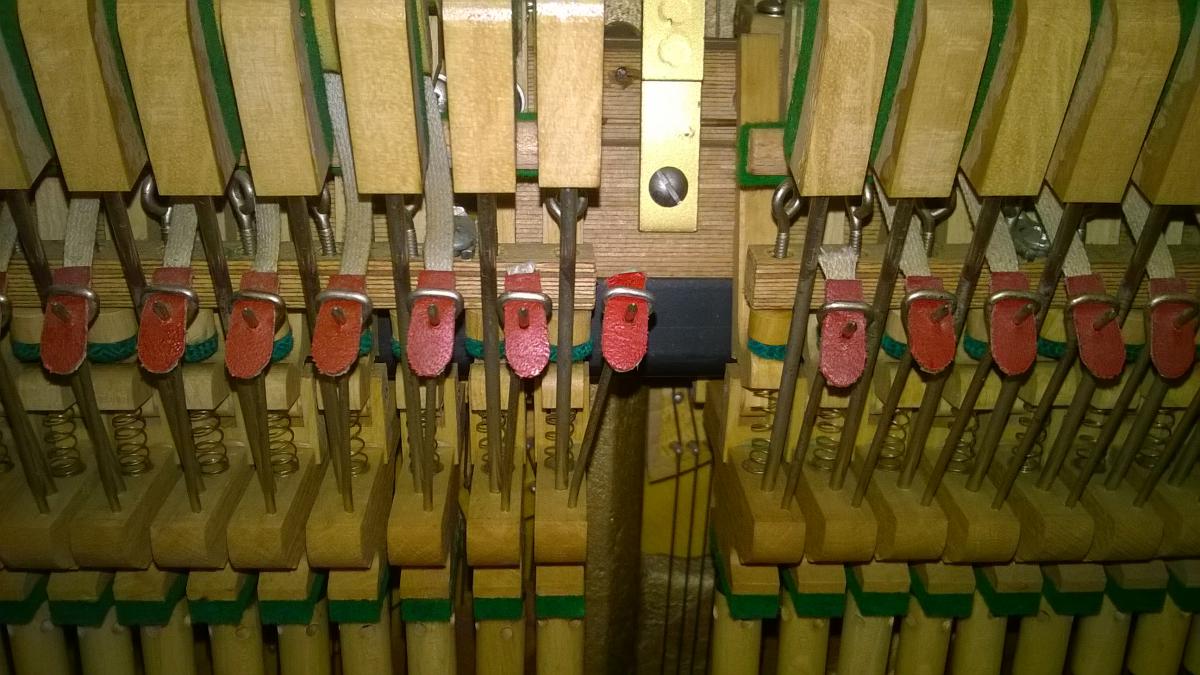
3) hard keyboard with dampers that rise immediately upon key touch
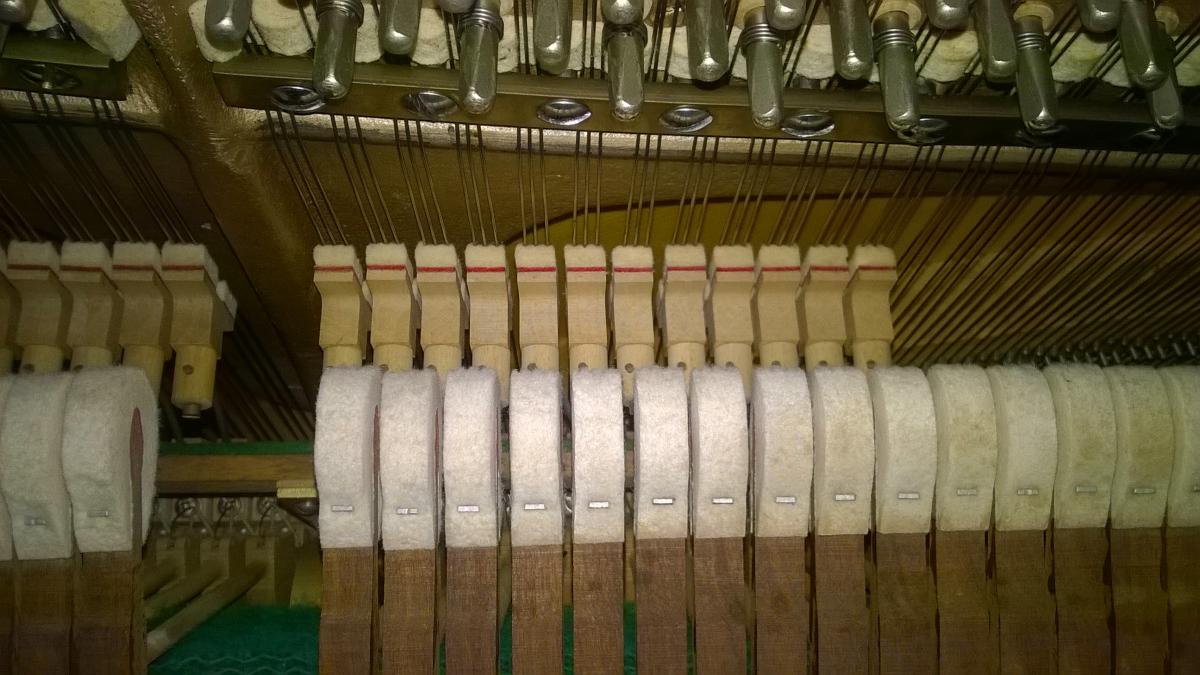
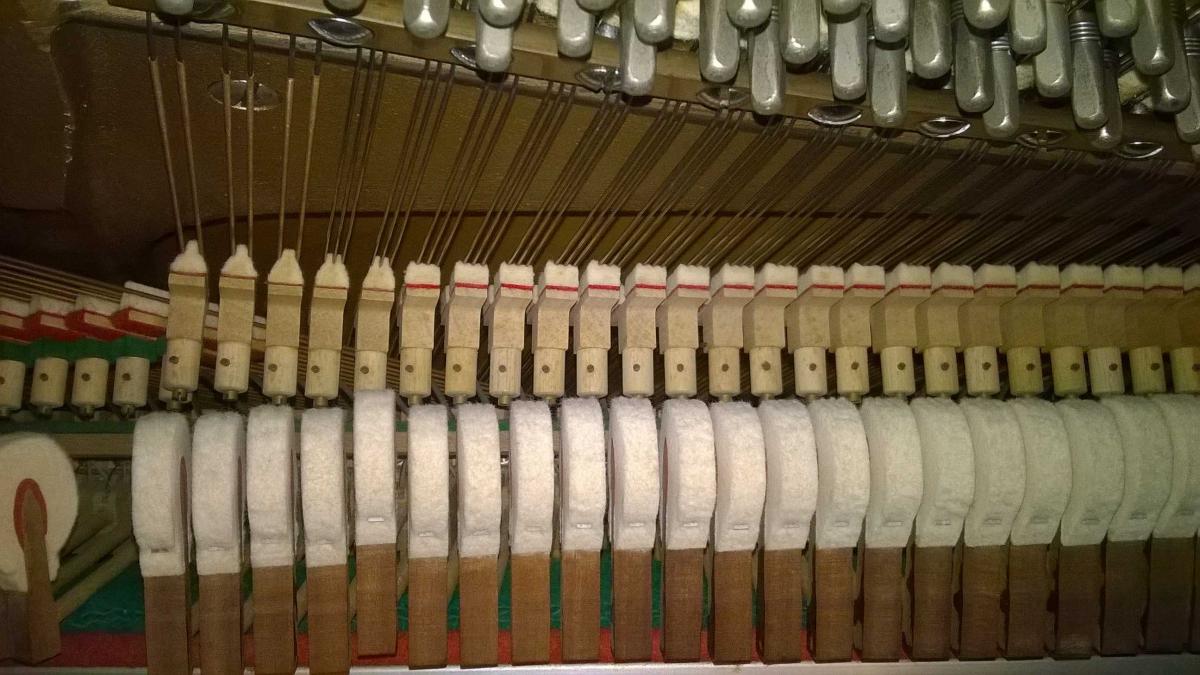
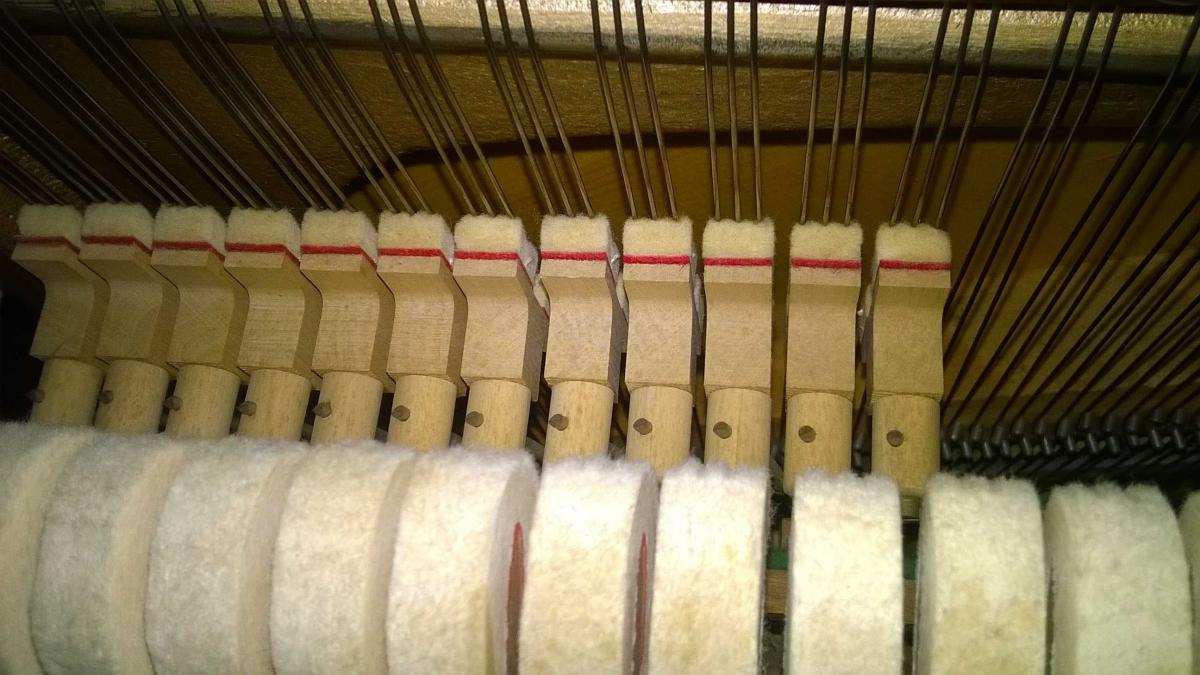
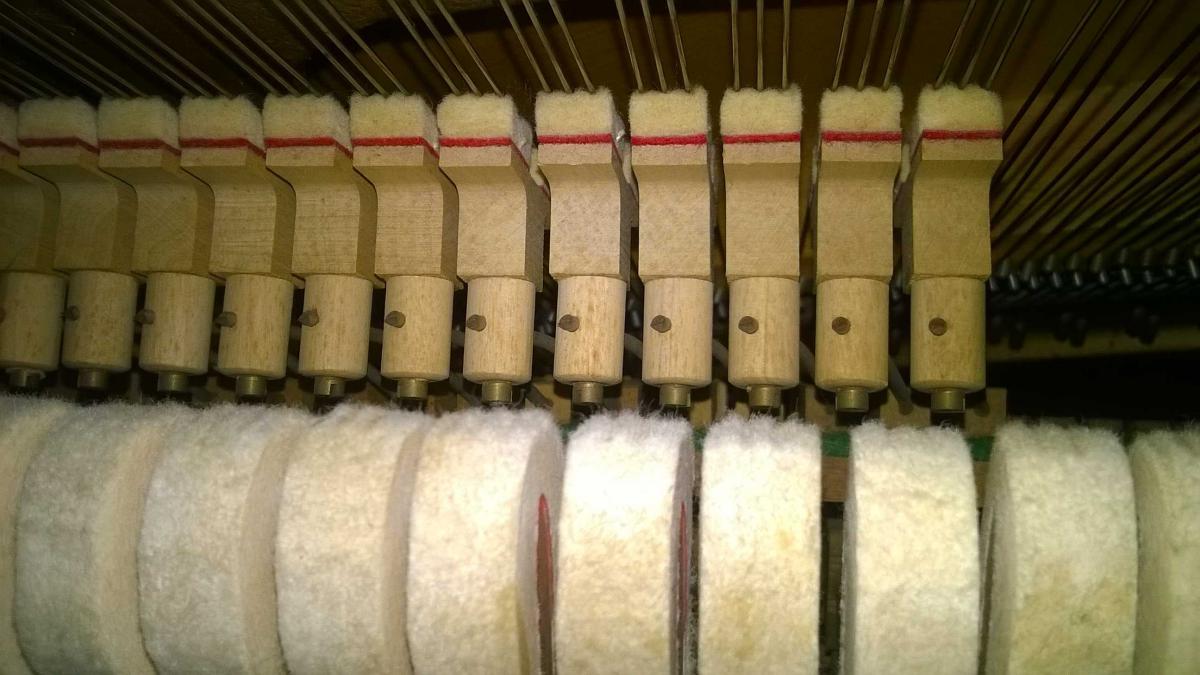
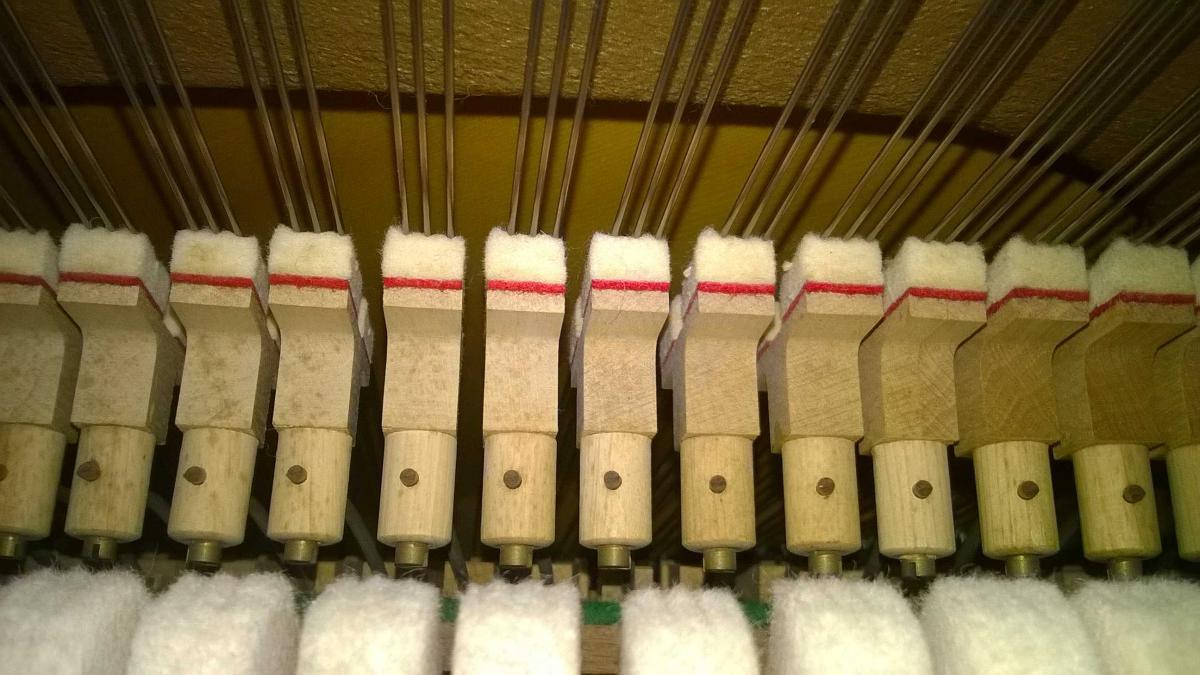
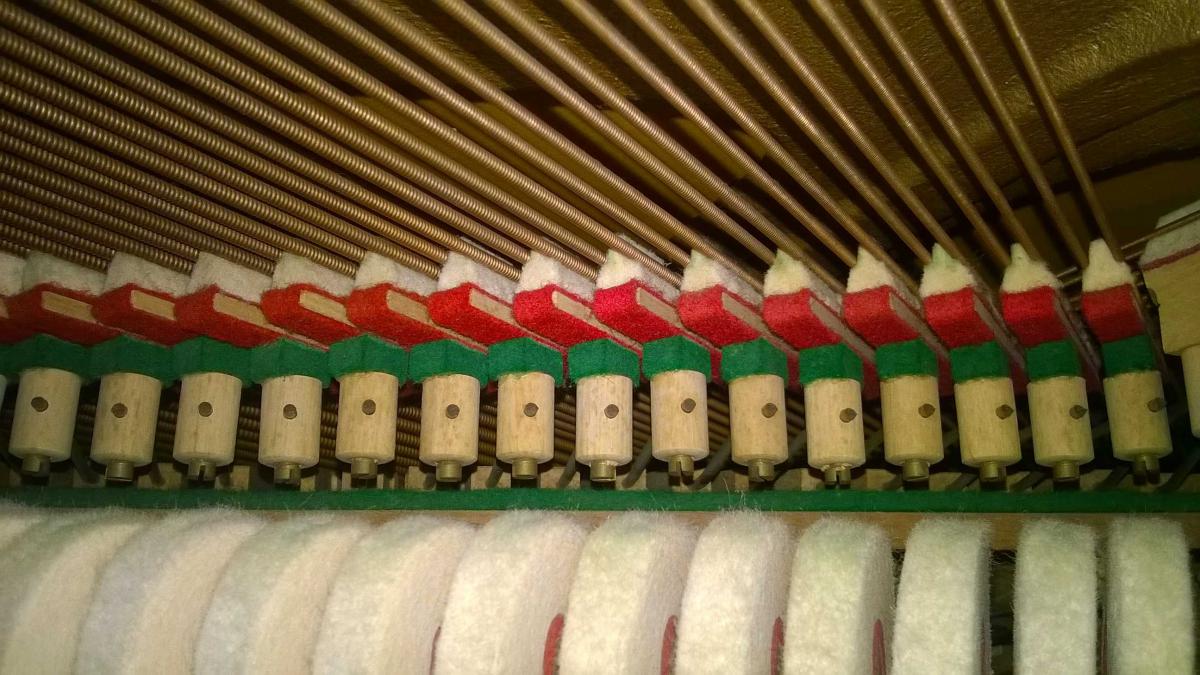
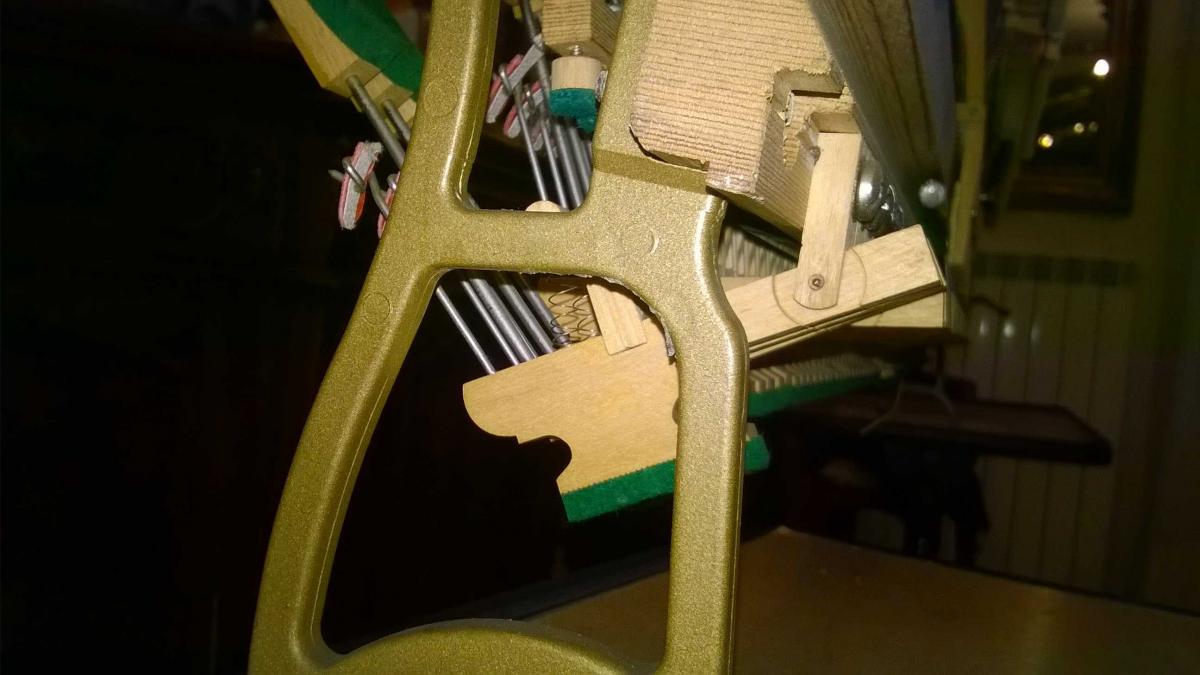
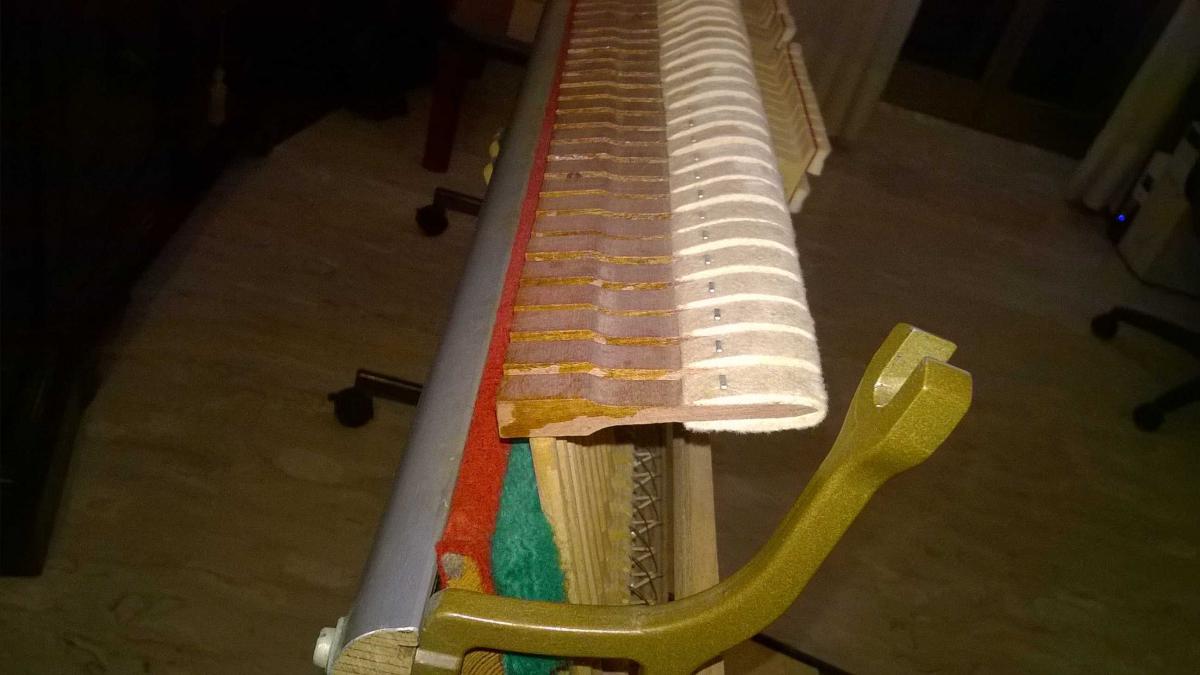
Lastly, 10 hammer felt strips gnawed by mice... which should be not very demanding to fix.
The hammers have only had a voicing, and after years, a brushing.
Rather than being brushed, it looks like they have been raked, and besides, what is the point of lifting the felt fibers in that way? Now we have to see if they can be recovered; it depends on how they were treated, if they went deep, etc.
You should try the bass notes by plucking them to hear if the sonority is good; on those hammers, even if the photos are not very clear, I can see the raised wool fibers and that is not correct.
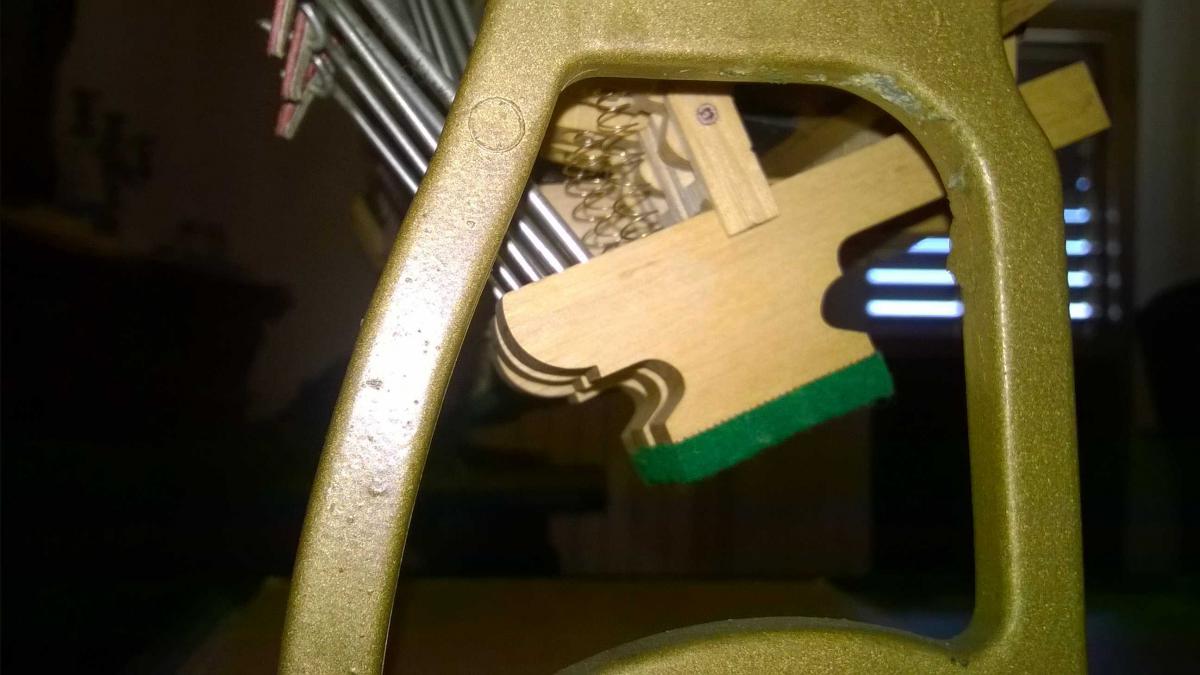
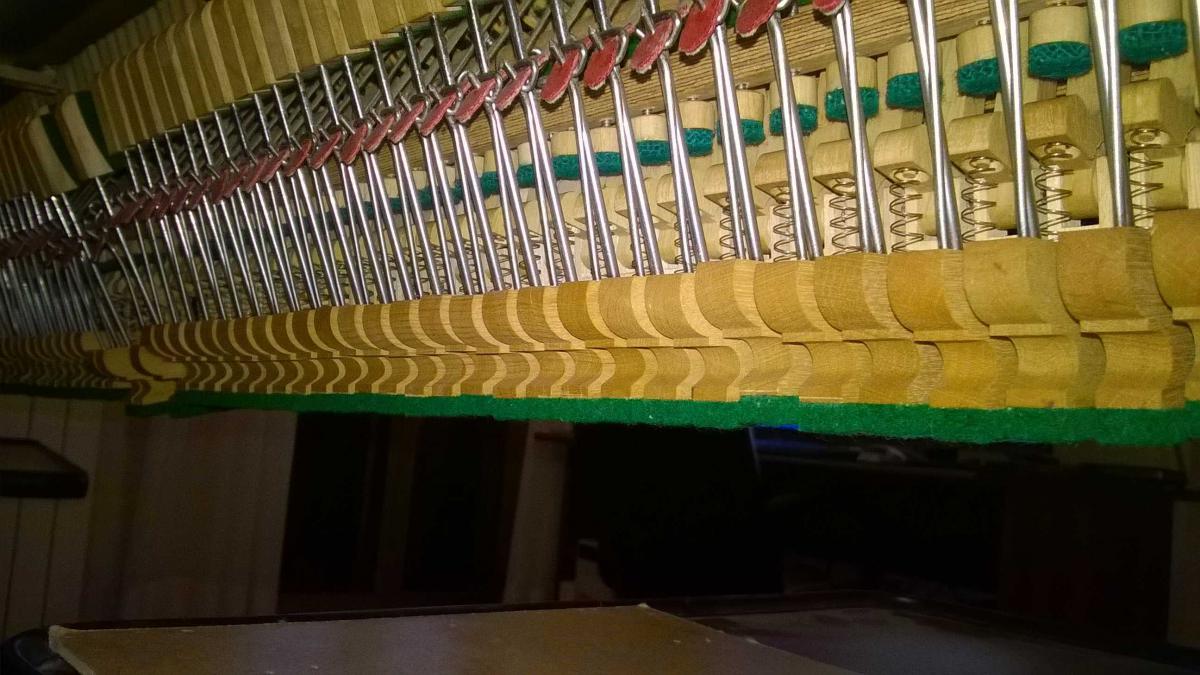
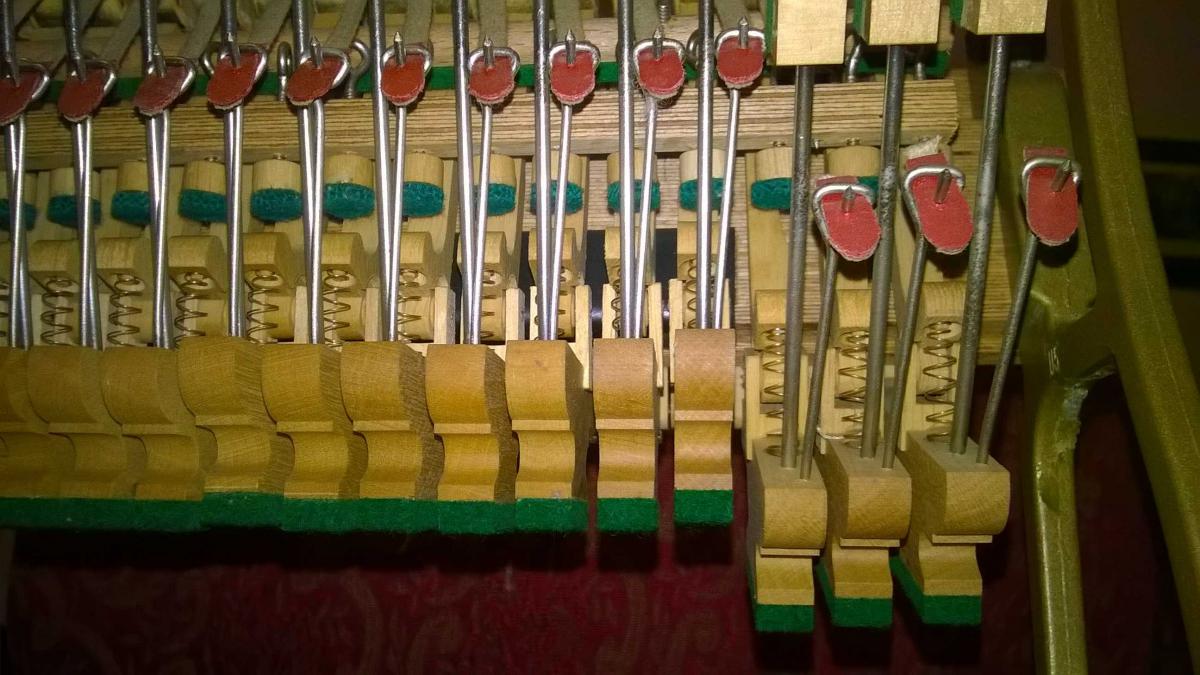
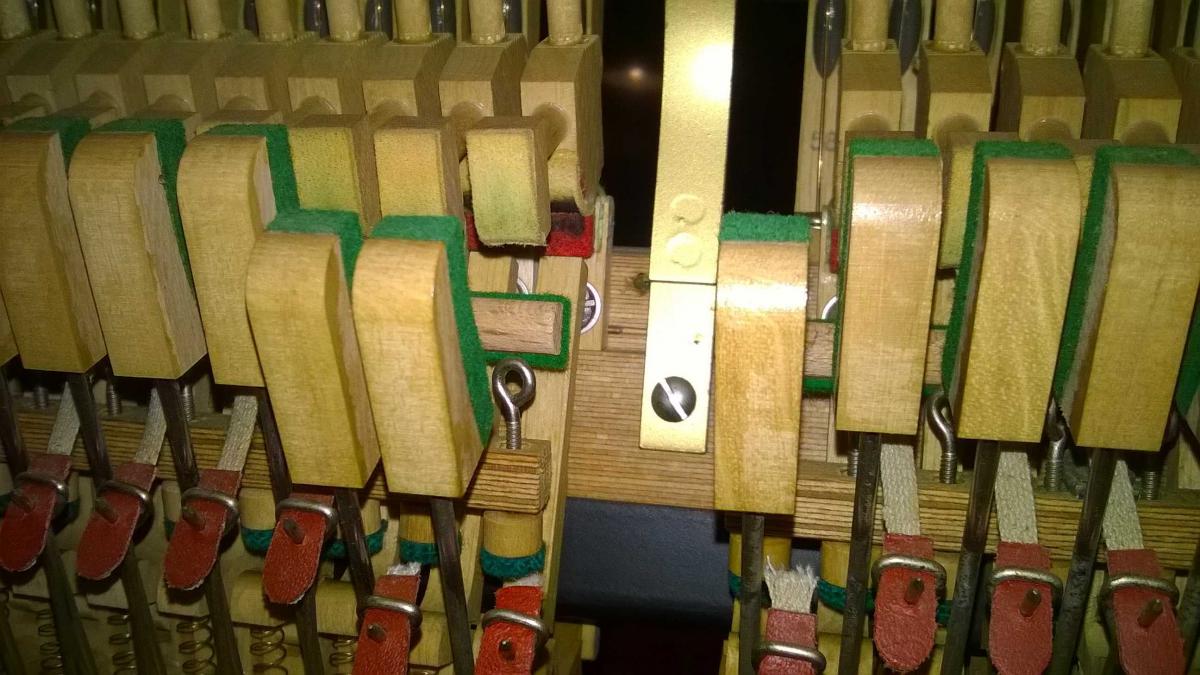
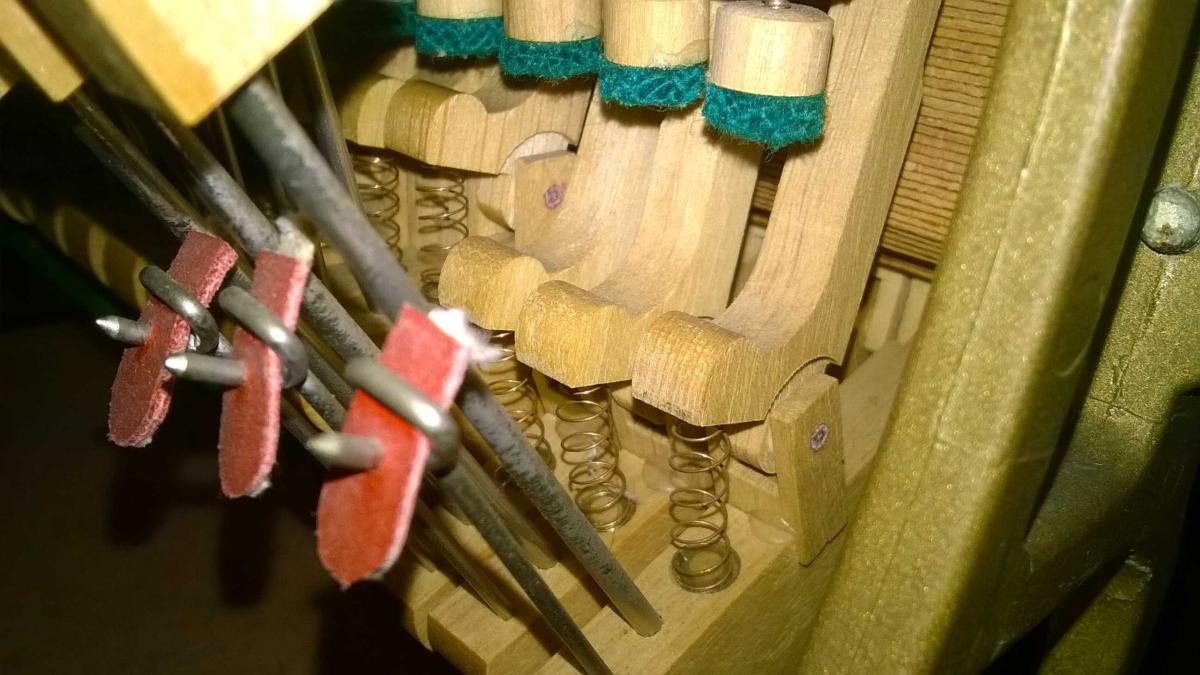
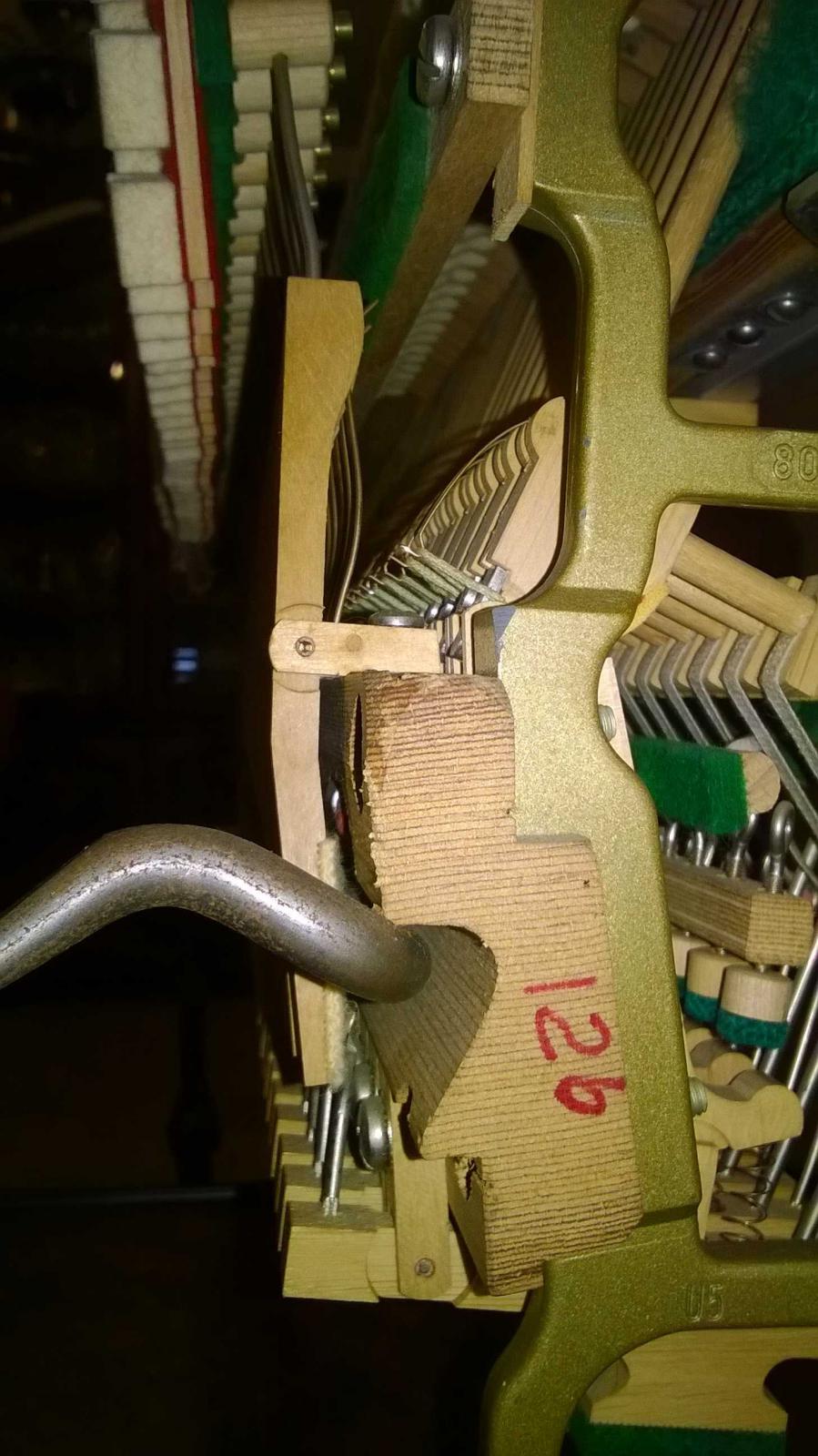
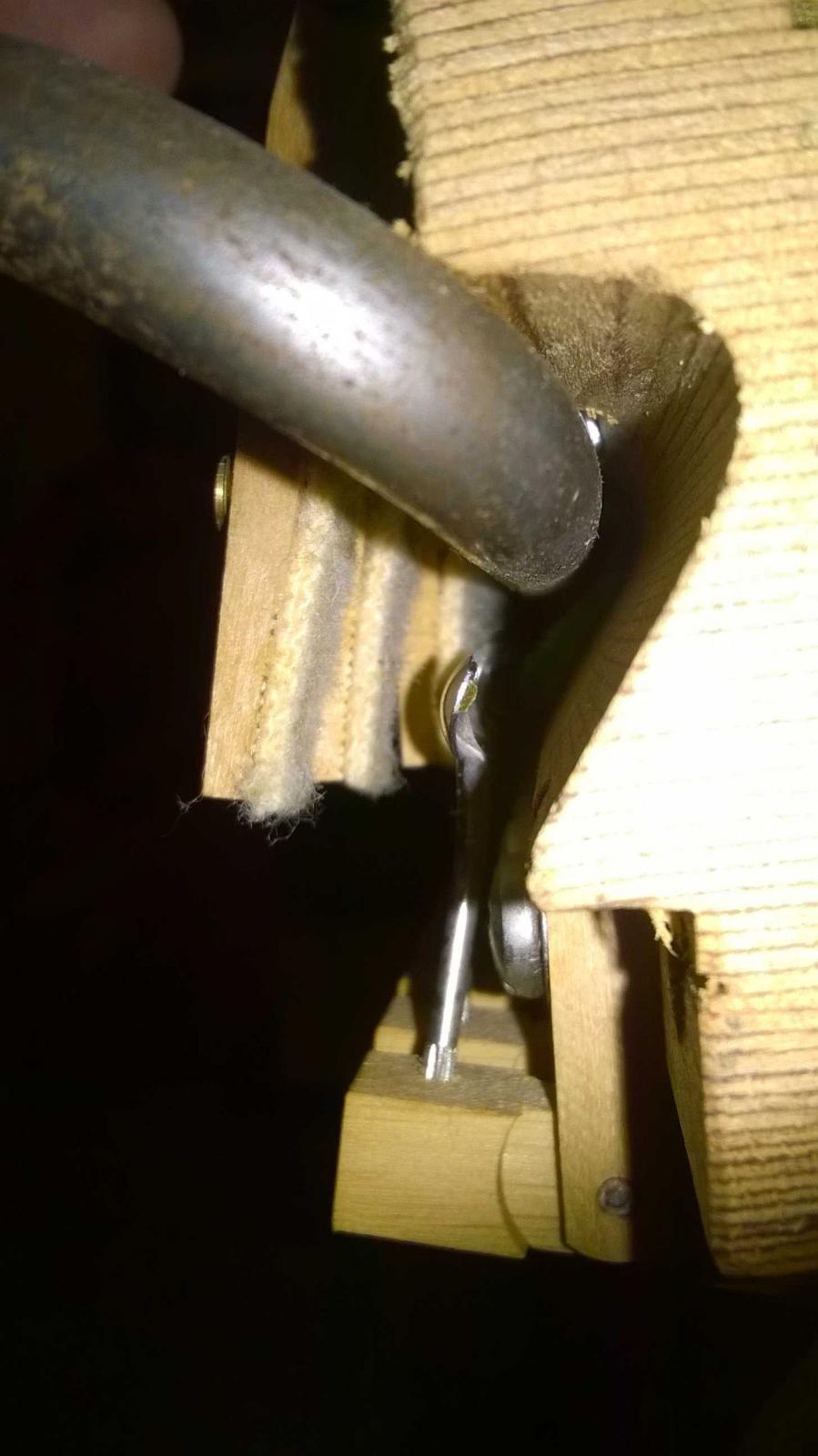
As far as the dampers, mechanical regulation, and their correct positioning are concerned, I would say these are all recoverable things. I can tell you that it was a bit of a habit at Schulze Pollmann to regulate the dampers so early; furthermore, I have happened to see several Schulze Pollmann uprights with damper springs that are too hard (they can also be loosened a little) and with bows that are short in relation to the instrument, for example in the 126. Which model is it?
In any case, both the 122 and the 126 are good uprights; if certain things in the regulation are corrected, they also become pleasant. The key is slightly shorter compared to others in the same category but still well-balanced; if the right equilibrium is found, it works well.
It is a very resonant piano; you either like it or you don't, and I find it unfair to distort its nature to achieve something different. It is because of this power that the higher model would need longer springs in order to keep the clips less loaded. Unfortunately, a very resonant piano also makes all its defects more evident, which must therefore be limited. But not by brushing the hammers.
Thanks Giovanni! Mine is a 126. Anyway, aside from the brushing, I've never found the hammers to be as compact as others, like Yamaha etc. At most, do you think a slight tightening could improve them? At least for the low tones..
Another thing, what do you mean by "unloading" the damper springs? Also, from the buzz it makes upon key release, it seems that the felts do not dampen well, and are also not very thick. I wonder if with new and thicker felts, it could
dampen better and at the same time delay the opening, without touching the capstans. What do you think?
I am attaching the link to the video I made today:
Hearing it like this, it sounds completely dead on the bass notes.
Changing the ribbons and placing them higher will delay the damping, but there are the spoons that can be adjusted; if it doesn't dampen, it's partly because they are positioned poorly and partly because they are short; Renner also makes wooden pieces in a larger size.
Those cords need to be checked; if the cords are good, the hammers need to be replaced.... Try to straighten them, but watch out for the inclinations—doing them all together is worse than not doing it at all. You should use the right tool and straighten them one by one
But has the piano undergone interventions in the past? It's the first time I've seen the white felt under the strings; also, back in those years, the hammers were the reinforced grey ones, so I have some doubts.
The strings seem voiceless regardless of the hammer
So, the piano hasn't undergone any particular interventions. The tuner 15 years ago took the action away to check it in the workshop and potentially change some springs... or so he said. When he brought it back, it seemed impregnated with something and the wood had a darker color, but it was nonetheless more fluid in its operation. I asked him if it was possible to have a more ringing sound, especially in the bass, and a lighter keyboard, but he said that it was just like that and there was nothing he could do, I don't know.. Then once the action was reinstalled, all the hammers were quite misaligned at rest, with the repetitions needing adjustment; he told me to leave it as it was and to play it for a month because it needed to settle, and then he would come to finish the job.
The fact is, I never called him again and I regulated them myself. Since then, I haven't called anyone else, partly because I didn't play it anymore until about 3 years ago. I personally performed only a couple of tunings, the last one being last year. But I played very little due to the heavy keyboard and the dull sound. In fact, for the last 3 years, I have always used a Yamaha P95 digital piano.
So do you think the repetitions (fiocchetti) might still work and maybe it's better to regulate the spoons (cucchiaini)? My doubt is that if I were to change the repetitions later, I would have to regulate the spoons again.
Anyway, I tried plucking the low strings, and they seem really quite dull compared to the mids.
Well then, the location needs to be carefully evaluated; a few things need to be checked. Anyway, it's easy enough to move the small bridges twice, but I believe that in this case, the ribbons are the last thing to worry about. How are the bass bridge and the soundboard positioned? Have you taken load measurements with the iron frame? Are there any cracks? Maybe take some photos from underneath as well.
Heavy keyboard, I don't think so; it is balanced at 55 grams, there is probably some friction; the same regulation and the low sound they produce together give the sensation of weight.
The only measurement I took is the key weight, which is around 100 / 105 g and without damping 60/65. Moving it with my finger, the nut, escapement, and other components seem smooth; the bridge is also okay. I checked underneath, there are no breakages.
Indeed! Thanks for all the advice! For now, I'll adjust the hammer regulating, adjust the dampers and tuning, and play it a bit; maybe it will loosen up. Additionally, I moved it to a less humid room (60/65%), previously it was at 70/75%. In a little while, I will have it looked at by an expert tuner.
in the meantime, I'm posting a video of the strings
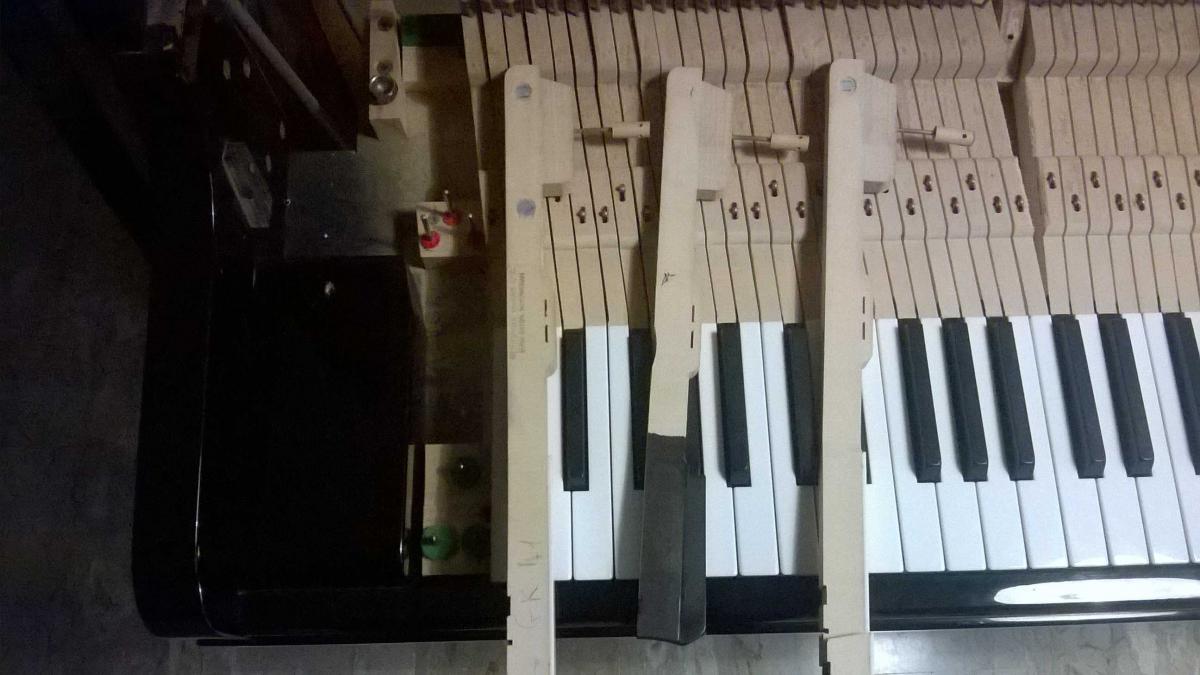
Well, I think the strings will be a bit flat but not by much. After tuning, we'll see how it goes. No, the dampers haven't been bent; those three that you see shifted forward is because the small straps behind are missing.
I'm just posting a couple of videos of the action, so you can see if there is friction or not.
If I had the ability to detect friction from the video, I would be a genius! Start by measuring how much weight you can report back up on the key... It could provide some indications regarding it