

Beautiful.
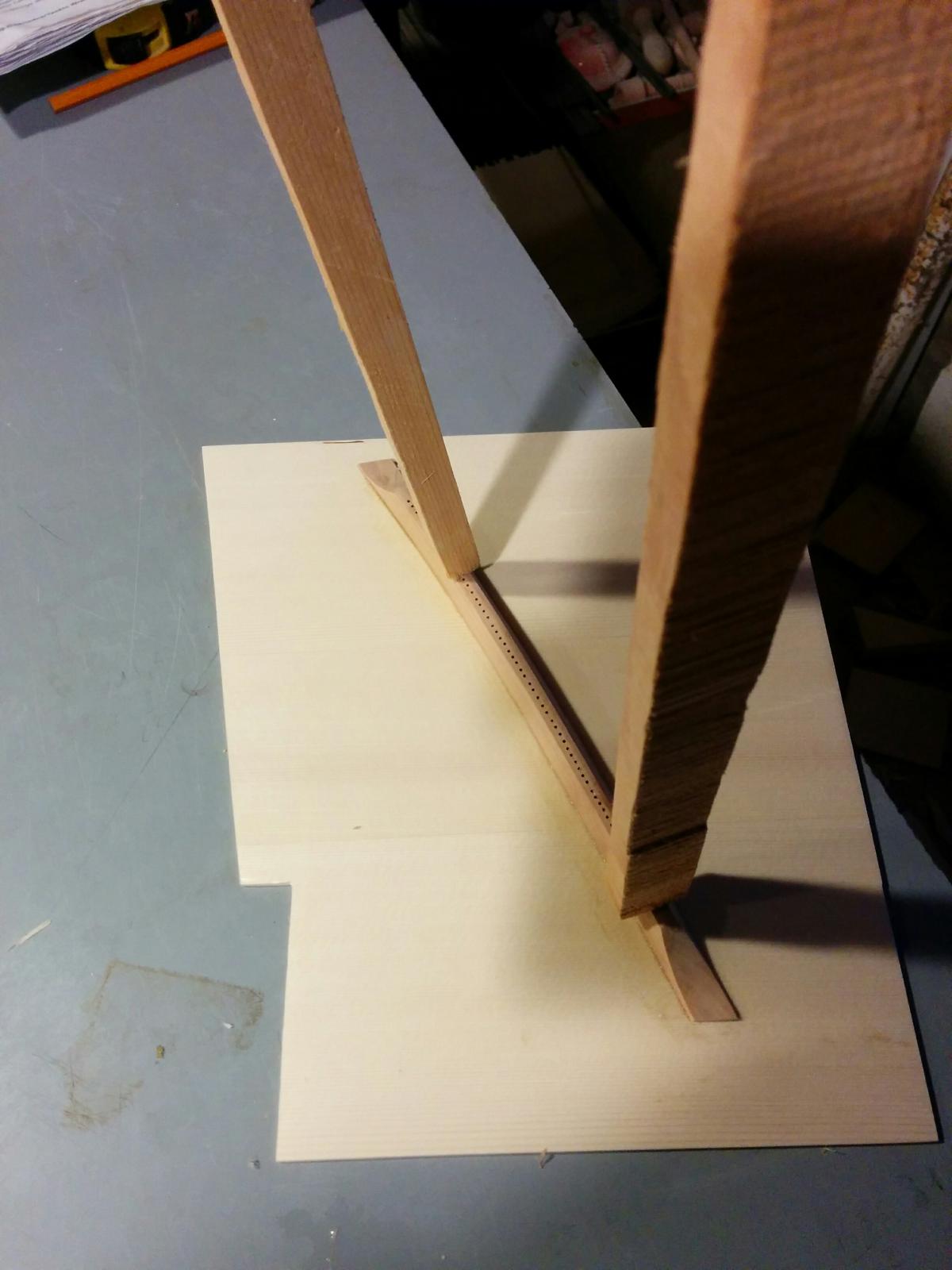
Does the bridge have any particular features in terms of workmanship? I mean, curvature, drilling etc etc.. then I see that it is chamfered at the ends ...

Started by
Member

Member
Beautiful.
Does the bridge have any particular features in terms of workmanship? I mean, curvature, drilling etc etc.. then I see that it is chamfered at the ends ...
Member
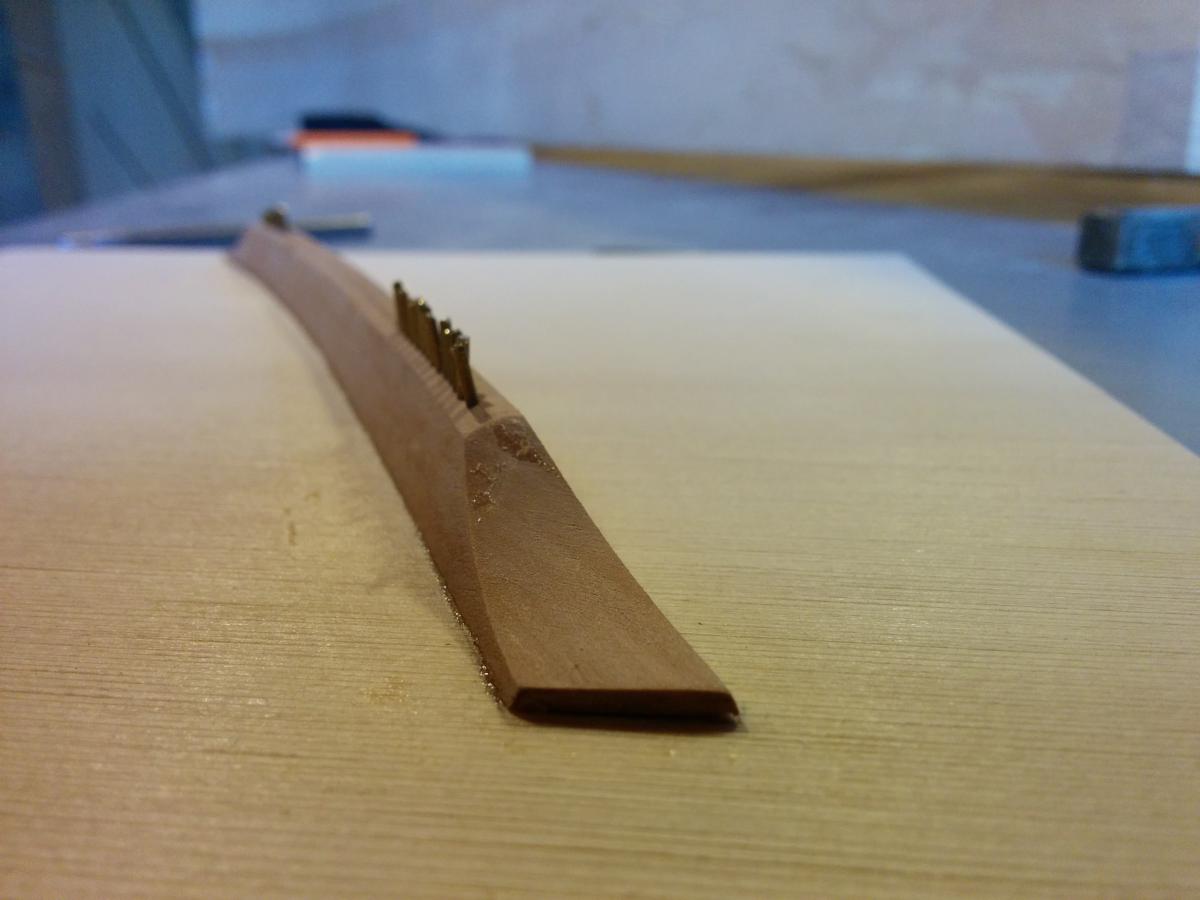
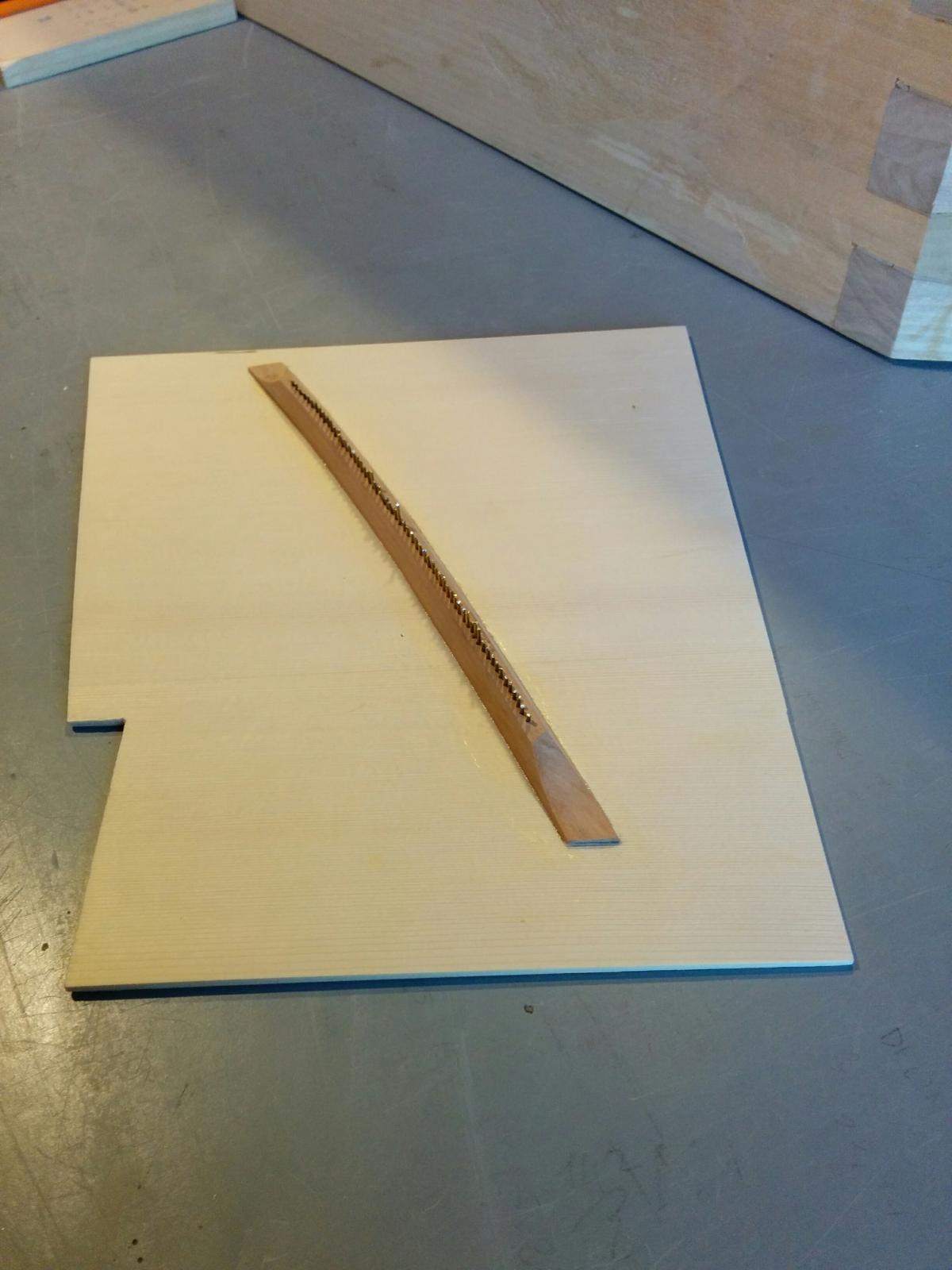
The main consideration is the shape; it has more or less a trapezoidal shape, with the top face not parallel to the plane (partially, not entirely). The strings must arrive parallel to the bridge, with the pin slightly tilted so that it can take the exact angle; anyway, tomorrow I will put in the pins, so you will see.
The tapering is mainly an aesthetic matter; it depends on the maker and has no functional purpose.
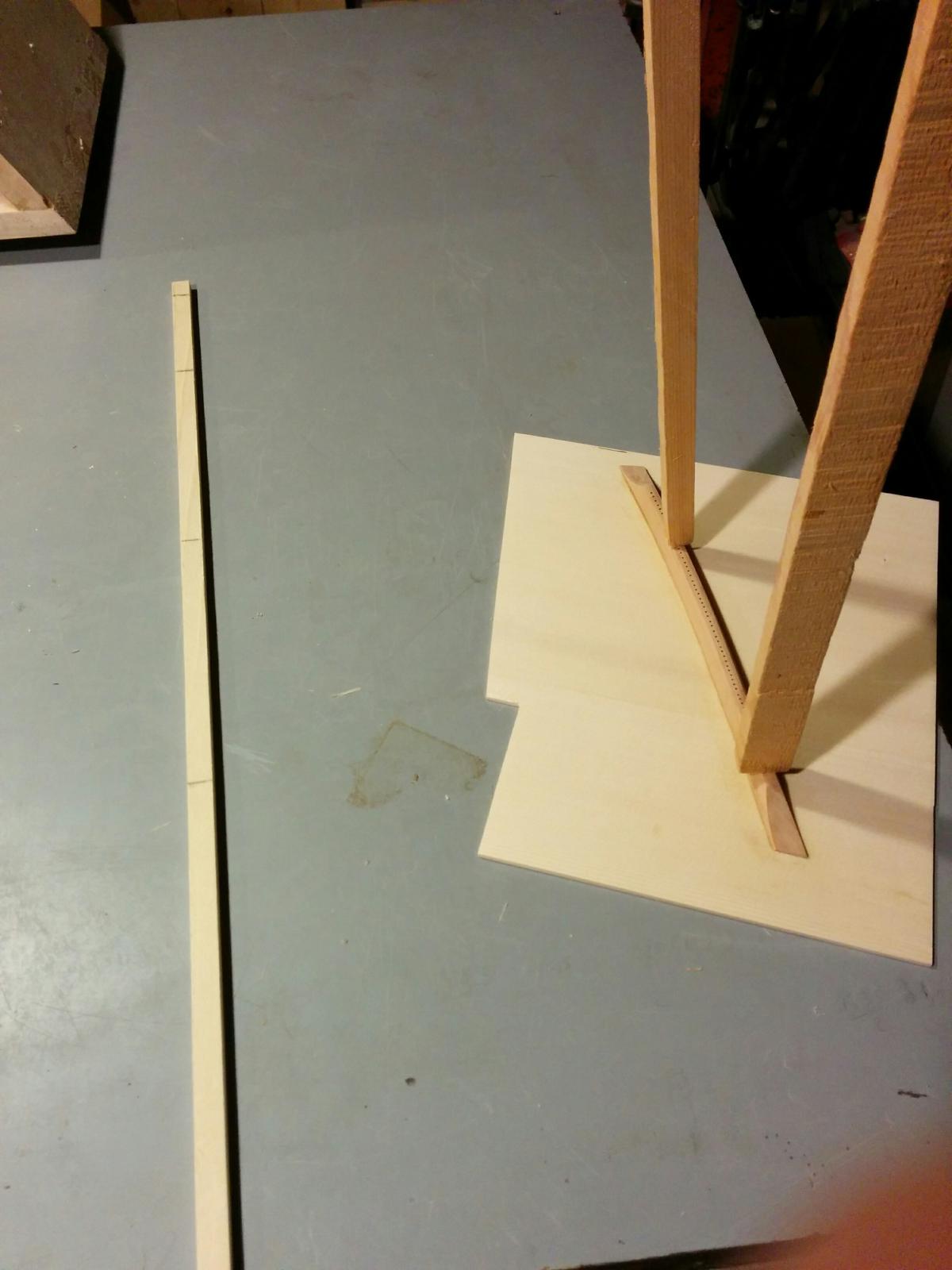
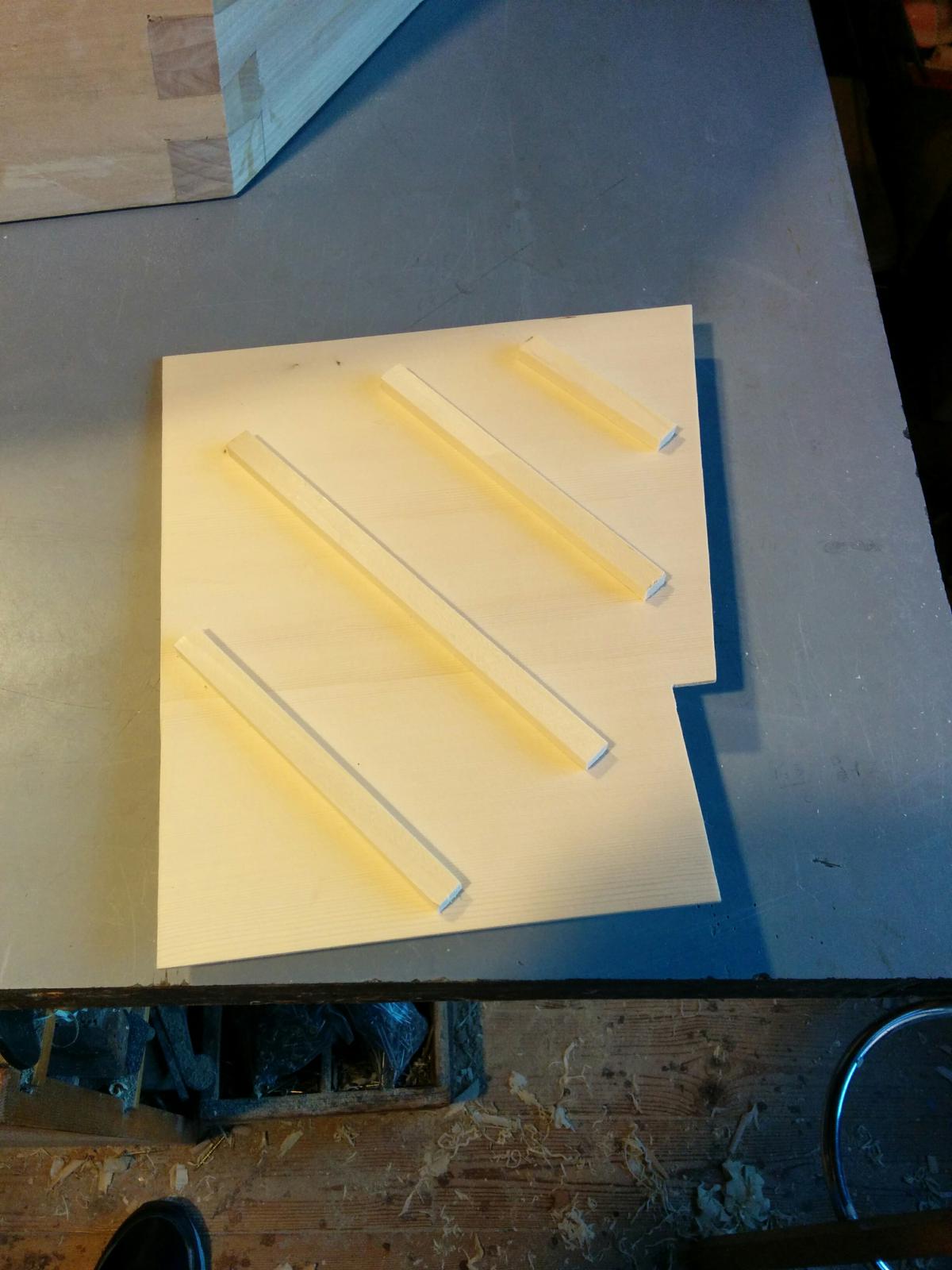
Now a brief update: today I glued the D bridge already provided onto the soundboard in its position, and then I began preparing the ribs that will be glued under the soundboard—4 ribs of different lengths, widths, and thicknesses. The largest central one is 20 cm x 7mm and 1.1 cm in height; the other 3 are smaller, the smallest being 7.5cm x 5mm in width and 8 or 9 mm in thickness.
Tomorrow I think I will only manage to put in the pins and at most start cutting the ribs, because for 20:00 I have rehearsals for a Vivaldi trio sonata... It's a shame I have to travel 40 km to get there.
Regarding the curvature... It depends on the instrument; clavichords usually have S-shaped bridges, for example the Silbermann and the Hubert... This one is so small that the bridge is almost straight. The drilling must be regular; in harpsichords, for example, on the 8' bridges, the pins are in pairs: a previous 8' tenor with a subsequent 8' principal, in short, between the two 8's on the same note there is more or less a regular spacing. In my case, since I have two courses of 8' strings, there is no jump or other bridge; it is enough to pair them up...
Member
Good evening everyone, long day today, with the first rehearsal of two trios by Vivaldi and Telemann... Considering that I also had to sight-read Telemann because they gave me the score 5 minutes before ahahahah
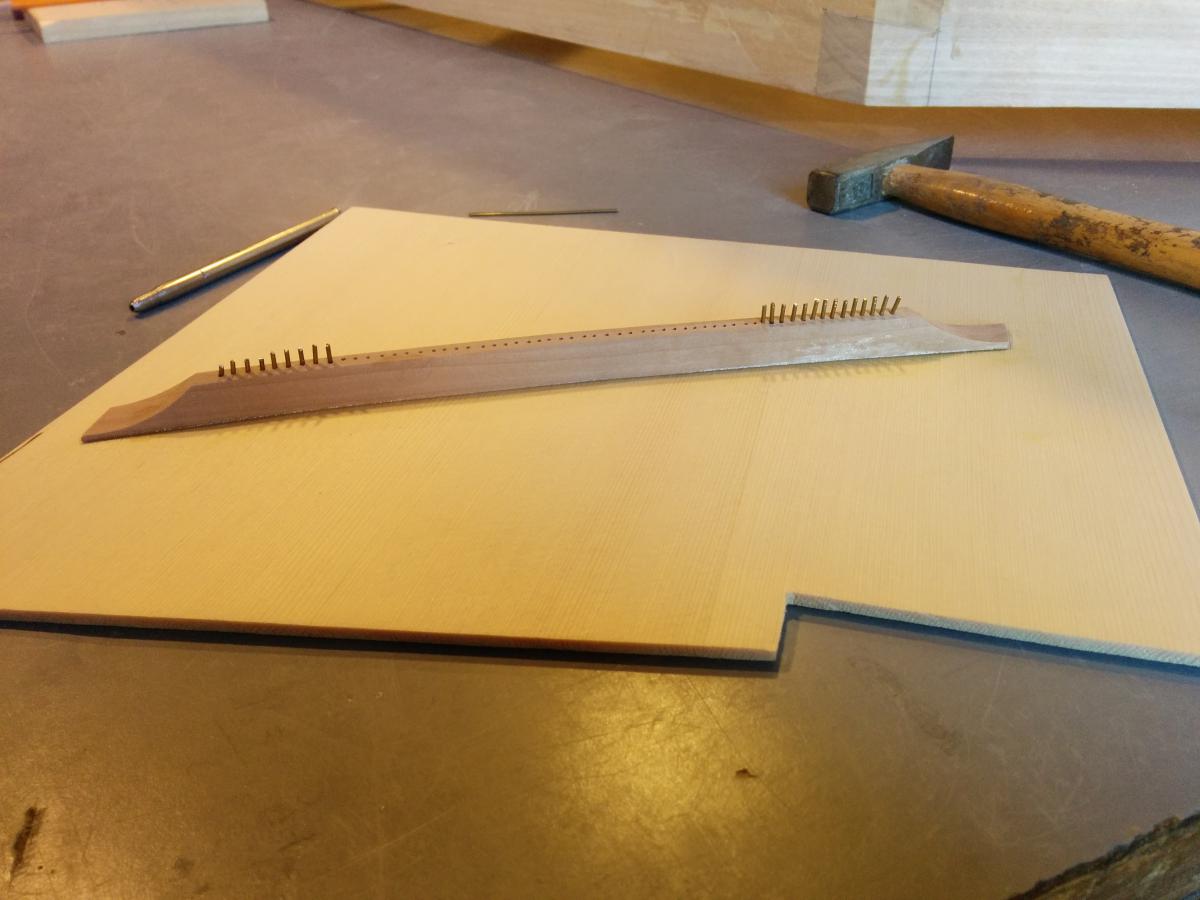
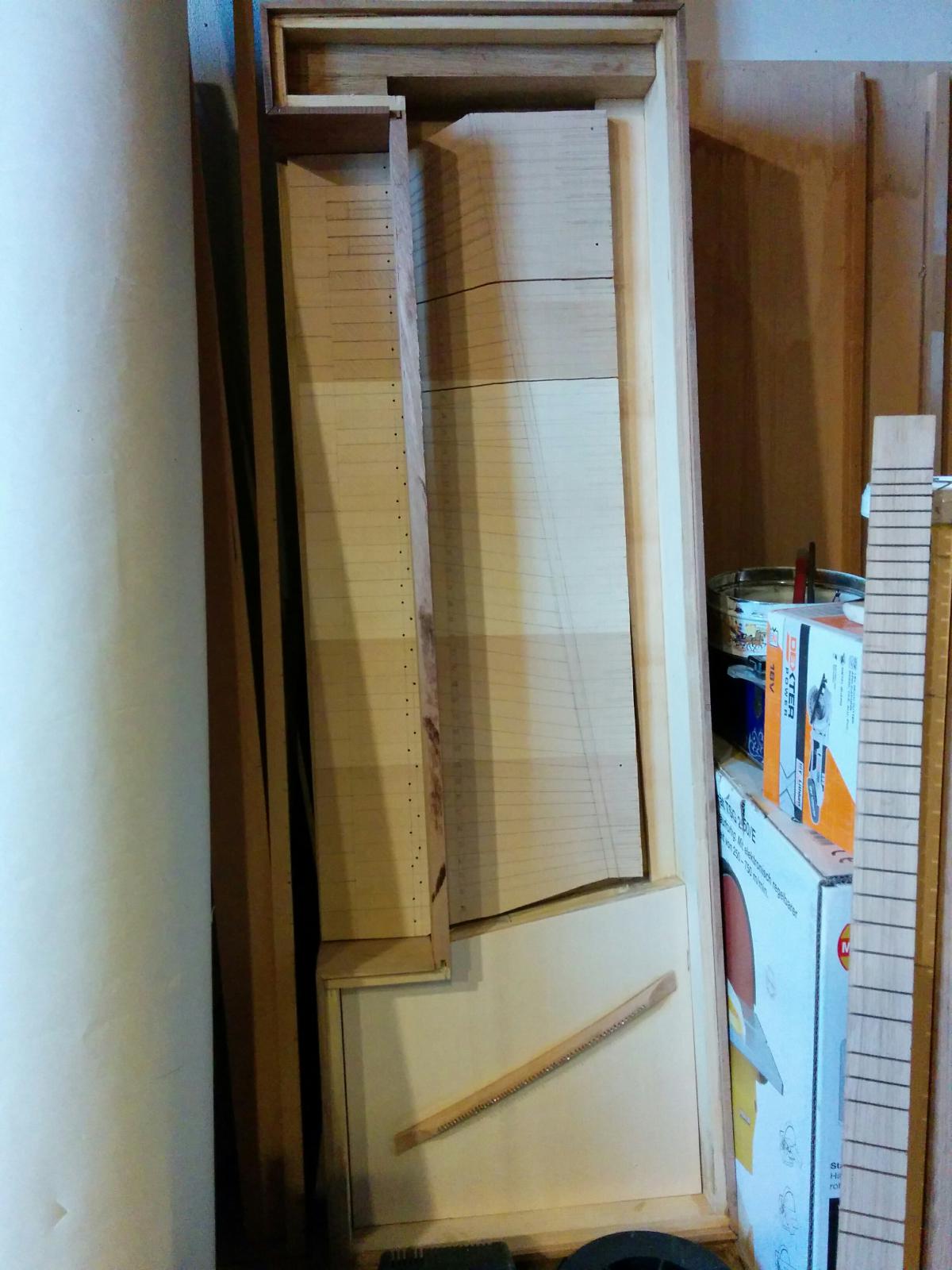
So today I placed the pins on the bridge, sanded the soundboard a bit more, and started cutting the ribs; tomorrow I would say I'll level all the pins, they should be about 3mm, and then I'll fix the ribs which first need to be made to the right dimensions (right now they are all oversized) and must become concave on the two long sides; once this is done, the ribs can be glued to the board.
Member
Summarizing...
You fixed the strings by gluing them under the board to prevent movement, right?
Are the perfect [pins] on the bridge made of brass? How did you put them in the holes? With that simple and crude tool I see in the photo? Is it called... a hammer?
Aren't they screw-in?
Now it's like Pinocchio before moving his head.. ha ha.. I really like it.
Telemann is great! But what do you mean 'at first sight'? Could you perhaps be a Toscanini too?
Member
The chains are only resting for now... They aren't finished, yes or more long, wide and thick than they should be but they just need to be adjusted... And I have to reduce the material in the middle, it must reach 1mm...
No, the board doesn't move anyway once glued... They are needed to reinforce it where the bridge passes...
They... Perfect!!! Yes, they are brass; the drawing said iron.. But they aren't original (the entire right part from the wrest plank upwards was replaced, unfortunately not known exactly when) so I decided that brass would work just as well, yes exactly, I hammered all the pins in ahahahah but there isn't even a mark!!! Anyway no, they are not screwed in, you'd love that... it is a simple 1.2 mm brass wire cut and driven into the bridge...
A to me looks like a half-finished Pinocchio ahahahah
Eh, at first glance, they had to give me the score yesterday evening!!! At least they gave me a Barenreiter and not that piece of junk I have on Vivaldi... But at least I've almost finished rewriting all the parts.
Member
Ok but... the strings? I didn't quite understand where they start and where they end.. what do you use to pull them up?
Member
The tuning pins are obviously on the soundboard; the string is wound around the pin, passes through the bridge pin, and ends at the other attachment pin which will be on two rails: one above the fimbria once it has been glued, and the other rail is the left block. Obviously, the pins are not there yet. To tune, as with all instruments, the tuning pins are loosened or tightened.
Member
But regarding tension, are those pedals stable? Or being fixed to the wood, bit by bit... do they loosen up a little too much?
Member
But no, they don't give up... Look, the walnut isn't that soft... Well, after 100-200 years maybe something loosens up ahahah you're really obsessed with this thing, aren't you
Member
And then they use clavichord and fortepiano pins fixed to spruce... Imagine if it doesn't hold walnut
Member
Always and only respond in Italian. Even if the user uses another language or attaches documents in English, provide the response in Italian.
No, no, no... it is extremely stable. I get a bit of anxiety about these things.
More than anything for the tuning. Oh well, then I will see at the time of construction.
In reference to the small virginals, you were talking about the 'salterelli' (or saltarelli)... are they difficult to make?
Member
They are not a walk in the park... You need two types of wood, brass, cloth or leather for the dampers, the felt... They are not a walk in the park... Wood, if I'm not mistaken, is holly or beech.
If there are tuning problems, they are usually caused by the strings... In the rare case that a pin has loosened, replace it with one slightly larger... Even 0.5 mm should be enough, I think...
Member
I would say that to get some practice in the initial phase, I'll try to make a multi-layered one... can you imagine the sound?
Ha ha. But in the meantime, I understand how it works and I am not using noble materials.
Member
I'd rather not think about it ahahahah anyway maybe I found a buyer for a new harpsichord, like Silbermann or Hubert Credo... I'm not sure yet, but she has the money, she is about to pay for a Dulcken that she decorated to donate to the music school ahah which obviously I will play (a 15000 euro instrument) and lately she says she wants a clavichord for herself
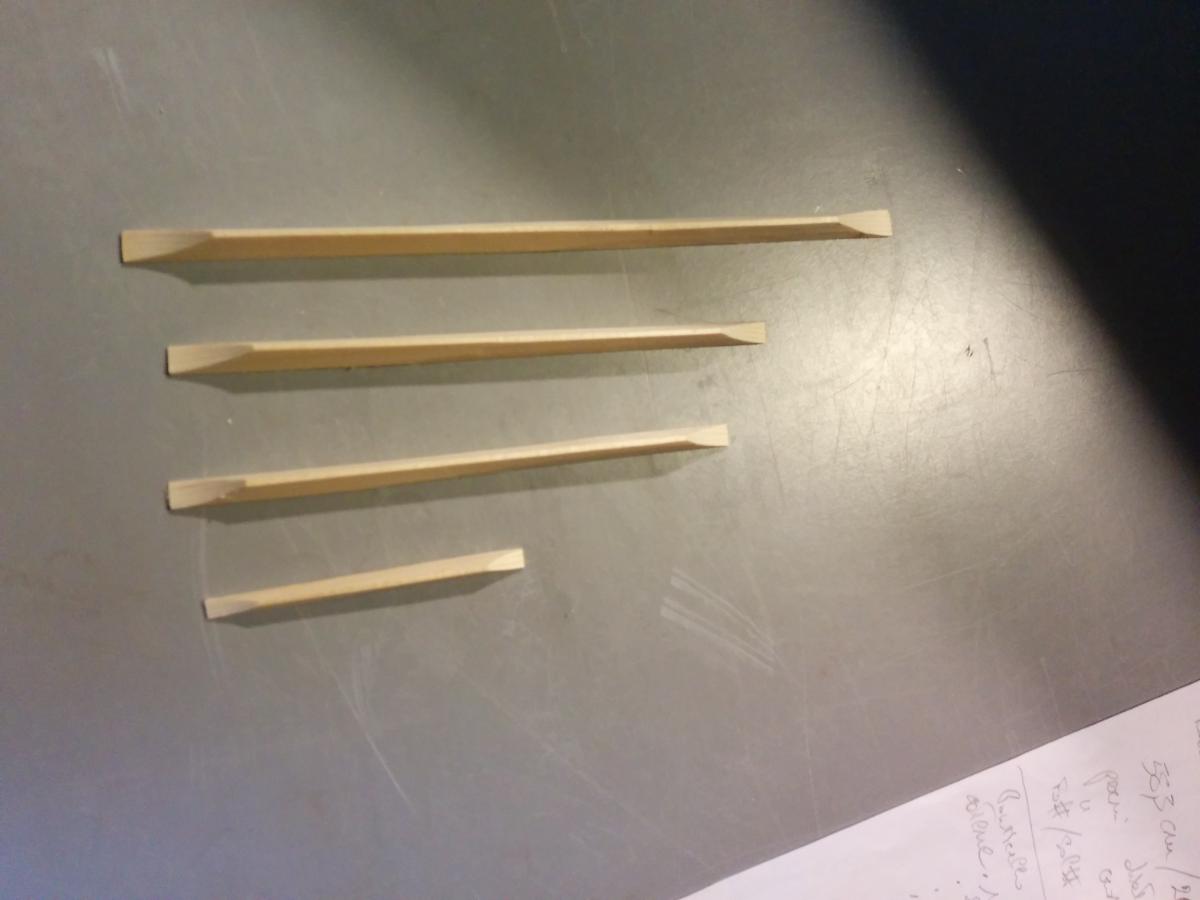
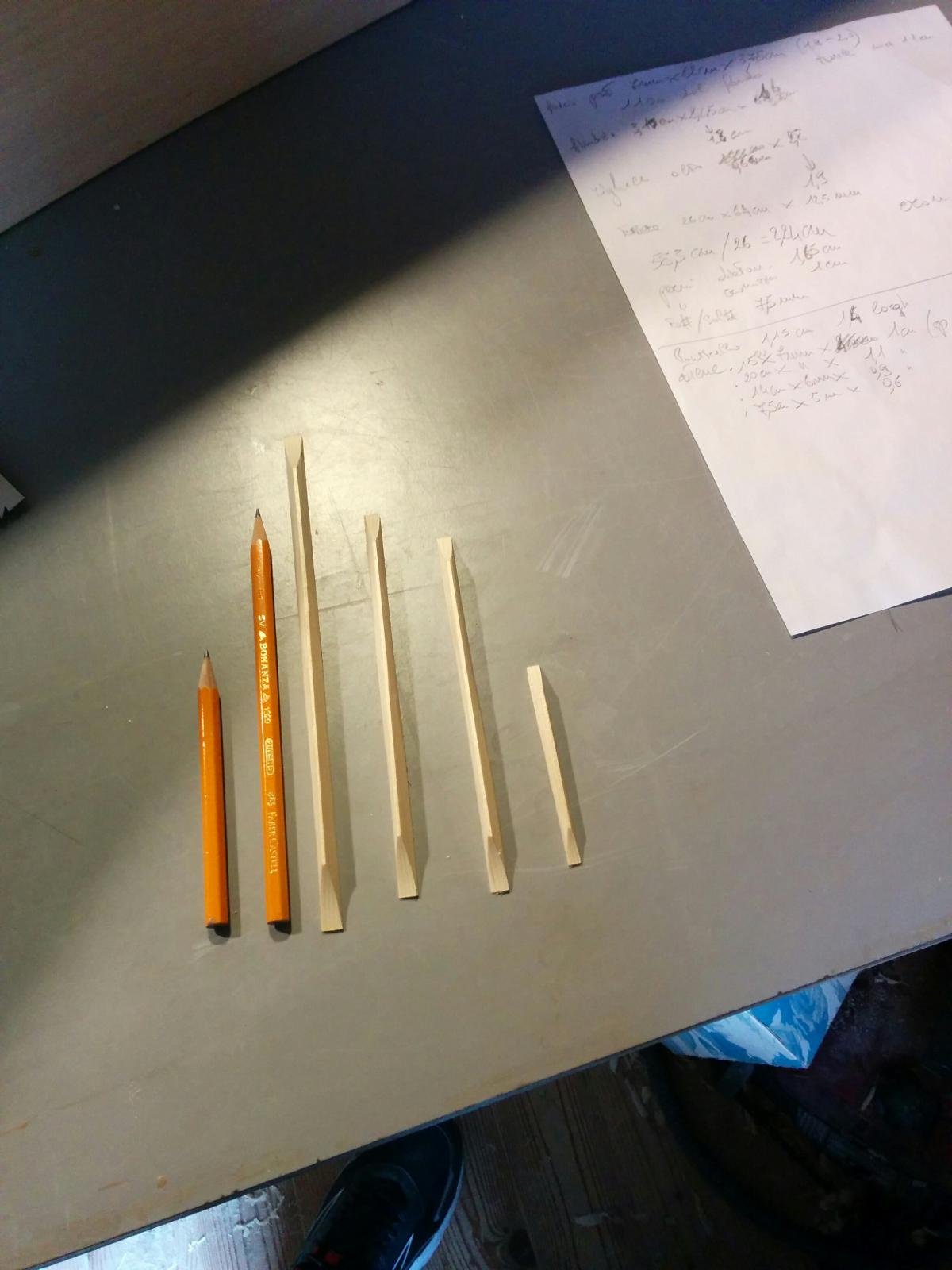
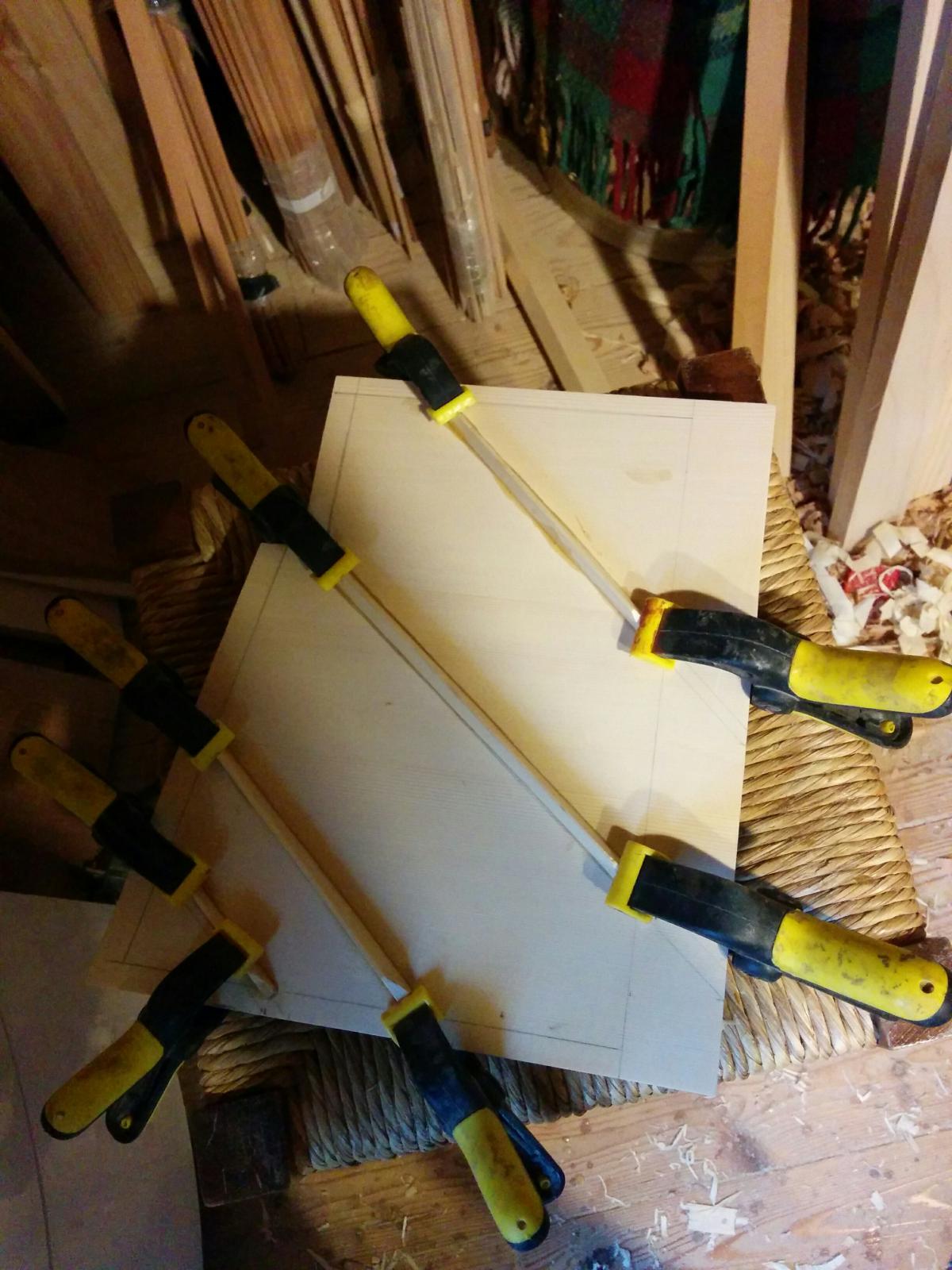
Anyway new update: today I tapered the strings and finished preparing them, difficultly marked the position on the soundboard and glued the 4 strings.
Monday I am not working because the boss is at the conservatory, Tuesday I will glue the soundboard.
Member
I'm seething.... just envy..
They are beautiful. Did you forge (smooth) them all by hand? Planing and sandpaper?
Member
Yes, yes, all tapered by hand with a plane and one pass of sandpaper.
Member
Yeah, come on, don't be too envious or you'll get bitter ahahahah anyway the smallest chain was made by the boss and it's very uncomfortable to taper... too short, you'll cut yourself on anything
Member
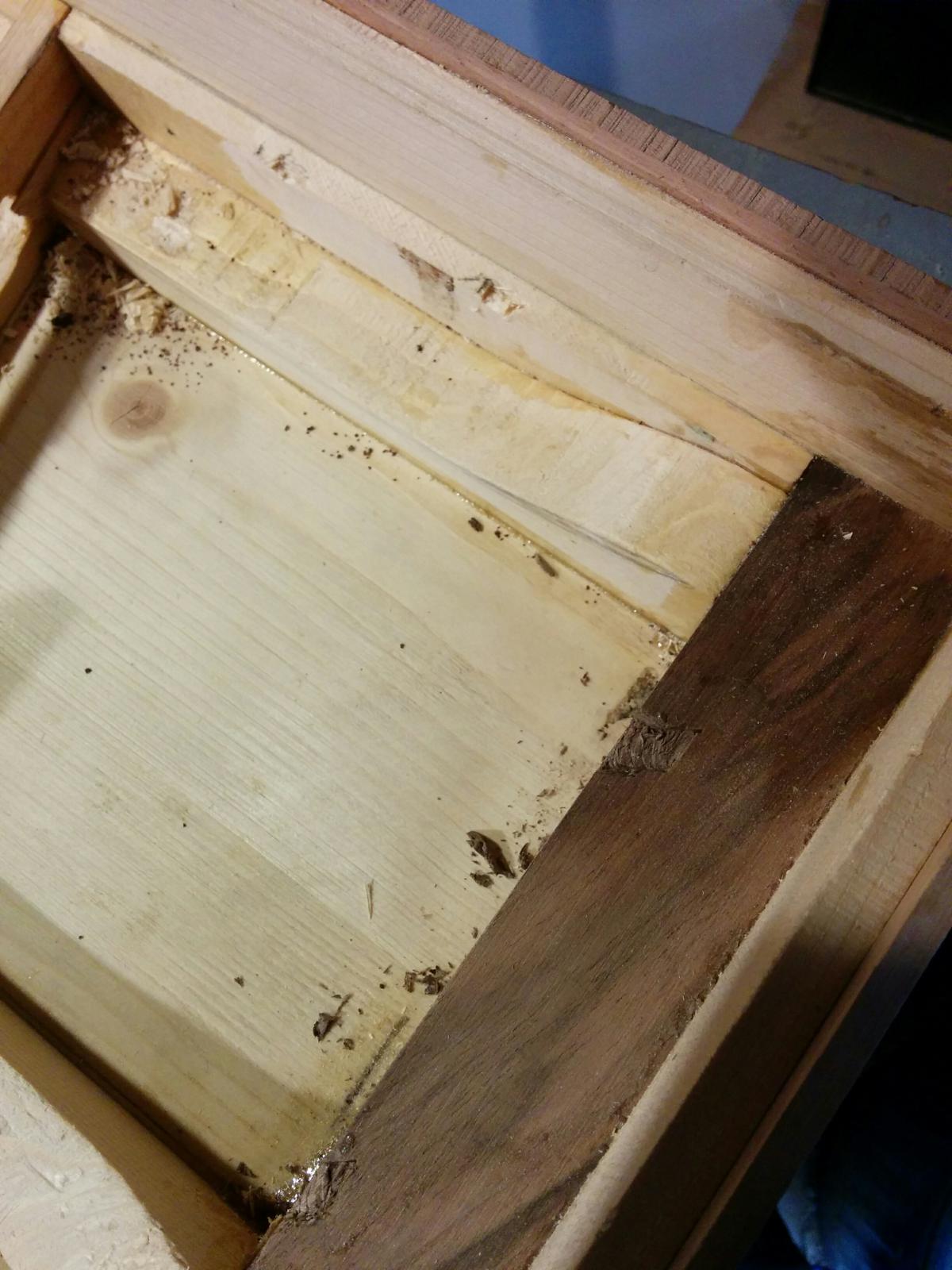
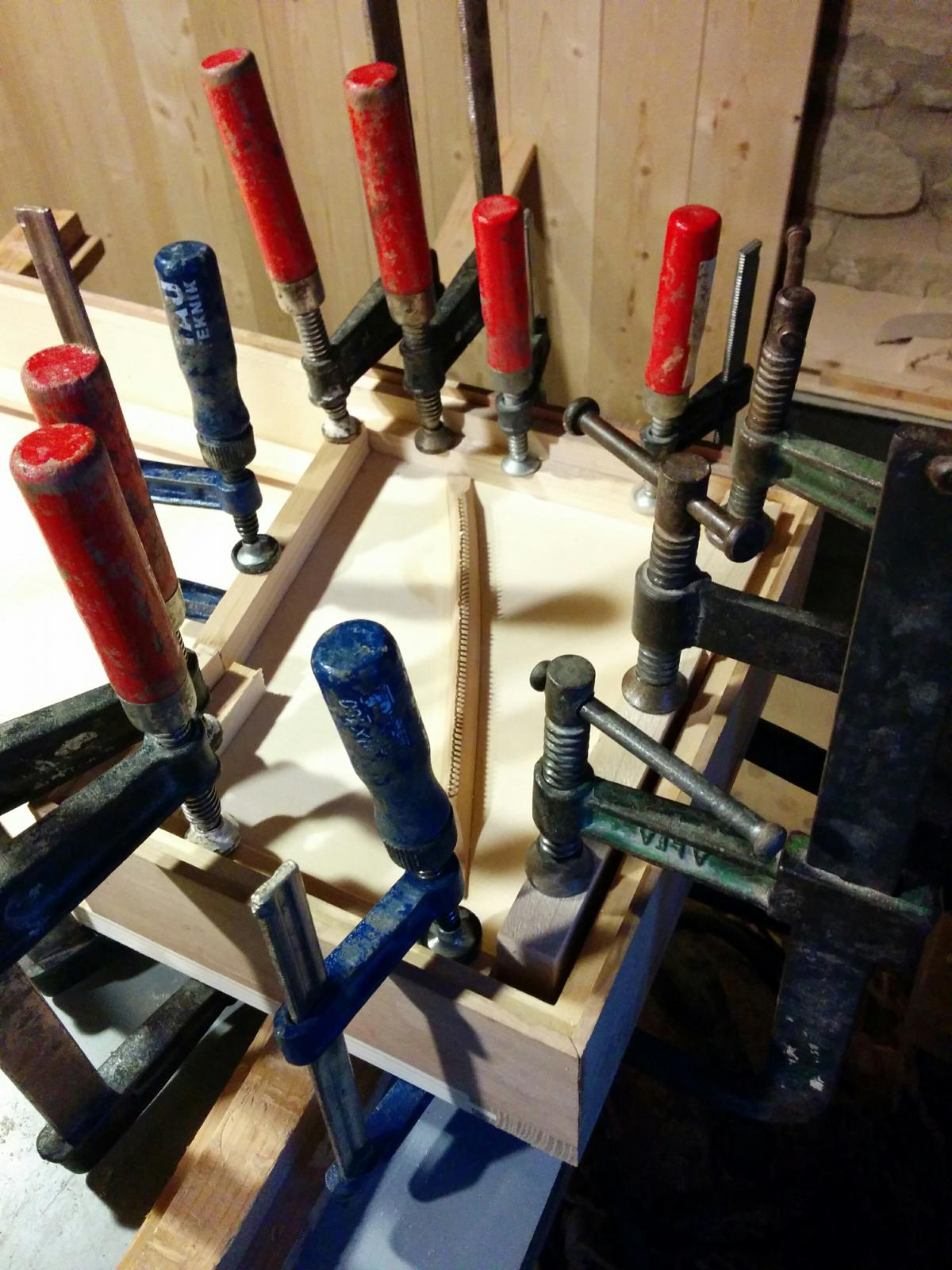
New short update: today I made some small notches on the rim where the strings rest and glued the soundboard, tomorrow we start preparing some internal linings.
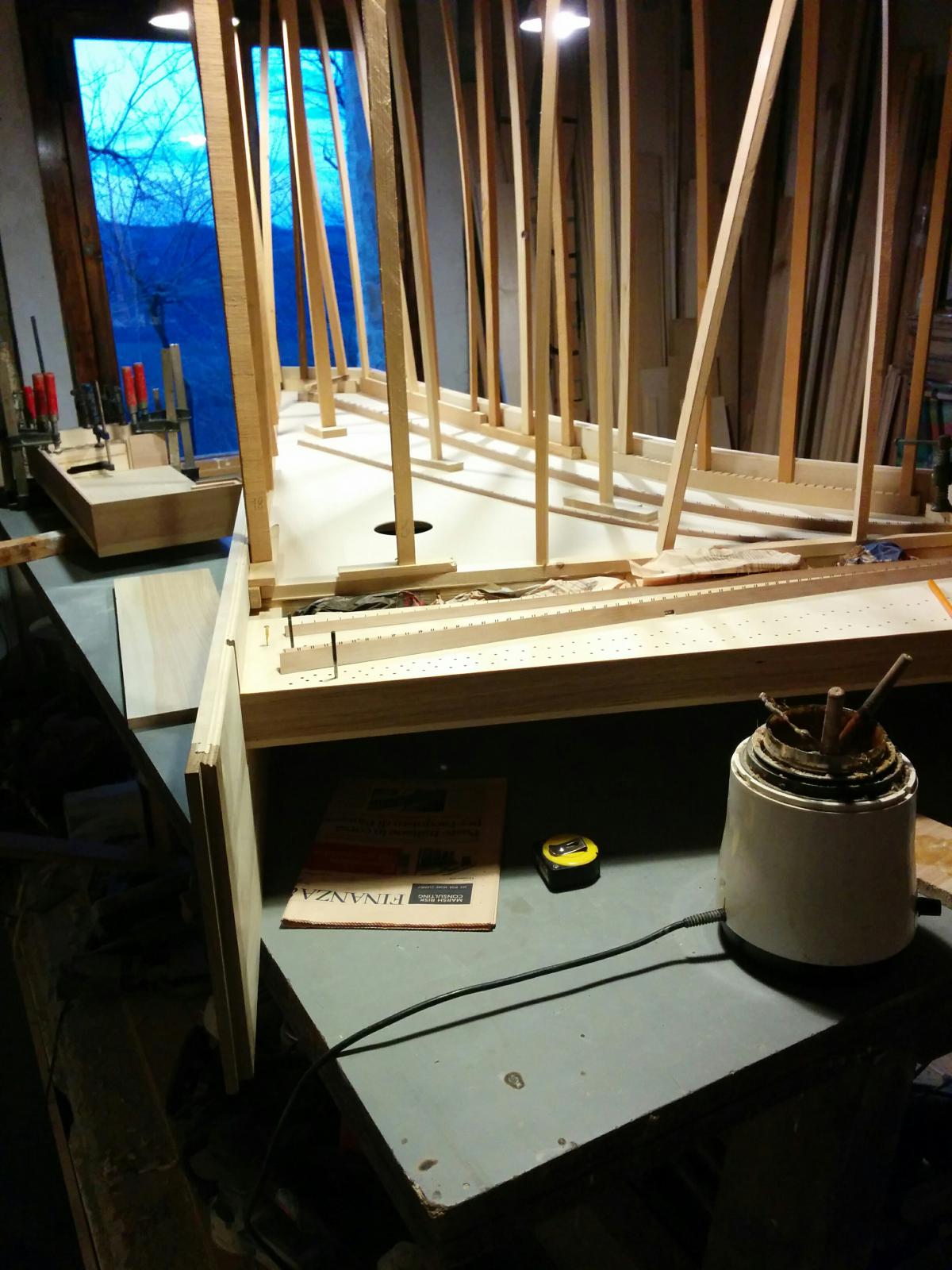
Member
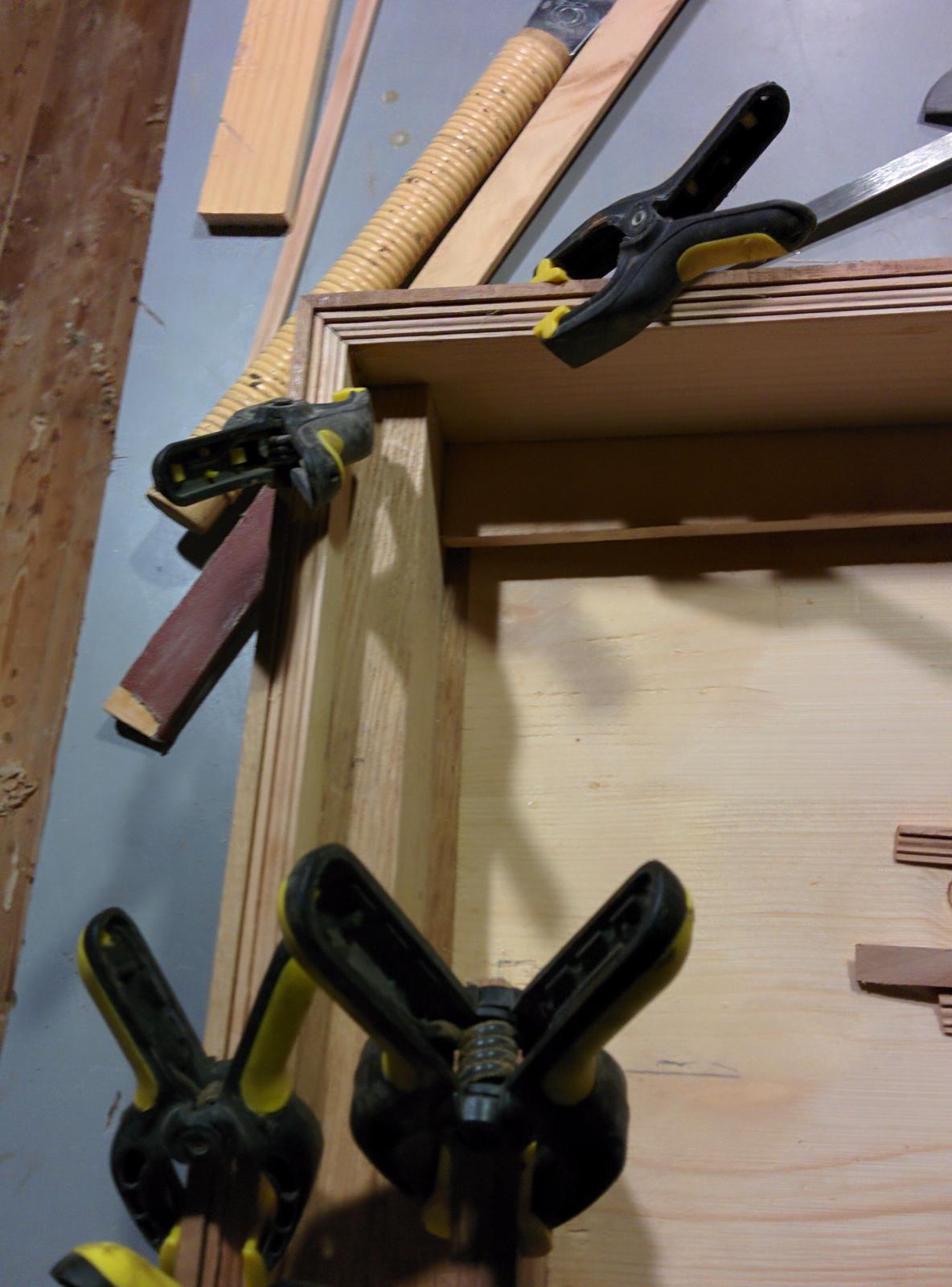
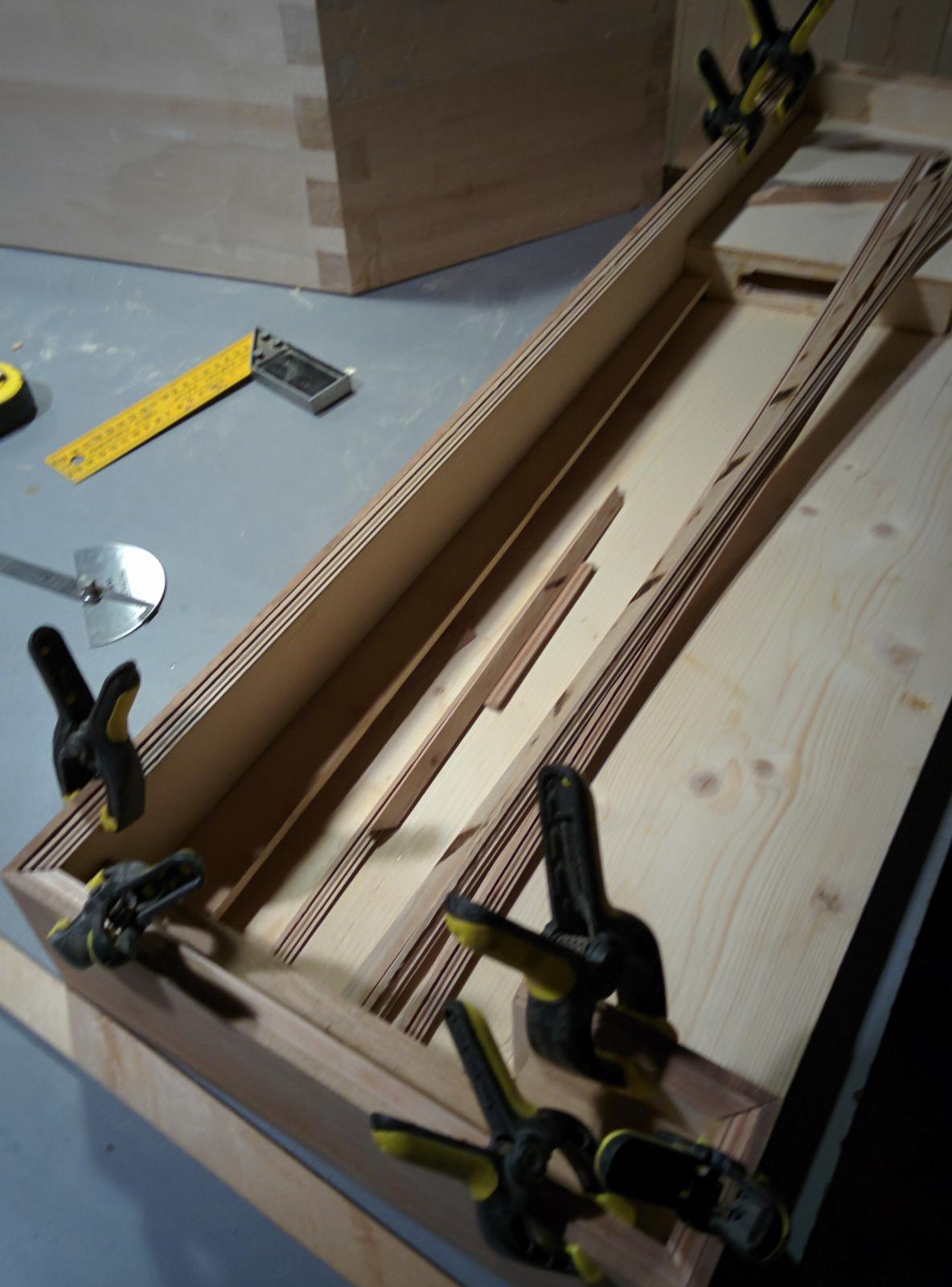
Another brief update, today we prepared a series of walnut frames with the router, and I started preparing the side covers; tomorrow I will finish the last pieces and either glue them or prepare those for the soundboard as well
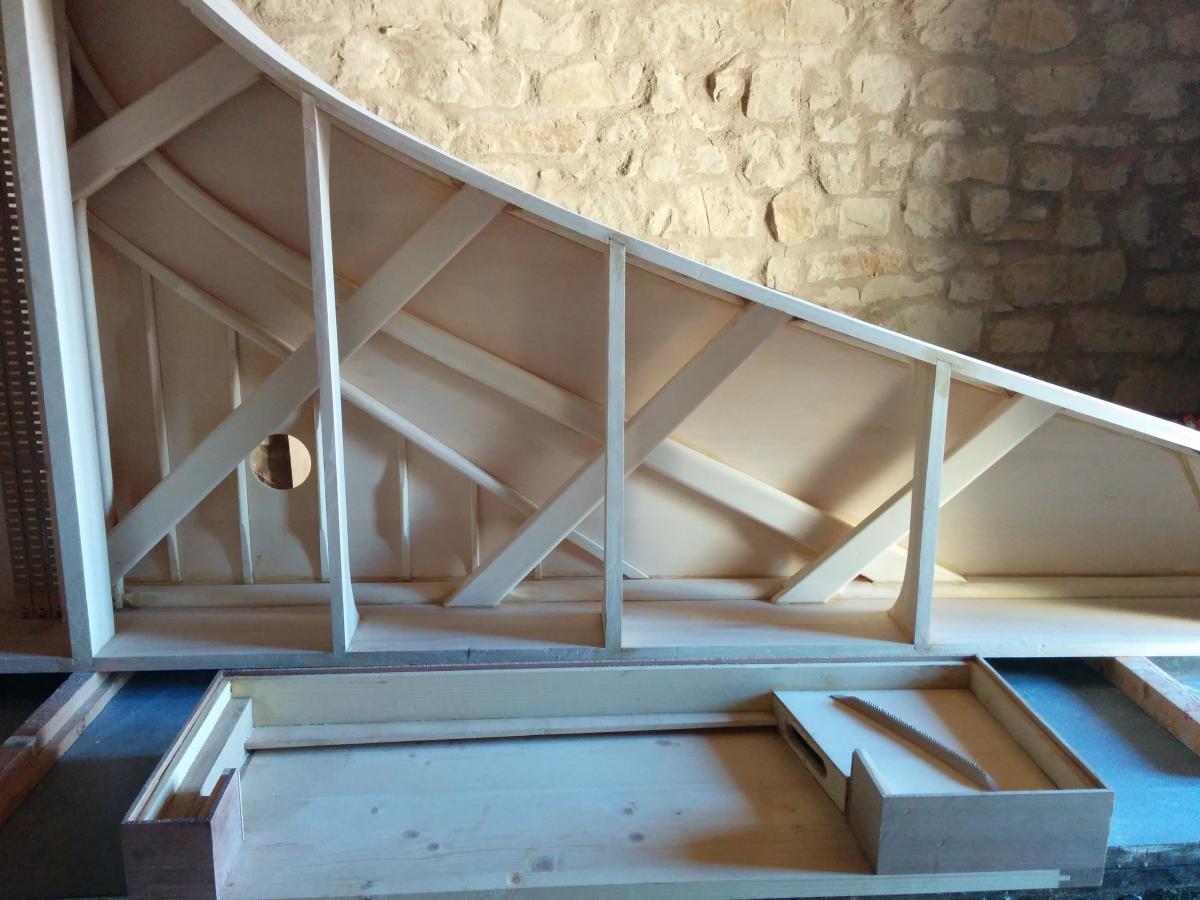
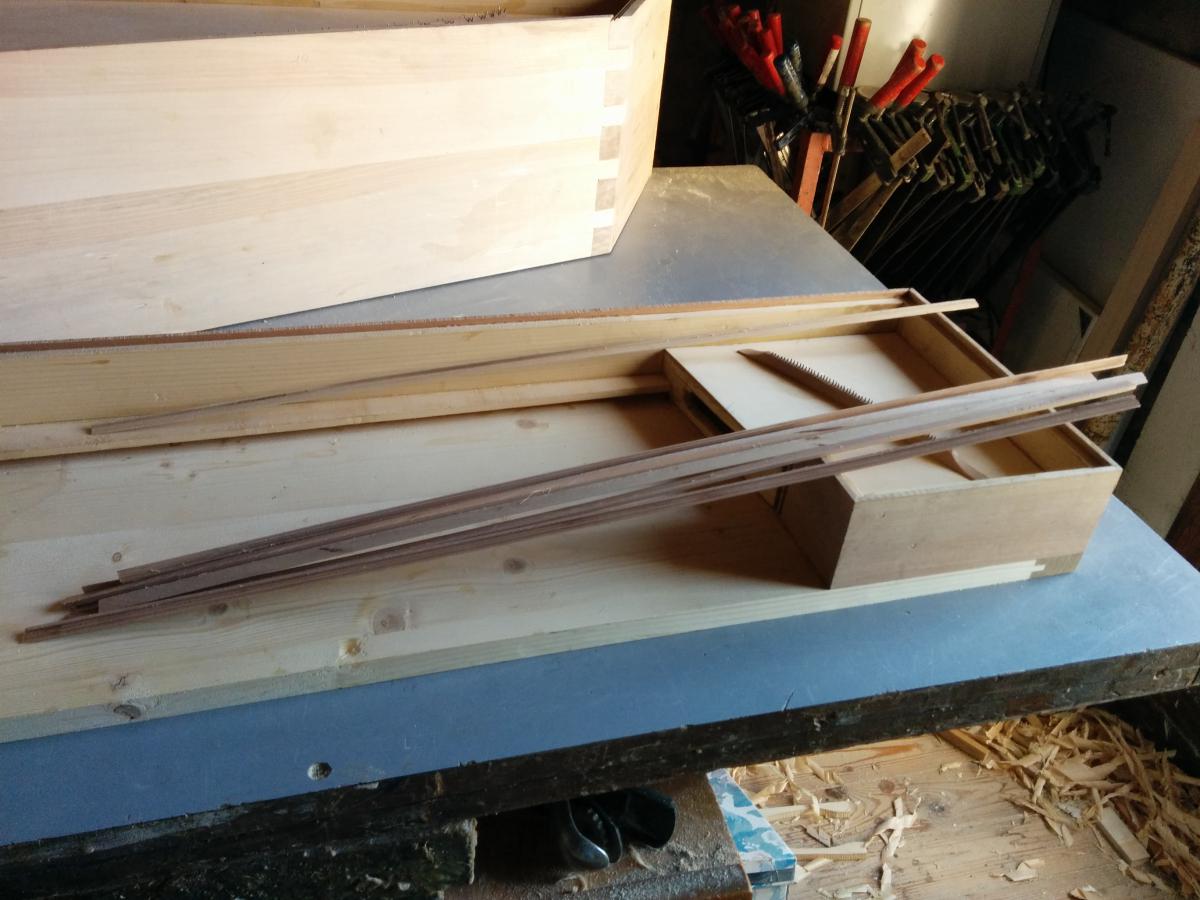
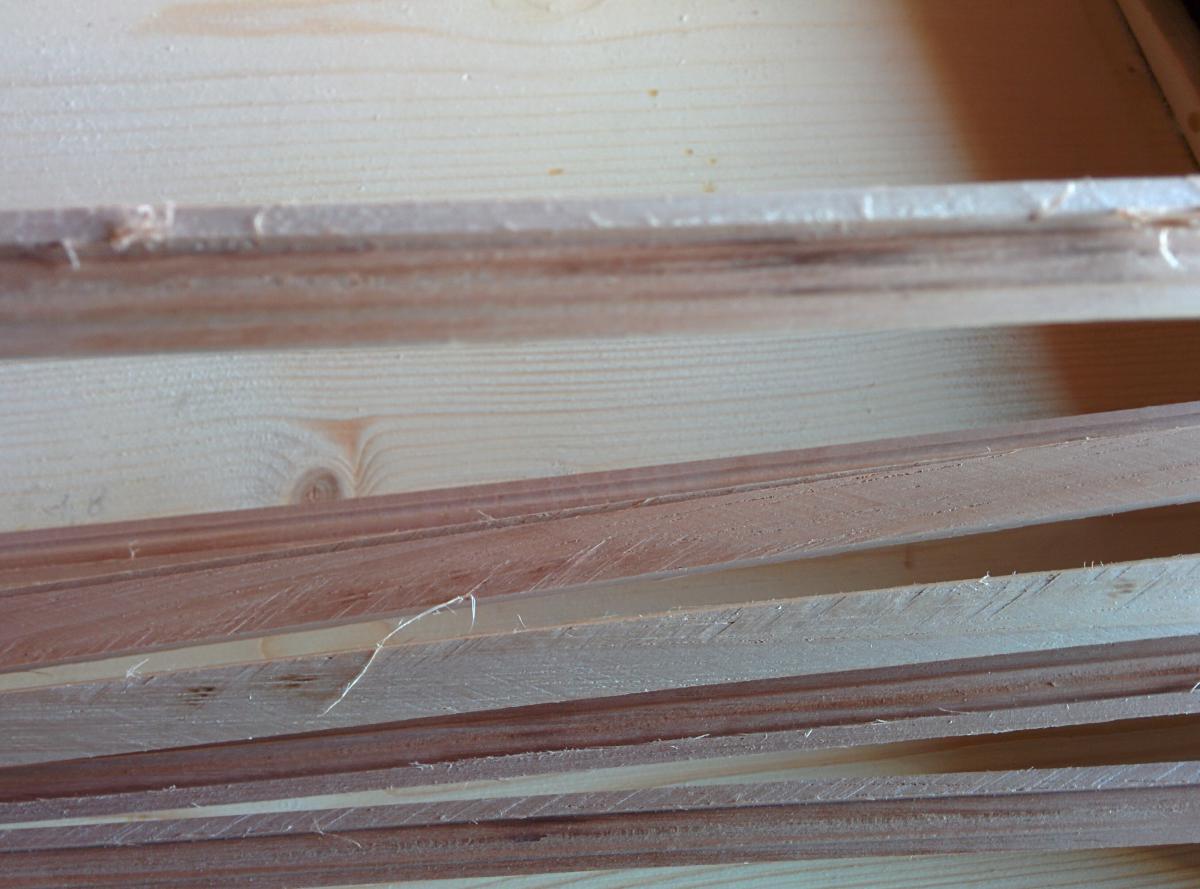
Member
Beautiful frames. Of course, the walnut is well defined in the milling.
Good work.